
|
Getting your Trinity Audio player ready...
|
- BonkDAO lost $21.2 million through a governance exploit rather than a smart contract hack.
- Low voter participation allowed an attacker to pass a proposal and transfer trillions of BONK tokens.
- The incident highlights the growing importance of stronger DAO governance and higher community engagement.
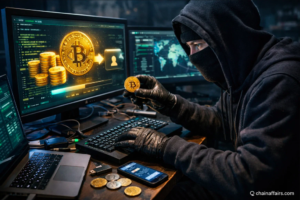
BonkDAO has suffered a staggering $21.2 million treasury loss after an attacker exploited its governance system rather than its code, exposing a major weakness in decentralized autonomous organizations (DAOs).
Instead of breaking into smart contracts or bypassing security measures, the attacker spent roughly $4.4 million buying BONK tokens, submitted a governance proposal, voted in favor of it using the newly acquired tokens, and watched the transaction execute automatically after the voting period expired.
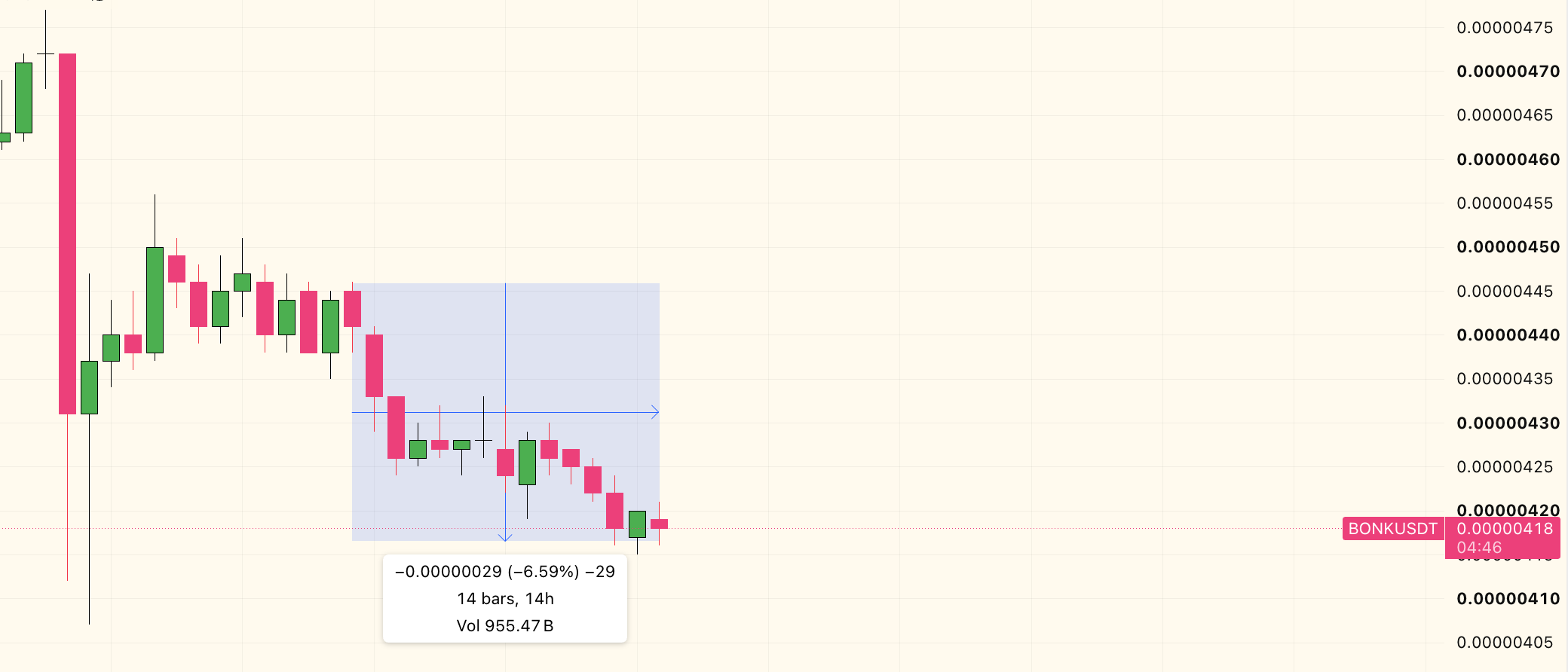
The incident triggered an immediate market reaction. BONK fell around 6.6% within hours, sliding from nearly $0.00000490 to about $0.00000417. Trading volume surged as investors reacted, while the token’s market capitalization declined by roughly $40 million. Some cryptocurrency exchanges also temporarily paused BONK withdrawals.
How the BonkDAO Treasury Was Drained
The proposal, known as BIP #76, appeared to focus on governance improvements and treasury management. However, it also included a transaction authorizing the transfer of approximately 4.426 trillion BONK tokens to a wallet controlled by the proposer.
Rather than exploiting a software vulnerability, the attacker relied entirely on the DAO’s governance rules.
To secure enough voting power, the individual purchased around 882.3 billion BONK tokens, meeting the required voting threshold. With little community participation during the seven-day voting period, the proposal passed without meaningful opposition.
Once approved, the transfer executed automatically through the DAO’s governance mechanism, making the movement of funds irreversible.
Community Inactivity Proved Costly
The incident highlights a growing challenge facing many DAOs: low voter participation.
BonkDAO was launched in late 2022 with a community-first vision that emphasized decentralized ownership and governance. However, decentralized governance depends on active participation from token holders.
In this case, too few members reviewed the proposal or voted against it before execution. The result was not a technical compromise but a governance failure that allowed a well-funded participant to control the outcome.
Following the incident, BonkDAO identified wallets linked to the attacker, alerted exchanges, contacted the Solana Foundation, and notified law enforcement. Recovery efforts remain ongoing, although on-chain transfers are notoriously difficult to reverse.
Why the BonkDAO Exploit Matters
The attack has reignited debate over DAO governance security.
Unlike traditional hacks, this exploit demonstrates that governance itself can become the attack surface when participation is weak and quorum requirements are too low. An attacker effectively turned a $4.4 million investment into more than $21 million by following the platform’s own rules.
For DAO projects across the crypto industry, the lesson is clear: secure smart contracts alone are not enough. Governance systems require active oversight, stronger voter engagement, and carefully designed quorum thresholds to prevent similar treasury attacks.
Also Read: BONK Rockets 17% This Week – Will the Rally Last?
As decentralized organizations continue to manage billions of dollars in digital assets, the BonkDAO incident may become one of the clearest examples of how governance weaknesses can be just as dangerous as software vulnerabilities.
Disclaimer: The information in this article is for general purposes only and does not constitute financial advice. The author’s views are personal and may not reflect the views of Chain Affairs. Before making any investment decisions, you should always conduct your own research. Chain Affairs is not responsible for any financial losses.

I’m a crypto enthusiast with a background in finance. I’m fascinated by the potential of crypto to disrupt traditional financial systems. I’m always on the lookout for new and innovative projects in the space. I believe that crypto has the potential to create a more equitable and inclusive financial system.