
|
Getting your Trinity Audio player ready...
|
- Federal court ruled that New York can enforce state gambling laws against Kalshi.
- The decision may influence similar legal battles across several U.S. states.
- The ruling intensifies the debate over whether prediction markets are financial products or gambling platforms.
Prediction market platform Kalshi has suffered a significant legal blow after a federal judge refused to block New York from enforcing its gambling laws against the company. The decision could reshape the regulatory landscape for prediction markets across the United States and strengthen states seeking to crack down on platforms offering event-based contracts.
The ruling arrives as prediction markets continue attracting billions of dollars in trading volume, particularly around sports events, raising fresh questions about whether these platforms function as financial markets or online gambling services.
Federal Judge Rejects Kalshi’s Preemption Argument
On July 7, Judge Analisa Torres of the U.S. District Court for the Southern District of New York denied Kalshi’s request for a preliminary injunction against New York authorities.
Kalshi had argued that its status as a platform regulated by the Commodity Futures Trading Commission (CFTC) placed it under federal oversight, preventing states from applying their own gambling laws. The court disagreed.
Judge Torres concluded that gambling regulation has historically belonged to the states and that the Commodity Exchange Act does not automatically override those laws. According to the ruling, Congress would need to clearly express its intent to replace state authority before federal law could take precedence.
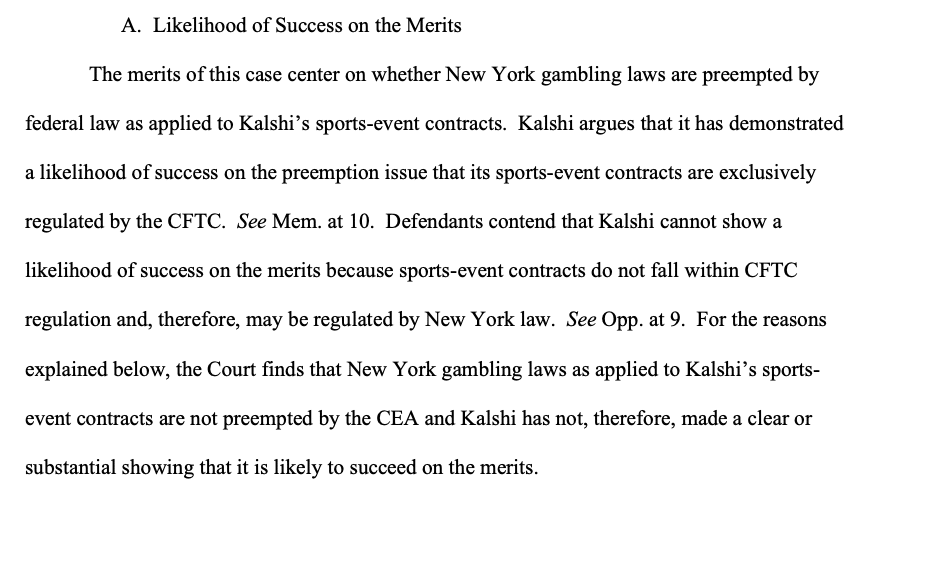
The decision leaves New York free to continue pursuing enforcement actions against the platform.
Ruling Could Affect Cases Across Multiple States
Legal observers believe the impact could extend far beyond New York.
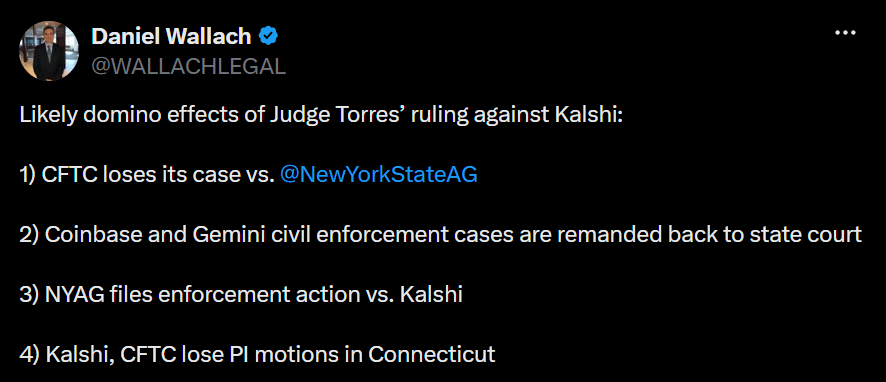
Sports betting attorney Daniel Wallach described the decision as a major setback for Kalshi, arguing that it may influence similar disputes involving other states. Cases involving prediction market regulation in Connecticut and several other jurisdictions could gain momentum following the ruling.
The outcome may also weaken the CFTC’s broader argument that federally regulated prediction markets should be exempt from state gambling restrictions. Regulators in Arizona, Connecticut, Illinois, Wisconsin, Minnesota, and New Mexico have all challenged similar platforms in recent months.
Kalshi is widely expected to appeal the decision while seeking temporary relief during the appeals process.
Record Trading Volumes Fuel Gambling Debate
The ruling comes during a period of explosive growth for prediction markets.
Kalshi and Polymarket reportedly generated a combined record trading volume of approximately $43 billion in June, driven largely by interest in sports-related contracts during the FIFA World Cup.
That surge has intensified criticism from opponents, who argue that sports prediction contracts closely resemble traditional sports betting rather than financial risk management products.
Supporters, however, continue to maintain that regulated prediction markets provide legitimate tools for price discovery and hedging future events.
The New York decision marks one of the most important legal developments for the prediction market industry this year. If upheld on appeal, it could reinforce the authority of individual states to regulate event-based contracts that resemble gambling, even when offered by federally regulated platforms.
Also Read: Kalshi Targets Massive $40 Billion Raise as Trading Volume Explodes
For Kalshi, the legal battle is far from over. But the latest ruling shifts momentum toward state regulators and may shape how prediction markets operate across the U.S. for years to come.
Disclaimer: The information in this article is for general purposes only and does not constitute financial advice. The author’s views are personal and may not reflect the views of Chain Affairs. Before making any investment decisions, you should always conduct your own research. Chain Affairs is not responsible for any financial losses.

I’m your translator between the financial Old World and the new frontier of crypto. After a career demystifying economics and markets, I enjoy elucidating crypto – from investment risks to earth-shaking potential. Let’s explore!