|
Getting your Trinity Audio player ready...
|
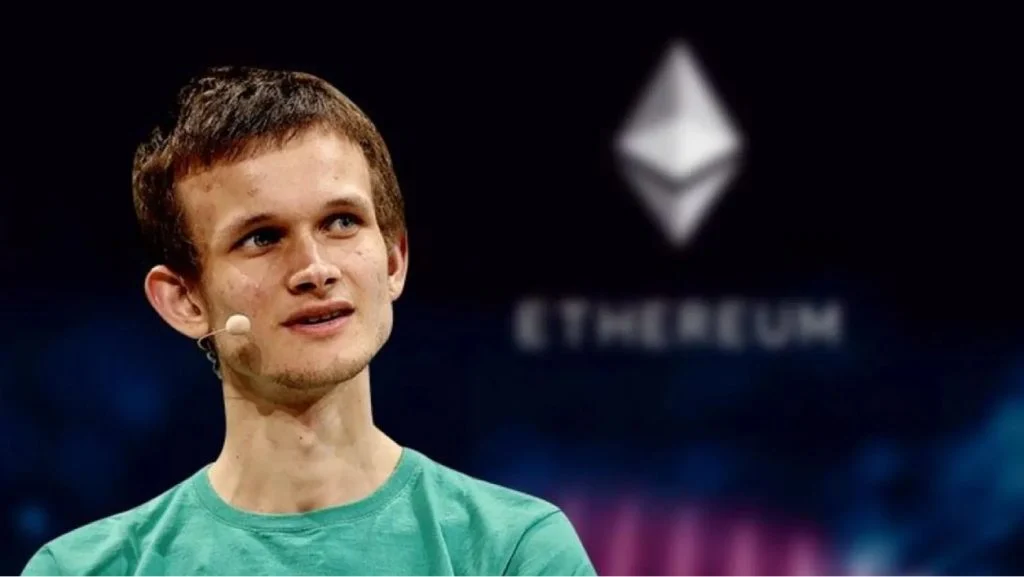
Ethereum co-founder Vitalik Buterin has floated a new technical proposal aimed at making privacy-preserving transactions and quantum-resistant cryptography dramatically cheaper to run on the network. The idea, outlined in a September 9 post on X, could reshape how Ethereum handles some of its heaviest computational work — though it remains an early-stage proposal rather than a locked-in upgrade.
What EIP-8288 Actually Proposes
The proposal, formally titled “A note on recursive STARK mempools,” centers on a concept Buterin calls “dependency frames.” Instead of every node independently verifying complex cryptographic statements — like confirming a signature matches a public key — nodes would periodically bundle these statements together, strip out anything expired, and generate a single recursive STARK proof covering all of them. That proof would then be broadcast in a new envelope, and block builders would compile a final STARK covering the transactions they choose to include.
The upshot: blocks would carry a compact proof of the underlying math rather than forcing every node to redo expensive cryptographic operations from scratch. Buterin estimates each STARK would run roughly 100–300 kilobytes, plus about 96 bytes per statement proven — a design he’s framed as a continuation of his earlier “Proof Singularity” concept, which he now believes has the technical building blocks to become real.
Why This Matters for Privacy and Post-Quantum Security
The clearest use case Buterin points to is quantum-resistant signatures. Schemes like SPHINCS-style signatures are secure against quantum attacks but expensive to verify on-chain today. Under this design, the signature data itself — often several kilobytes — would stay off-chain, with only a compact proof of its validity recorded on Ethereum. Buterin also floated Falcon, ML-DSA, and other lattice- or code-based schemes as candidates that could be wrapped inside STARK proofs this way.
Privacy transactions stand to benefit similarly. Buterin estimates that optimized privacy transactions currently cost around 300,000 gas, with quantum-safe versions potentially running as high as 10 million gas. Under his proposed architecture, he believes that could drop to the low tens of thousands of gas — a significant reduction if it holds up in practice.
Also Read: Vitalik Buterin Backs Bitcoin-Inspired Ethereum Upgrade to Fix a Major Scaling Problem
Still Just a Proposal
Buterin has said he hopes EIP-8288 gets considered for I-star, the fork expected to follow Ethereum’s upcoming Hegotá upgrade. But he’s been clear that plenty remains unresolved, including which instruction set to build on — RISC-V is currently the leading candidate — and how to manage node bandwidth and proof-generation demands. The proposal also arrives alongside Ethereum’s broader push toward post-quantum readiness, with core developers having set a December 2029 target earlier this month.
For now, EIP-8288 is a direction under discussion, not a scheduled change. Whether it survives the review process could shape how Ethereum handles increasingly complex cryptography in the years ahead.
Disclaimer: The information in this article is for general purposes only and does not constitute financial advice. The author’s views are personal and may not reflect the views of Chain Affairs. Before making any investment decisions, you should always conduct your own research. Chain Affairs is not responsible for any financial losses.