|
Getting your Trinity Audio player ready...
|
- SC Ventures has become GSR’s first outside shareholder in 12 years, cementing a partnership centered on tokenization and institutional-grade crypto liquidity.
- Coinbase is targeting Australia’s 664,000 SMSFs — a $758 billion market — after securing its local financial services license last month.
- Banks like Standard Chartered, JPMorgan, and BNY Mellon are embedding directly into crypto infrastructure, signaling a structural shift — not just experimentation.
Two stories out of the crypto world this week signal that institutional finance is no longer testing the waters — it’s diving in. Standard Chartered’s investment arm has taken a historic stake in crypto market maker GSR, while Coinbase has moved to let Australian retirement fund trustees invest in digital assets. Together, they paint a picture of an industry growing up fast.
Standard Chartered makes crypto history with GSR stake
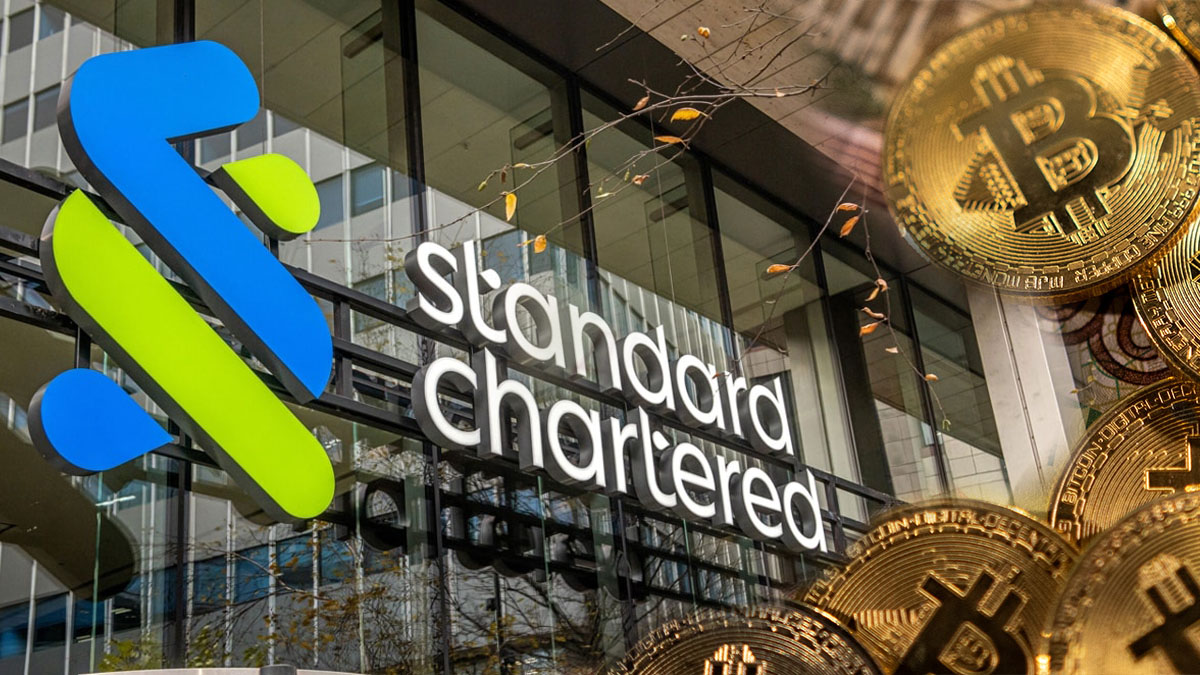
SC Ventures, the innovation and investment unit of Standard Chartered, has become the first external shareholder in GSR since the crypto market-making firm was founded in 2013. The deal, announced Monday, marks a significant step for a bank that has been quietly but steadily expanding its crypto exposure over recent years.
GSR CEO Xin Song framed the partnership as a union of complementary strengths — pairing capital markets expertise with banking-grade infrastructure, with tokenization as the shared starting point. SC Ventures CEO Alex Manson echoed that logic, describing the investment as part of a broader effort to build institutional ecosystems capable of supporting deeper liquidity in digital asset markets.
The tie-up is more than a balance sheet transaction. Last month, GSR invested in Libeara, a tokenization platform co-backed by SC Ventures that helps financial institutions issue tokenized assets — suggesting the two firms had already been building toward this formal relationship.
The tokenization race heats up across banking
Standard Chartered is not alone in its push into digital infrastructure. The bank has also backed blockchain payments firm Ripple. Meanwhile, JPMorgan Chase runs its own dedicated blockchain unit, and BNY Mellon has moved into crypto custody. The pattern is consistent: major banks are no longer observing crypto from a distance — they’re embedding themselves in its plumbing.
Also Read: CLARITY Act Update: Senators Move to Restrict Stablecoin Interest Earnings
Tokenization — the process of representing real-world assets as digital tokens on a blockchain — has become the flagship use case drawing traditional finance into the space. Its appeal lies in the promise of faster settlement, greater transparency, and the ability to fractionalize assets that were previously illiquid.
Coinbase targets Australia’s $758 billion retirement market
On the other side of the world, Coinbase has launched support for Australia’s self-managed superannuation funds (SMSFs), a regulated class of private retirement vehicles overseen by the Australian Taxation Office. The move gives fund trustees a direct path to include crypto in their retirement portfolios.
The offering includes data exports aligned with Australian accounting standards and a verification process tailored to local fund structures. Coinbase APAC Managing Director John O’Loghlen pointed to growing regulatory clarity in Australia as the green light for the push, describing SMSFs as a core growth opportunity for the exchange.
The scale of the opportunity is hard to ignore. Australia had more than 664,000 SMSFs at the end of 2025, holding an estimated AU$1.06 trillion ($758 billion) in total assets. Coinbase obtained its Australian Financial Services License last month, clearing the regulatory hurdle needed to serve this market. Rival exchange OKX has already launched similar SMSF functionality.
The move also reflects a global shift in how regulators and policymakers view crypto’s role in long-term savings. In the United States, President Trump signed an executive order last August allowing 401(k) plans to hold digital assets. Indiana has since passed state-level legislation permitting crypto allocations in certain retirement plans.
What it means for investors
The SC Ventures-GSR deal and Coinbase’s SMSF push are different in scale but cut from the same cloth: institutions are building bridges into crypto, and retail savers are beginning to cross them. For crypto market participants, the growing presence of established financial players brings deeper liquidity and credibility. For everyday investors, it opens access to asset classes that were once the preserve of specialist traders. The infrastructure being built now — by banks, exchanges, and market makers — will define how mainstream digital finance looks in the years ahead.
Disclaimer: The information in this article is for general purposes only and does not constitute financial advice. The author’s views are personal and may not reflect the views of Chain Affairs. Before making any investment decisions, you should always conduct your own research. Chain Affairs is not responsible for any financial losses.

I’m your translator between the financial Old World and the new frontier of crypto. After a career demystifying economics and markets, I enjoy elucidating crypto – from investment risks to earth-shaking potential. Let’s explore!