
|
Getting your Trinity Audio player ready...
|
- SEC leadership says clear crypto rules are essential for market growth and investor confidence.
- Officials acknowledge past regulatory shortcomings while promising a more transparent approach.
- The CLARITY Act is viewed as the key to providing lasting legal certainty for the U.S. crypto industry.
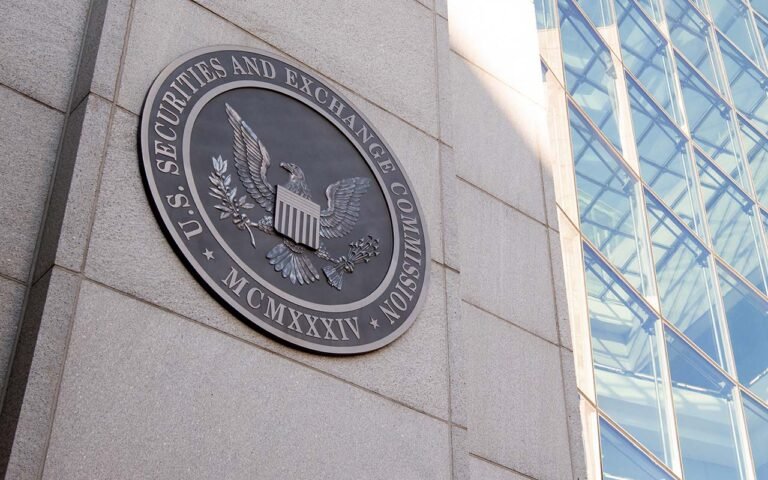
The U.S. Securities and Exchange Commission (SEC) is standing by its efforts to reshape cryptocurrency regulation, even as critics argue the agency has moved too slowly. SEC Chairman Paul Atkins says the regulator is making significant progress toward creating a clearer legal framework for digital assets, aligning with the Trump administration’s goal of making the United States a global leader in crypto innovation.
Speaking recently, Atkins rejected claims that the SEC’s approach favors the crypto industry. Instead, he argued that transparent regulations are essential for healthy markets and long-term growth.
SEC Says Regulatory Clarity Is Essential
According to Atkins, the SEC has spent the past year modernizing its approach to digital assets by providing guidance on issues such as crypto asset classification and exchange-traded fund (ETF) approvals.
He emphasized that predictable rules are necessary for investors, businesses, and developers to operate with confidence. Rather than offering special treatment to crypto firms, the SEC believes its role is to establish a consistent regulatory environment that encourages responsible innovation.
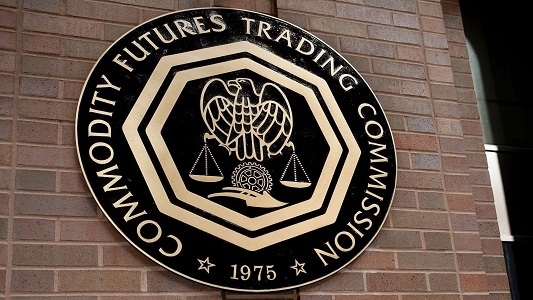
The agency has also worked more closely with the Commodity Futures Trading Commission (CFTC) as lawmakers consider broader reforms under the proposed CLARITY Act.
Officials Admit Past Mistakes
The SEC’s renewed focus comes with an acknowledgment that previous regulatory efforts damaged trust within the crypto industry.
Brian Daly, the SEC’s Head of Investment Management, recently admitted the agency mishandled its relationship with the digital asset sector. He said regulators are now focused on creating a more organized review process, particularly as the SEC receives hundreds of ETF applications every month, including proposals tied to emerging markets such as prediction platforms.
The comments reflect a broader effort to improve communication between regulators and the rapidly evolving crypto industry.
Why the CLARITY Act Matters
Despite the SEC’s updated guidance, many legal experts argue that staff interpretations alone cannot provide lasting regulatory certainty. Without legislation, agency guidance remains vulnerable to legal challenges and future policy changes.
That concern has already surfaced in areas such as tokenization initiatives and prediction markets, where regulatory disputes continue in several jurisdictions.
Supporters believe the CLARITY Act would establish a permanent legal framework defining how digital assets should be regulated while clearly dividing oversight responsibilities between the SEC and CFTC.
Although the CLARITY Act has cleared an important committee stage, it has not yet been scheduled for a Senate vote. Industry groups warn that further delays could weaken America’s competitiveness as other regions continue implementing comprehensive crypto regulations.
The European Union’s Markets in Crypto-Assets (MiCA) framework is already in force, increasing pressure on U.S. lawmakers to finalize their own legislation.
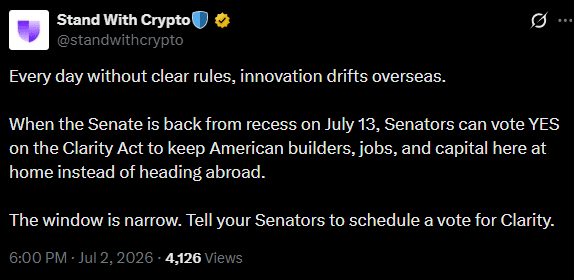
Crypto advocacy organizations argue that every month without clear federal rules increases the risk that innovation, investment, and blockchain development will shift to overseas markets.
Also Read: CLARITY Act Showdown: Cynthia Lummis Fires Back at Elizabeth Warren Over Crypto Bill
As debate continues, the future of U.S. crypto regulation may ultimately depend less on agency guidance and more on whether Congress can deliver lasting legal certainty through the CLARITY Act.
Disclaimer: The information in this article is for general purposes only and does not constitute financial advice. The author’s views are personal and may not reflect the views of Chain Affairs. Before making any investment decisions, you should always conduct your own research. Chain Affairs is not responsible for any financial losses.

I’m your translator between the financial Old World and the new frontier of crypto. After a career demystifying economics and markets, I enjoy elucidating crypto – from investment risks to earth-shaking potential. Let’s explore!