
|
Getting your Trinity Audio player ready...
|
- Japan’s rising bond yields could reduce global liquidity and increase pressure on Bitcoin.
- Corporate treasuries continue accumulating BTC despite weakening spot Bitcoin ETF demand.
- Bitcoin must break above key resistance to strengthen the case for a sustained recovery.
Bitcoin is navigating one of its most challenging macro environments in recent months as rising government bond yields in Japan, weaker institutional demand, and uncertain market sentiment weigh on the world’s largest cryptocurrency.
While Bitcoin has shown signs of stabilizing after a difficult stretch, analysts say its next move may depend less on crypto-specific news and more on developments in global financial markets. At the same time, growing Bitcoin purchases by publicly traded companies are offering a key source of support that could help offset slowing ETF demand.
Japan’s Bond Market Emerges as a Bitcoin Risk
Japan’s government bond market has become an unexpected factor influencing Bitcoin’s outlook.
Yields on the country’s 10-year and 20-year government bonds have climbed to levels not seen in decades. Higher yields typically encourage investors to shift capital into lower-risk assets while reducing liquidity available for speculative investments like cryptocurrencies.
The situation is being amplified by Japan’s long-term investment plans, which may require additional government borrowing. Meanwhile, the Bank of Japan has been reducing its purchases of government bonds, creating concerns about who will absorb the growing supply.
If borrowing costs continue rising, investors who previously used inexpensive Japanese yen financing for global investments may unwind those positions. That could tighten worldwide liquidity and create additional pressure on risk assets, including Bitcoin.
ETF Demand Weakens as Corporate Buying Continues
Bitcoin has also been facing softer institutional demand through spot Bitcoin ETFs.
Recent weeks have seen significant capital leaving these investment products, reflecting investor caution amid higher interest rates and an uncertain macroeconomic environment. Reduced ETF inflows have removed one of Bitcoin’s strongest growth drivers from earlier this year.
However, another group of buyers has continued accumulating.
Publicly traded companies now collectively hold more than 1.26 million BTC in their corporate treasuries. This steady accumulation suggests that long-term corporate investors remain confident despite short-term market volatility.
The key question is whether corporate purchases can continue absorbing selling pressure if ETF outflows persist.
Technical Levels Remain Critical
Bitcoin has recovered modestly, posting gains over the past month and trading near the mid-$60,000 range. Even so, technical indicators suggest the market has yet to establish a convincing bullish trend.
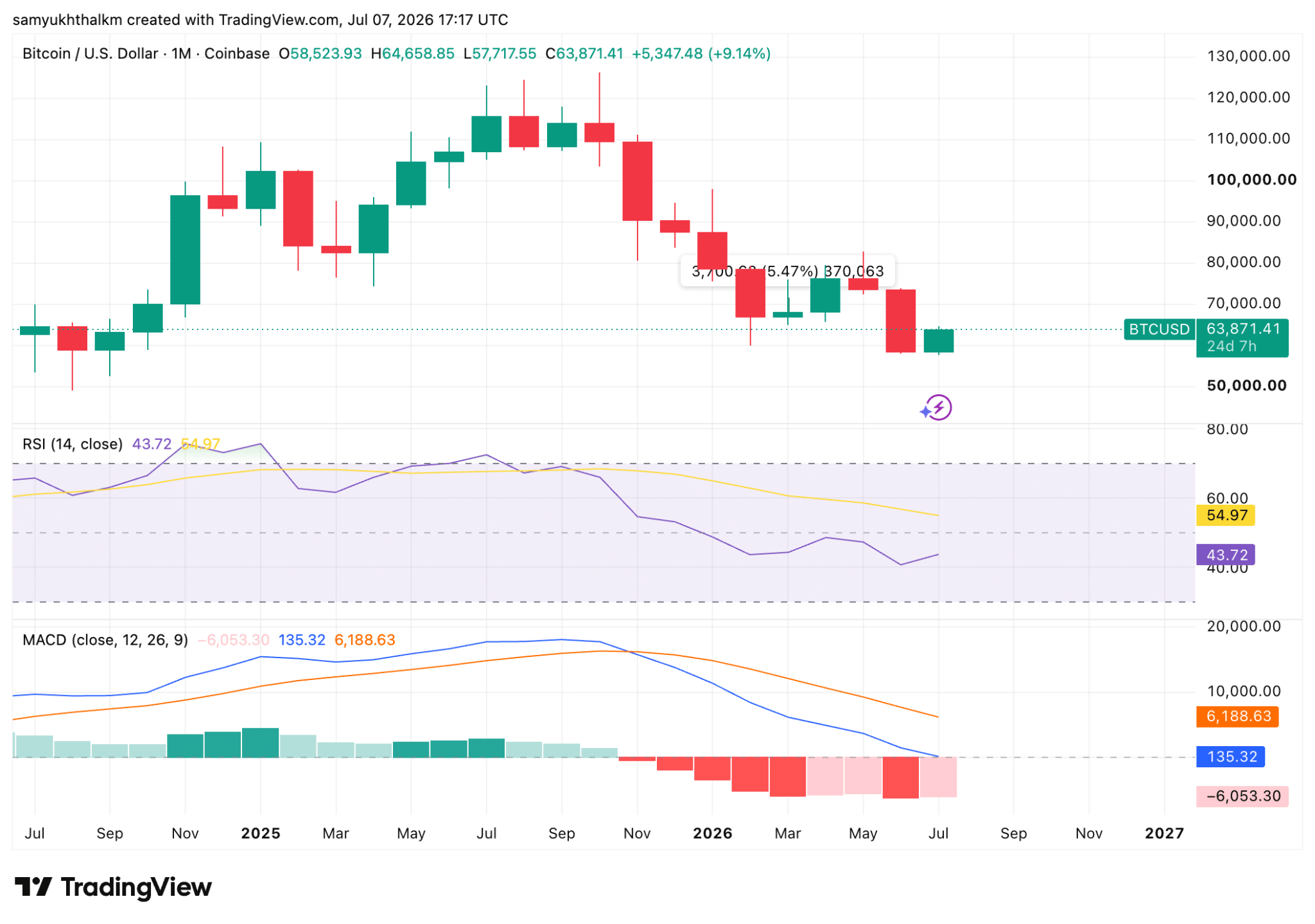
The immediate resistance level sits around $64,600. A decisive move above that price could strengthen investor confidence and signal renewed buying momentum.
For now, momentum indicators remain relatively neutral, indicating that buyers have not fully regained control.
Bitcoin’s recovery is likely to depend on more than technical charts alone.
Calmer bond markets, improving global liquidity, and renewed ETF inflows could provide the foundation for a stronger rally. Until then, continued corporate accumulation may act as an important buffer against broader market weakness.
Also Read: Metaplanet Hits 43,000 BTC: How Japan’s Bitcoin Giant Became the World’s No. 3 Holder
While Bitcoin has demonstrated resilience, investors are closely watching whether macroeconomic headwinds ease enough to support a sustained recovery rather than another temporary rebound.
Disclaimer: The information in this article is for general purposes only and does not constitute financial advice. The author’s views are personal and may not reflect the views of Chain Affairs. Before making any investment decisions, you should always conduct your own research. Chain Affairs is not responsible for any financial losses.

I’m your translator between the financial Old World and the new frontier of crypto. After a career demystifying economics and markets, I enjoy elucidating crypto – from investment risks to earth-shaking potential. Let’s explore!