|
Getting your Trinity Audio player ready...
|
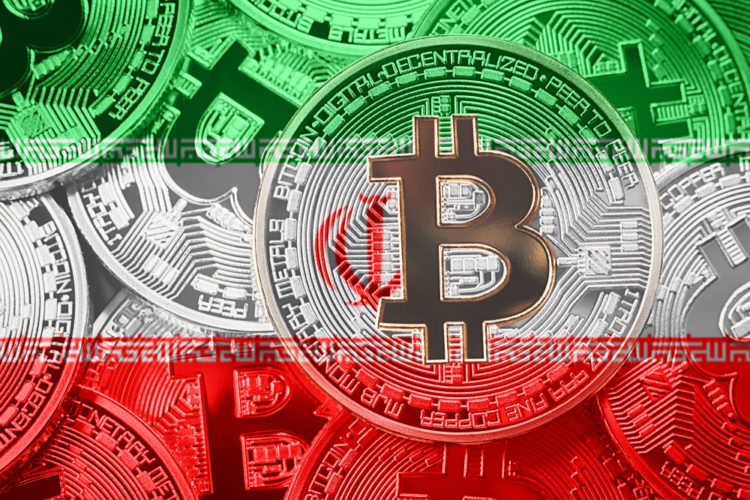
- Iran is now accepting Bitcoin for oil shipping tolls through the Strait of Hormuz.
- Fidelity says global reserve strategies are slowly moving away from dollar-based systems.
- Stablecoins still dominate oil payments, but Bitcoin’s neutrality is gaining attention.
Iran’s decision to accept Bitcoin for oil shipping tolls through the Strait of Hormuz is adding new momentum to the global debate around the future of the US dollar in international trade. The move comes as central banks continue increasing gold reserves while reducing exposure to dollar-based assets, according to a new report from Fidelity Digital Investments.
The report, titled Six Key Trends Shaping Digital Assets in 2026, argues that the rise of alternative payment systems could weaken the dominance of traditional financial infrastructure controlled by the United States and its allies.
Iran Expands Bitcoin Use in Oil Trade
In April 2026, Iran confirmed it would begin accepting Bitcoin, dollar-backed stablecoins, and Chinese yuan for oil shipping toll payments. The policy applies to vessels crossing the strategically important Strait of Hormuz, one of the world’s busiest energy trade routes.
The announcement followed earlier reports from Iranian state media suggesting the country was exploring a blockchain-based insurance framework for oil tankers. Under the proposal, shipping insurance and financial responsibility certificates could be processed using digital assets and settled through blockchain networks.
Supporters of Bitcoin argue the development highlights the cryptocurrency’s appeal as a neutral and censorship-resistant asset. Because Bitcoin transactions do not rely on traditional banking intermediaries, advocates believe it offers countries facing sanctions or financial restrictions an alternative way to conduct international trade.
Gold Demand Signals Shift From Dollar Assets
Fidelity’s report also pointed to growing central bank demand for gold as another sign of changing global reserve strategies. Although gold has fallen roughly 20% from its January peak near $5,600 per ounce, institutional demand remains strong.
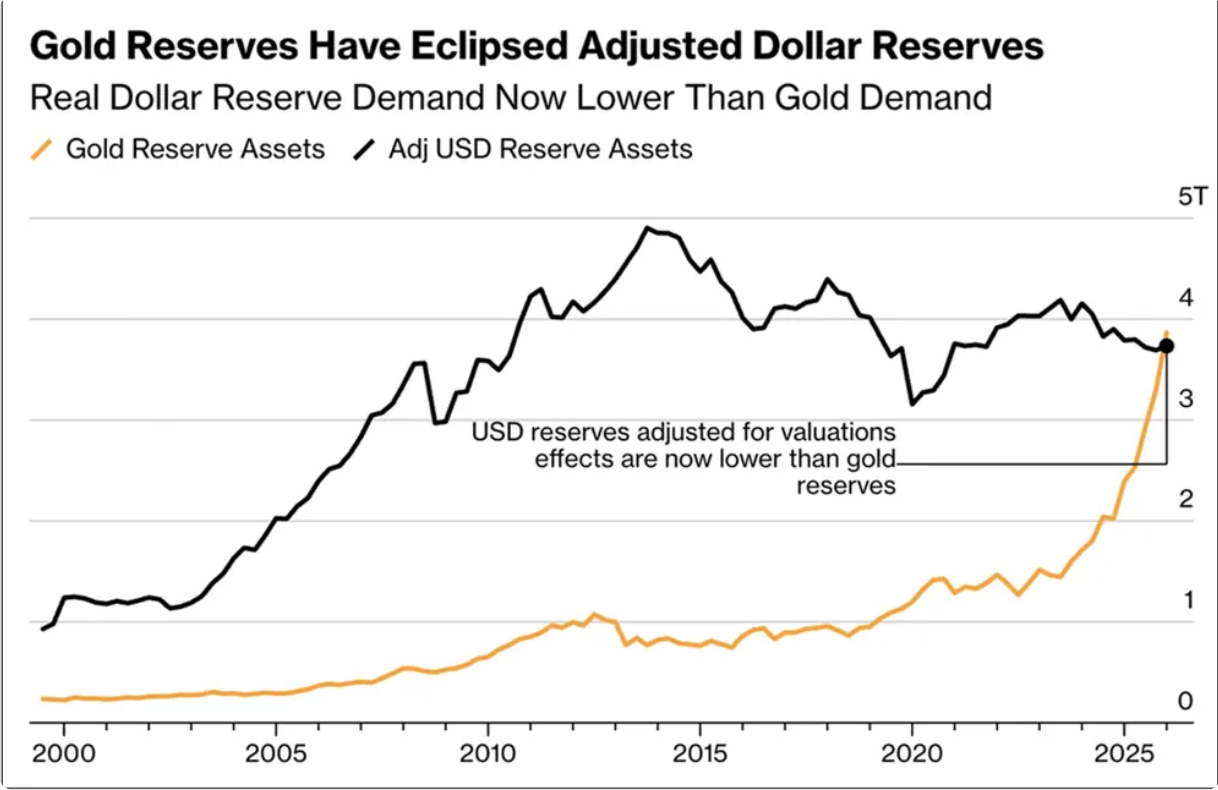
According to the report, gold’s continued accumulation by central banks aligns with expectations that countries are gradually diversifying away from dollar-denominated reserves. However, Fidelity noted that Bitcoin has not yet matched gold’s recent performance as a reserve asset.
The combination of rising gold purchases and experimentation with crypto-based settlement systems suggests some governments are seeking alternatives to traditional dollar infrastructure amid geopolitical tensions.
Stablecoins Still Dominate Oil Payments
Despite Bitcoin’s growing visibility, stablecoins continue to play a larger role in energy-related transactions. Tether’s USDt remains widely used for oil shipping fees due to its price stability and liquidity.
However, the risks tied to centralized stablecoins became clear after US authorities froze $344 million worth of digital assets reportedly linked to Iran and the Iranian Revolutionary Guard Corps earlier this year.
That incident strengthened arguments among Bitcoin supporters who believe decentralized assets may offer greater protection against seizures and sanctions.
Also Read: Bitcoin Holds $72K as U.S.-Iran Ceasefire Deal Nears Approval
Iran’s embrace of Bitcoin for oil-related payments marks another step in the broader shift toward alternative financial systems. While the US dollar still dominates global trade, rising gold reserves, growing crypto adoption, and geopolitical fragmentation are pushing more countries to explore non-dollar settlement options.
Whether Bitcoin can eventually compete with gold or challenge the dollar’s reserve status remains uncertain. But the latest developments show digital assets are becoming increasingly tied to global trade and international finance.
Disclaimer: The information in this article is for general purposes only and does not constitute financial advice. The author’s views are personal and may not reflect the views of Chain Affairs. Before making any investment decisions, you should always conduct your own research. Chain Affairs is not responsible for any financial losses.

I’m a crypto enthusiast with a background in finance. I’m fascinated by the potential of crypto to disrupt traditional financial systems. I’m always on the lookout for new and innovative projects in the space. I believe that crypto has the potential to create a more equitable and inclusive financial system.