|
Getting your Trinity Audio player ready...
|
- Bitcoin remained weak despite reports of a possible U.S.-Iran ceasefire extension.
- Rising inflation and oil market uncertainty continue pressuring crypto markets.
- Traders remain skeptical that a permanent peace agreement will happen soon.
Bitcoin held steady on Thursday after reports emerged that U.S. and Iranian negotiators had reached a preliminary agreement to extend the current ceasefire for another 60 days. While the proposed deal could ease immediate geopolitical pressure, markets remain cautious as both governments have yet to formally approve the arrangement.
According to reports citing U.S. officials and regional sources involved in mediation efforts, the memorandum of understanding would temporarily preserve the ceasefire while opening fresh talks around Iran’s nuclear program and sanctions relief. U.S. President Donald Trump is reportedly reviewing the proposal before making a final decision, while Iranian leadership has also not formally signed off.
Bitcoin Price Stays Flat Despite Diplomatic Progress
Crypto markets reacted cautiously to the latest development. Bitcoin traded near $72,700 following the report, showing little recovery after recent volatility tied to escalating tensions in the Middle East.
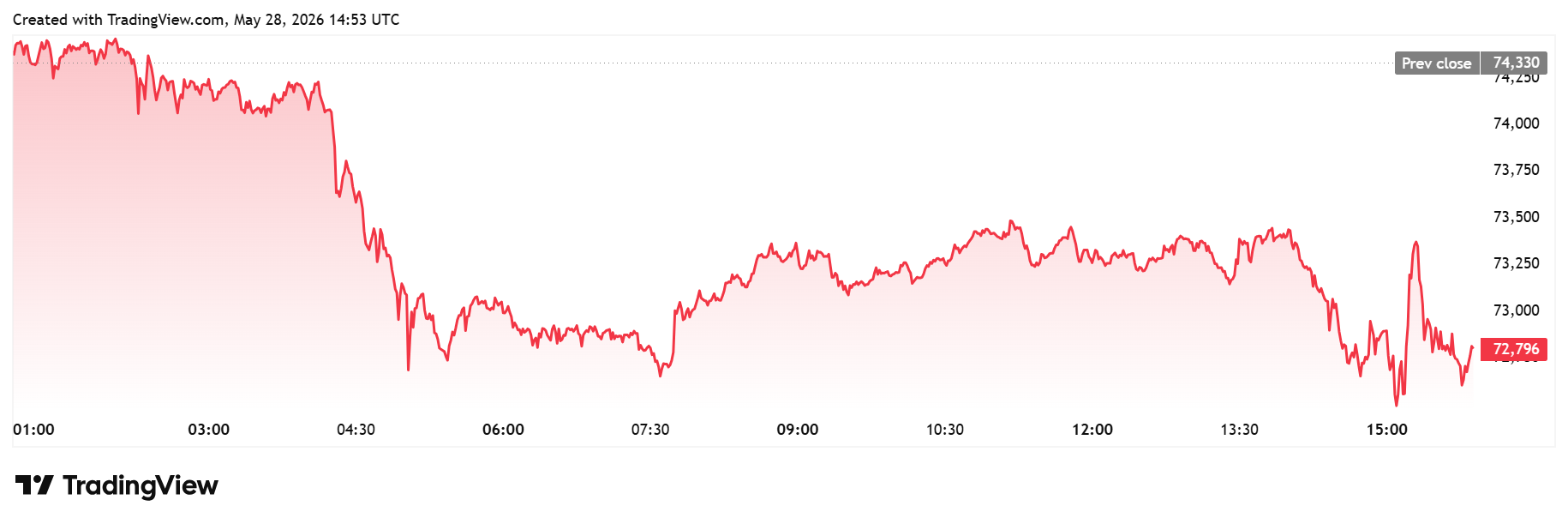
Earlier this week, Bitcoin briefly fell below the $73,000 mark as renewed military exchanges between the U.S. and Iran rattled investors. Traders moved away from risk assets amid concerns that diplomatic negotiations had collapsed.
However, geopolitical uncertainty is not the only factor weighing on crypto prices. Fresh U.S. inflation data also pressured the market. April PCE inflation reportedly rose 3.8% year-over-year, reinforcing expectations that inflation could remain elevated for longer.
Rising energy prices linked to instability in the region have added to broader market concerns, especially as oil supply routes remain under scrutiny.
Strait of Hormuz Shipping Deal Could Ease Energy Fears
One of the most significant parts of the proposed agreement involves commercial shipping through the Strait of Hormuz, one of the world’s most critical oil transit routes.
Under the reported terms, shipping traffic would continue without restrictions during the 60-day ceasefire period. The U.S. Navy would also reportedly remove its blockade measures to allow smoother commercial movement through the corridor.
The temporary arrangement is expected to reduce immediate fears of supply disruptions in global energy markets. Analysts say calmer oil markets could help reduce short-term inflation pressures, although uncertainty remains high until both governments formally approve the deal.
Traders Still Doubt a Permanent Peace Agreement
Despite the ceasefire extension talks, prediction markets show that investors remain skeptical about a lasting diplomatic breakthrough.
Data from Polymarket indicates traders currently assign only a 42% chance of a permanent U.S.-Iran agreement being reached by June 30. Those odds have declined from levels seen earlier in the week when optimism around negotiations briefly improved market sentiment.
For crypto investors, the coming days may prove critical. Any confirmation or rejection of the proposed ceasefire extension could quickly impact Bitcoin, oil prices, and broader financial markets.
Also Read: Kalshi Sues Minnesota as Bitcoin Crashes Out of Top 10 Global Assets
The proposed 60-day ceasefire extension between the U.S. and Iran has temporarily stabilized market fears, but uncertainty continues to dominate investor sentiment. With Bitcoin struggling to regain momentum and inflation concerns still lingering, traders remain highly sensitive to geopolitical headlines. Until both sides formally approve the agreement, volatility across crypto and traditional markets is likely to persist.
Disclaimer: The information in this article is for general purposes only and does not constitute financial advice. The author’s views are personal and may not reflect the views of Chain Affairs. Before making any investment decisions, you should always conduct your own research. Chain Affairs is not responsible for any financial losses.

I’m a crypto enthusiast with a background in finance. I’m fascinated by the potential of crypto to disrupt traditional financial systems. I’m always on the lookout for new and innovative projects in the space. I believe that crypto has the potential to create a more equitable and inclusive financial system.