|
Getting your Trinity Audio player ready...
|
- Clarity Act approval odds have fallen sharply as legislative uncertainty increases.
- Patrick Witt’s temporary military leave has complicated White House negotiations.
- Elizabeth Warren’s push for stricter ethics rules could further delay Senate approval.
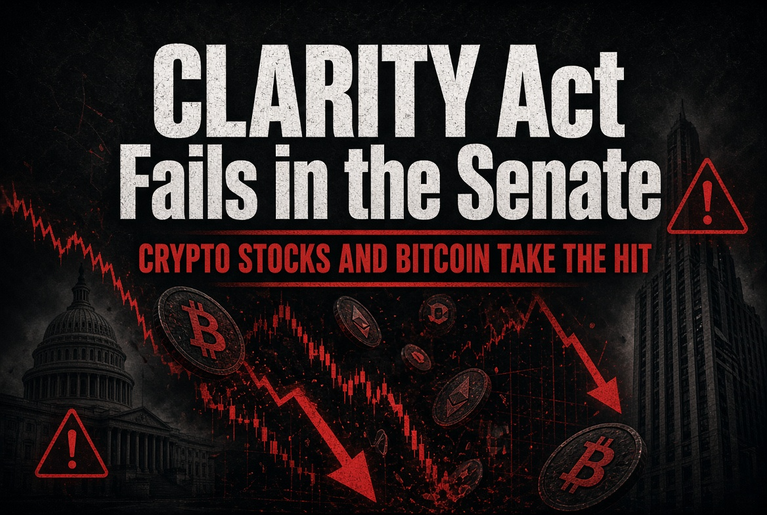
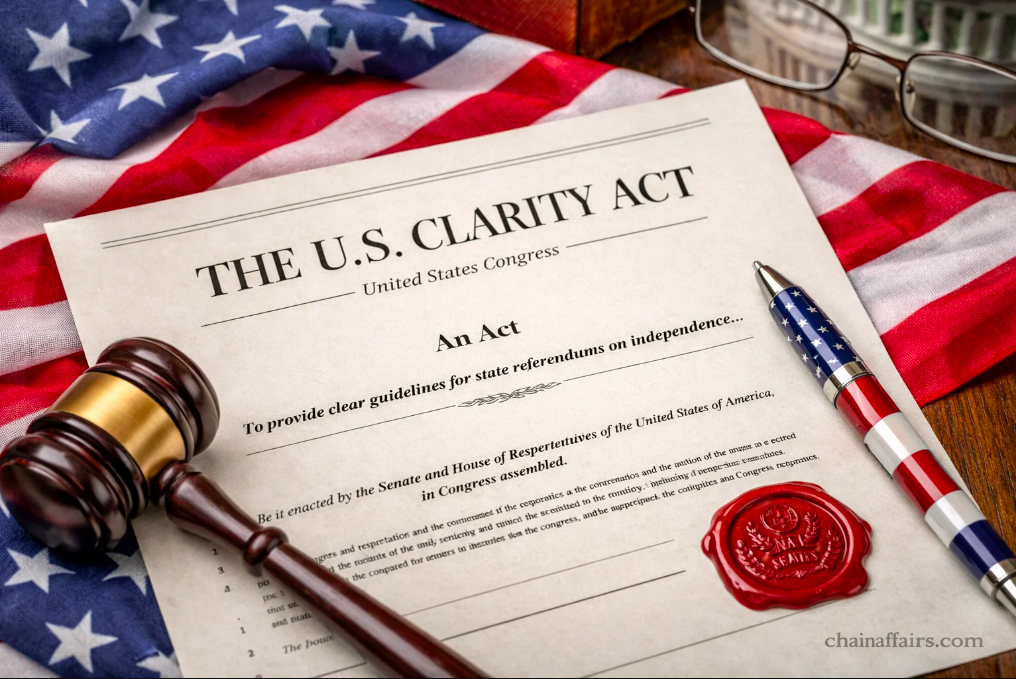
The outlook for the Clarity Act has weakened significantly as political uncertainty and legislative hurdles raise fresh doubts about whether the landmark crypto bill will become law this year.
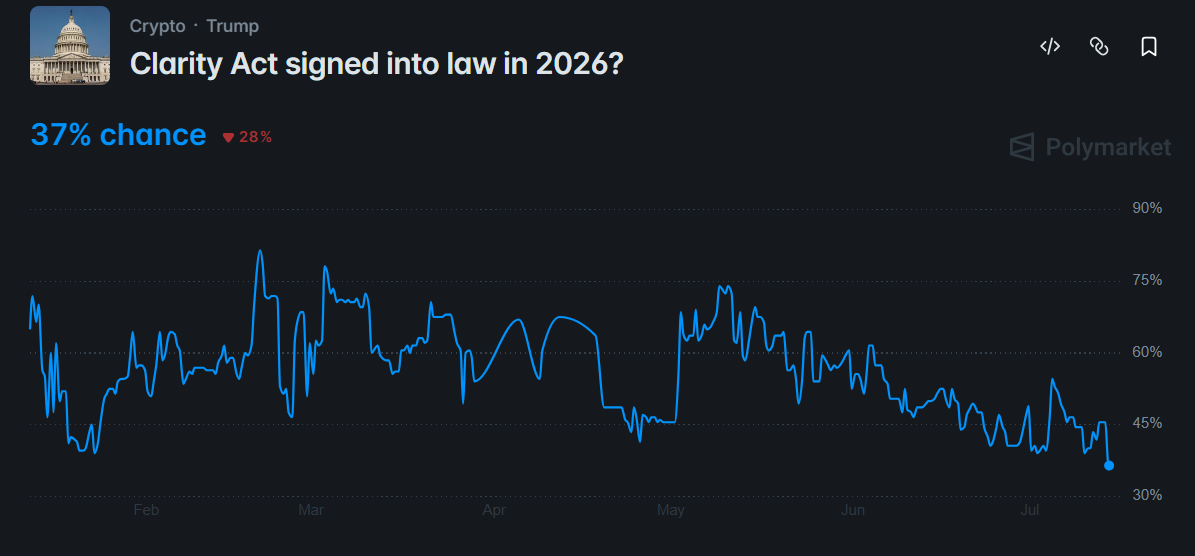
Prediction market data shows confidence in the Clarity Act’s passage has fallen sharply over the past day, reflecting growing concerns that time is running short before Congress begins its August recess. The decline comes as the White House temporarily loses its lead crypto negotiator and lawmakers continue to clash over ethics provisions tied to the legislation.
Clarity Act Faces Tough Road in Senate
Market participants have become increasingly skeptical that the Clarity Act will reach President Donald Trump’s desk before the end of the year. Prediction markets now place considerably lower odds on the bill being signed into law in 2026 than they did just days ago.
One major factor behind the shift is the temporary absence of Patrick Witt, the White House’s chief crypto adviser. Witt has begun a month-long military leave for Army National Guard JAG training, leaving deputy Harry Jung to oversee negotiations during a critical phase of the legislative process.
The timing is significant. Senate Republicans are working to move the crypto market structure bill forward before lawmakers leave Washington for the August recess. Any delay could push key votes further down the legislative calendar.
Ethics Rules Become Major Sticking Point
Another obstacle is the growing debate over ethics requirements.
Senator Elizabeth Warren has urged Senate leaders to strengthen the legislation by adding provisions that would prohibit the President, Vice President, members of Congress, senior administration officials, and their immediate families from financially benefiting from the cryptocurrency industry.
Warren argues that stronger safeguards are necessary to prevent conflicts of interest, particularly following financial disclosures related to President Trump’s crypto-related earnings. Supporters of the proposed changes believe ethics rules would improve public confidence, while opponents worry they could further delay an already complicated bill.
The ongoing negotiations have added another layer of uncertainty to legislation that was already facing a tight timeline.
Crypto Industry Watches Regulatory Progress
The Clarity Act is widely viewed as one of the most important pieces of crypto legislation under consideration in the United States. If enacted, it could provide long-awaited regulatory clarity for digital asset markets and establish clearer oversight responsibilities.
Alongside the Clarity Act, other crypto-related proposals, including the Blockchain Regulatory Certainty Act, continue to face legislative challenges.
Despite the growing uncertainty, President Trump has continued to encourage the Senate to approve the legislation, underscoring the administration’s support for advancing crypto policy.
Also Read: Bitcoin Faces Historic Capitulation as CLARITY Act Delay Shakes Crypto Markets
The Clarity Act remains alive, but its path has become more difficult. With leadership changes, political negotiations, and ethics debates all converging before a tight congressional deadline, lawmakers face increasing pressure to find common ground. For now, falling prediction market odds reflect growing investor caution as the crypto industry waits to see whether Congress can deliver meaningful regulatory reform before time runs out.
Disclaimer: The information in this article is for general purposes only and does not constitute financial advice. The author’s views are personal and may not reflect the views of Chain Affairs. Before making any investment decisions, you should always conduct your own research. Chain Affairs is not responsible for any financial losses.

I’m your translator between the financial Old World and the new frontier of crypto. After a career demystifying economics and markets, I enjoy elucidating crypto – from investment risks to earth-shaking potential. Let’s explore!