|
Getting your Trinity Audio player ready...
|
- Schwab is open to offering prediction markets but will strictly exclude sports, politics, and pop culture bets — focusing only on products aligned with long-term wealth building.
- Citadel Securities sees a clear use case in event contracts as portfolio hedging tools, particularly for macro events like elections, but says current market liquidity isn’t sufficient to enter yet.
- The sector’s credibility is growing fast — $23.6B in combined monthly volume in March — but regulatory pressure from state attorneys general and federal lawmakers remains a significant headwind.
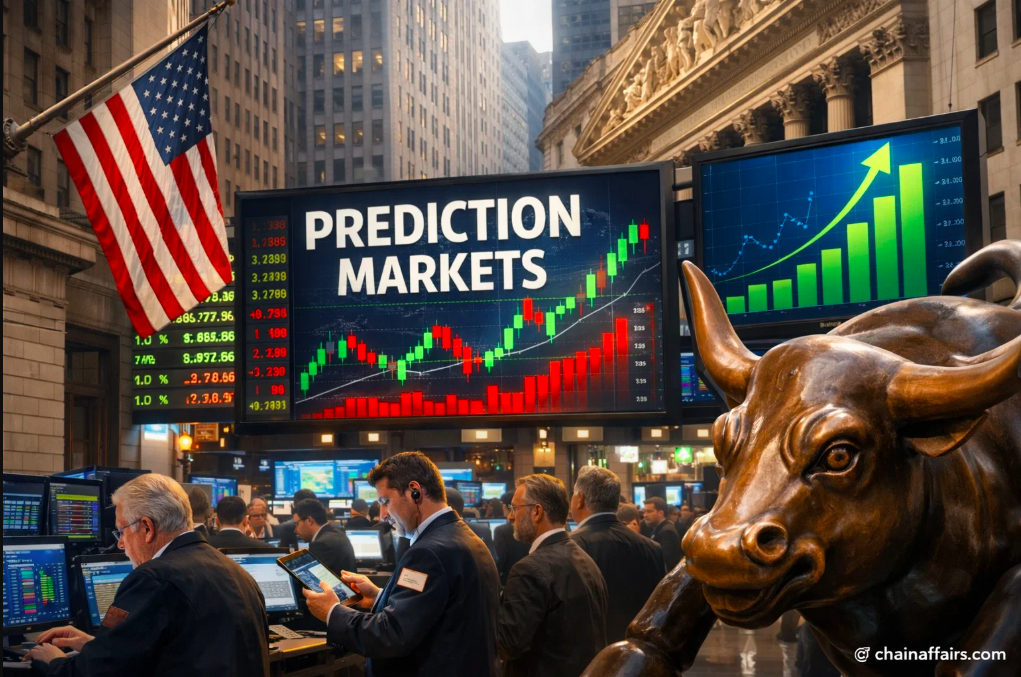
Two of America’s most powerful financial names — Charles Schwab and Citadel Securities — are signaling serious interest in entering the fast-growing prediction market space, raising questions about what mainstream adoption could mean for an industry still fighting for legitimacy.
Schwab CEO Hints at Eventual Entry, With Conditions
Charles Schwab’s chief executive Rick Wurster told investors on Thursday that the company would “likely” offer prediction markets at some point. But he was careful to draw a line. Schwab, he said, has no appetite for bets tied to sports, politics, or pop culture — territory the firm considers misaligned with its wealth-building mission.
“If you look at the stats on the success of gamblers, they’re not strong,” Wurster noted, signaling that the company wants any prediction market product to serve long-term investors rather than casual bettors. He acknowledged that when he recently surveyed Schwab clients, the topic did not rank as a high priority — but added that it would be “quite straightforward” for the company to offer once it decides to move forward.
Citadel Watching and Waiting
At a Semafor conference in Washington, D.C., Citadel Securities president Jim Esposito struck a similarly measured tone. The market-making giant is “absolutely keeping an eye” on the space, he said, but flagged that current liquidity levels don’t yet justify a move.
Esposito’s interest appears centered on event contracts — particularly those tied to elections and macro events that can shift the value of investor portfolios. For institutional clients seeking hedges against political or economic risk, he argued, there is a “clear use case and industrial logic” to offering targeted contracts.
Sports betting, however, is off the table. “I don’t see us entering that market,” he said plainly.
A Sector at a Crossroads
The timing of these comments is notable. Prediction platforms like Kalshi and Polymarket hit a combined monthly trading record of $23.6 billion in March, according to Token Terminal. That kind of volume is hard to ignore on Wall Street.
But the industry is navigating turbulence. Several U.S. states have sued prediction platforms, claiming they operate unlicensed sports betting services. Some federal lawmakers have also taken aim at the space, raising alarms over insider trading.
Also Read: South Korea Is About to Pay Government Bills with Blockchain. Here’s What That Means.
That dual reality — explosive growth paired with regulatory pressure — may actually make incumbents like Schwab and Citadel more attractive players. Both have compliance infrastructure, regulatory relationships, and client trust that startups typically lack.
What Comes Next
Neither firm is ready to launch. But the signals from two industry heavyweights suggest that prediction markets are edging closer to the financial mainstream — on Wall Street’s terms. If and when Schwab or Citadel enters the space, it could reshape how both retail and institutional investors hedge risk and engage with live events.
Disclaimer: The information in this article is for general purposes only and does not constitute financial advice. The author’s views are personal and may not reflect the views of Chain Affairs. Before making any investment decisions, you should always conduct your own research. Chain Affairs is not responsible for any financial losses.

I’m your translator between the financial Old World and the new frontier of crypto. After a career demystifying economics and markets, I enjoy elucidating crypto – from investment risks to earth-shaking potential. Let’s explore!