
|
Getting your Trinity Audio player ready...
|
- Focus on ‘Net’ Yield, Not ‘Gross’ APY: For portfolios under $1,000, a single $50 gas fee on Ethereum can wipe out an entire year of 5% yield. Shift your focus to Layer 2s or Solana where fees are sub-cent.
- Liquid Staking is the “Small Bag” Superpower: Using LSTs (Liquid Staking Tokens) allows you to stay liquid. Instead of locking funds for 21 days, you can exit instantly if you need to rebalance your portfolio.
- Treat Staking as an Airdrop Multiplier: For small accounts, the 5-10% interest is secondary. The real value is “staking for eligibility”—using your assets to qualify for ecosystem airdrops that can double your portfolio overnight.
For years, the high-yield world of cryptocurrency staking felt like an exclusive club for “whales.” On the Ethereum mainnet, a single transaction to stake or claim rewards could cost $50 to $150 in gas fees—effectively wiping out an entire year’s profit for someone with a $500 portfolio.
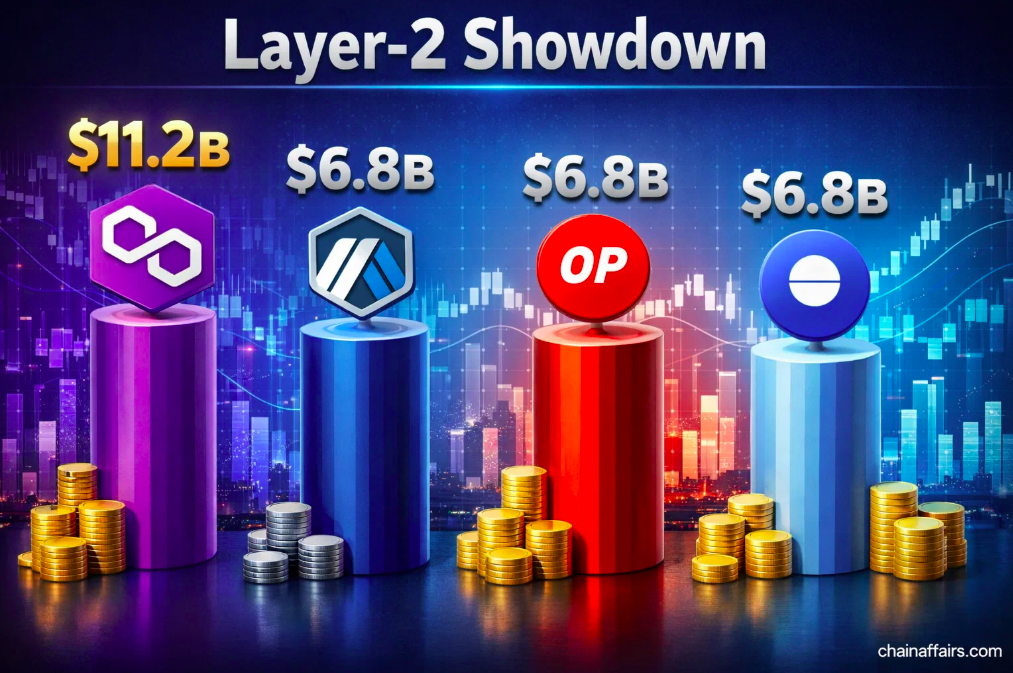
However, the landscape in 2025 has shifted. The rise of high-performance Layer 1s like Solana and the maturation of Layer 2 scaling solutions like Polygon have democratized access to passive income. For investors with under $1,000, the goal isn’t just finding the highest APY; it’s about capital efficiency—ensuring that network fees don’t cannibalize your principal.
The Mathematical Reality: Why $1,000 is the “Efficiency Threshold”
In traditional finance, a 5% return on $1,000 is a straightforward $50 gain. In crypto staking, that $50 gain must survive the “Fee Gauntlet”:
- Approval Fees: Granting a contract permission to use your tokens.
- Staking/Deposit Fees: The gas cost of moving tokens into a protocol.
- Compounding Fees: The cost of claiming and re-staking rewards to achieve APY (Annual Percentage Yield).
- Unstaking/Withdrawal Fees: The cost of exiting the position.
On expensive chains, these four steps can cost $100+. On low-fee chains, they cost less than $0.10. For a $1,000 portfolio, choosing the right chain is the difference between a 7% net gain and a 5% net loss.
Top Staking Destinations for Small Portfolios
| Network | Native Asset | Average Reward Rate | Transaction Cost | Verdict for <$1,000 |
|---|---|---|---|---|
| Solana | SOL | 6% – 8% | < $0.01 | Best Overall |
| Polygon | POL (MATIC) | 4% – 6% | < $0.02 | Best for DeFi Integration |
| Cosmos | ATOM | 10% – 14% | ~ $0.10 | Best for Airdrop Exposure |
| Ethereum | ETH | 3% – 4% | $15 – $100+ | Avoid Mainnet (Use L2s) |
1. Solana: The Efficiency King
Solana is currently the gold standard for small-scale staking. Because transaction fees are fractions of a penny, users can compound their rewards daily or even hourly without diminishing their returns.
The Liquid Staking Strategy
Instead of traditional “locked” staking, small portfolios should utilize Liquid Staking Tokens (LSTs).
- Jito (JitoSOL): By holding JitoSOL, you earn staking rewards plus MEV (Maximal Extractable Value) tips.
- Solayer (sSOL): A newer restaking protocol that allows you to secure the network while earning “points” for future airdrops.
- Marinade (mSOL): Offers a directed staking feature where you can choose specific validators to support while maintaining liquidity.
Solana’s architecture allows for “state compression,” meaning the cost of managing your stake remains flat regardless of how many users join the network. This prevents the “fee spikes” that price out retail users during bull markets.
2. Polygon (POL): The Professional’s Playground
With the transition from MATIC to POL, Polygon has reinforced its position as the primary “Value Layer.” For a $500 portfolio, staking POL directly on the Polygon PoS network via liquid staking providers like Lido or Stader is highly efficient.
The Strategy: Use a decentralized exchange (DEX) like QuickSwap to swap your POL for stPOL. Your balance grows in value relative to the native token, meaning you never have to manually “claim” rewards, saving you multiple transaction fees over the year.
3. The “Airdrop Multiplier” Strategy
For a $1,000 portfolio, 7% APY is only $70 a year. To see “life-changing” gains, retail investors must look toward Staking as a Gateway to Airdrops.
The Cosmos (ATOM/TIA) Blueprint
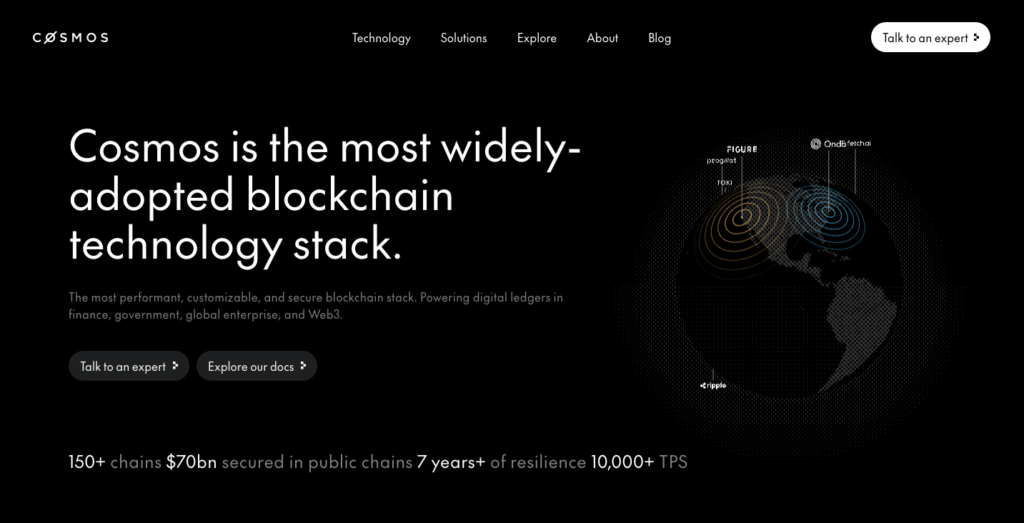
The Cosmos ecosystem is famous for “Stake-to-Airdrop” mechanics.
- Protocol: Stake 25 ATOM or 50 TIA (Celestia).
- The Logic: New projects launching on the Cosmos SDK often distribute their new tokens to existing stakers.
- Historical Data: In previous cycles, staking $500 worth of ATOM resulted in airdrops (like OSMO or TIA) worth over $2,000.
4. Deep Dive: The Mechanics of Restaking (EigenLayer & Beyond)
The 2024-2025 meta is defined by Restaking. This allows you to use your already-staked assets to secure additional services (Active Validated Services or AVSs) for extra yield.
- For Small Accounts: Directly interacting with EigenLayer on Ethereum is impossible due to gas. However, Kelp DAO or Ether.fi allow you to deposit small amounts of ETH on Layer 2s (like Arbitrum or Base).
- The Benefit: You earn ETH staking rewards + Restaking rewards + Protocol Points. This triple-yield structure is the only way for $1,000 to compete with institutional capital.
5. Technical Validator Selection: How to Avoid Slashing
If you choose a validator that goes offline or attempts to double-sign transactions, the network “slashes” (deletes) a portion of your money. For a small account, a 5% slash is devastating.
Rules for Validator Selection:
- Commission Rates: Avoid 0% commission validators (often unsustainable or a “bait and switch”) and 100% commission validators (scams). Look for 3% to 5%.
- Uptime History: Use explorers like SolanaBeach or Mintscan to verify the validator has a 99.9% uptime.
- Self-Stake: Ensure the validator has “skin in the game”—meaning they have staked a significant portion of their own funds.
6. The Psychological Trap: Chasing “DeFi Degeneracy”
Small portfolios often fall for “Degen” staking—protocols offering 1,000% APY. These are almost always inflationary death spirals.
Case Study: If a token pays 1,000% APY but its price drops 95% because of hyper-inflation, your $1,000 investment becomes $50 despite having “more tokens.” Journalistic integrity requires pointing out that Blue Chip Staking (SOL, ETH, POL) is the only sustainable path for a sub-$1,000 portfolio.
7. Operational Efficiency: The On-Chain Workflow
| Step | Action | Fee Awareness |
|---|---|---|
| 1. The Purchase | Buy on CEX (Coinbase/Binance) | Use “Advanced Trade” to keep fees <0.5%. |
| 2. The Transfer | Move to Phantom/Keplr/Rabby | Avoid transferring during peak US/EU hours. |
| 3. The Swap | Swap for an LST (e.g., SOL to JitoSOL) | Use aggregators (Jupiter) for zero slippage. |
| 4. The Monitoring | Use a dashboard (DeBank/Step Finance) | Minimize wallet interactions to save on gas. |
8. Tax Efficiency for the Small Portfolio
In many jurisdictions (like the US or UK), every time you “claim” a reward, it is a taxable event based on the token’s price at that moment.
- The Problem: 365 daily claims = 365 entries on your tax return.
- The Solution: Use Accumulating LSTs. Tokens like wstETH or sSOL do not pay out rewards to your wallet. Instead, the token simply increases in value. You only pay taxes when you sell, turning an “income tax” headache into a “capital gains” event.
9. Risk Mitigation: The “Triad of Safety”
A $1,000 portfolio should be protected with the same rigor as a $1M portfolio.
- Hardware Wallets: Even for $1,000, a $70 Ledger or Trezor is a wise one-time insurance cost.
- Revoke Permissions: If you use a new staking site, use a tool like Revoke.cash to disconnect your wallet immediately after.
- Diversification vs. Over-extension: Do not spread $1,000 across 10 chains. You will lose too much in transfer fees. Stick to 2-3 ecosystems maximum.
10. Future-Proofing: What Happens in a Bear Market?
Staking is “Long-Only.” You are betting the token price will stay flat or go up. If SOL drops 80%, your 7% yield won’t save you.
The Hedge: For small accounts, consider Stablecoin Staking during periods of high volatility. Platforms like Ethena or Aave on Layer 2s offer 10-20% on USDT/USDC. It lacks the “moonshot” potential of SOL, but it preserves your $1,000 for the next cycle.
Conclusion: The Path to $10,000
Staking a $1,000 portfolio is not about the immediate dollar yield; it is about building a foundation of on-chain literacy. By choosing low-fee networks like Solana and Polygon, and positioning yourself for ecosystem airdrops through restaking protocols, you are playing a “high-convexity” game.
You aren’t just earning 7%; you are earning 7% while holding a lottery ticket for the next major protocol launch. In the world of crypto, that is how a $1,000 portfolio scales into five figures through patience and technical discipline rather than luck.
Disclaimer: The information provided in this article is for educational purposes only and does not constitute financial advice. Staking involves technical and market risks. Always conduct your own research before deploying capital.

I’m the cryptocurrency guy who loves breaking down blockchain complexity into bite-sized nuggets anyone can digest. After spending 5+ years analyzing this space, I’ve got a knack for disentangling crypto conundrums and financial markets.