
|
Getting your Trinity Audio player ready...
|
• Solana surpassed 1 billion weekly non-vote transactions after its Alpenglow upgrade.
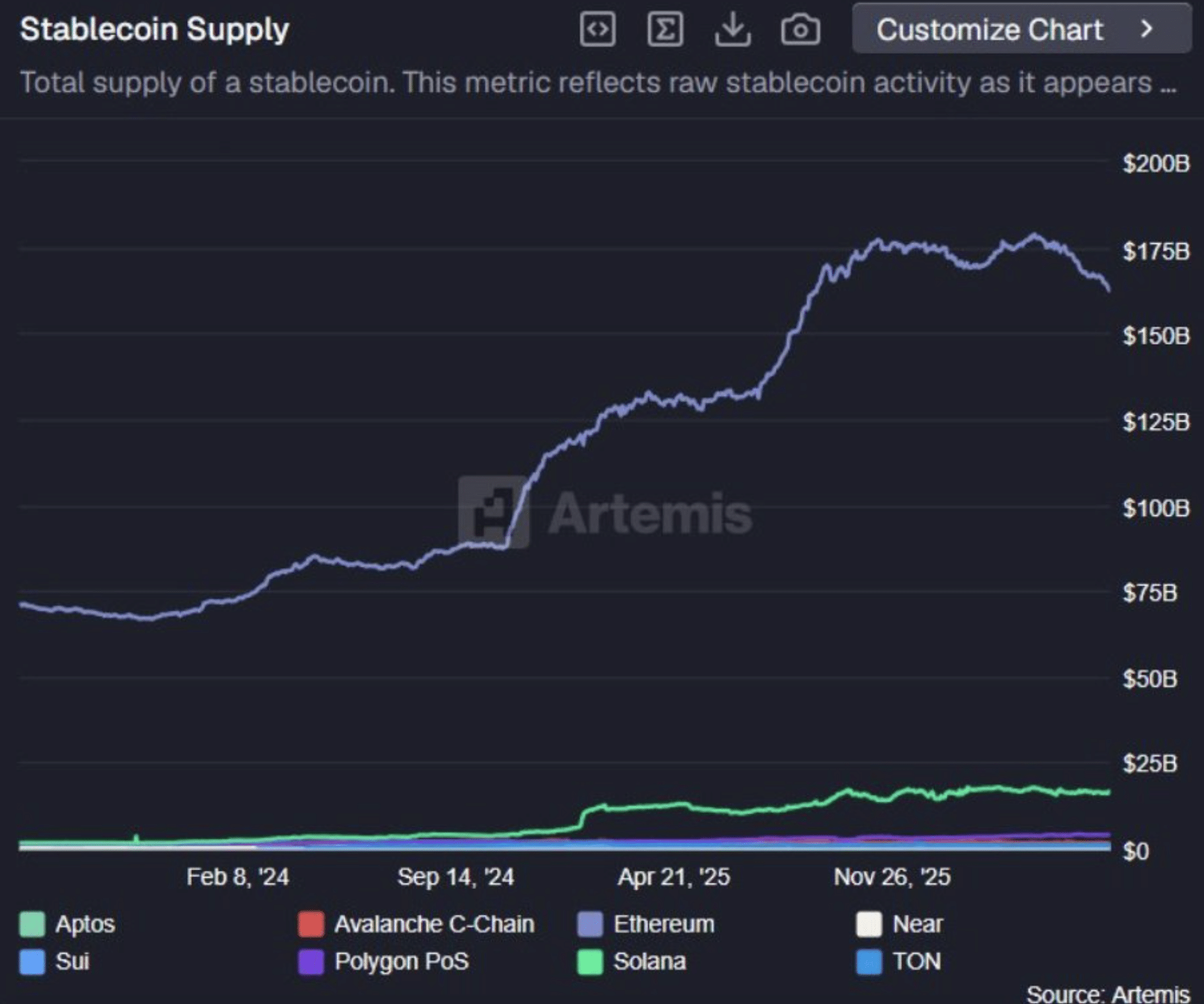
• Ethereum continues leading blockchain finance with over $150 billion in stablecoin liquidity.
• Both networks are strengthening fundamentals through different competitive advantages.
Solana and Ethereum are taking different paths toward blockchain leadership, but both networks are showing signs of growing real-world utility. While Solana has reached a record milestone in transaction processing, Ethereum continues to dominate the infrastructure behind stablecoins and tokenized assets.
The latest developments highlight an important shift across the crypto market. Instead of focusing only on price, investors are increasingly watching network activity, liquidity, and capital efficiency to assess long-term value.
Solana Sets New Transaction Record
Solana recently processed more than 1 billion non-vote transactions in a single week, marking the first time the network has crossed that milestone. The achievement comes shortly after the rollout of the Alpenglow upgrade, which reduced transaction finality to roughly 100–150 milliseconds, allowing transactions to settle almost instantly.
The network is currently averaging close to 1,500 transactions per second, significantly outperforming many competing Layer-1 blockchains in raw throughput. Faster execution and lower confirmation times reinforce Solana’s reputation as one of the industry’s highest-performance blockchain networks.
The increase in transaction volume suggests that technical improvements are already translating into stronger on-chain activity rather than remaining theoretical upgrades.
Market Efficiency Remains Solana’s Biggest Challenge
Despite its execution advantage, Solana still faces important hurdles before its market valuation fully reflects its technical capabilities.
Attention is now shifting toward improving the network’s market layer. Projects such as Jito aim to enhance liquidity, transaction execution, and capital efficiency instead of simply increasing processing speed.
Stablecoin activity is also expanding rapidly. Circle has minted more than $64 billion worth of USDC on Solana, demonstrating the blockchain’s growing importance for digital payments and settlement.
However, tokenomics remain a concern. Compared with Ethereum and Hyperliquid, Solana’s higher annual token issuance continues to create inflationary pressure that could weigh on SOL’s long-term valuation.
Ethereum Continues to Lead Digital Dollar Infrastructure
While Solana dominates transaction speed, Ethereum remains the leading platform for digital financial infrastructure.
According to recent market data, Ethereum now hosts more than $150 billion in on-chain stablecoin liquidity, reinforcing its role as the primary settlement layer for digital dollars and tokenized assets.
This growing stablecoin ecosystem reflects genuine economic activity rather than purely speculative trading, strengthening Ethereum’s long-term investment narrative.
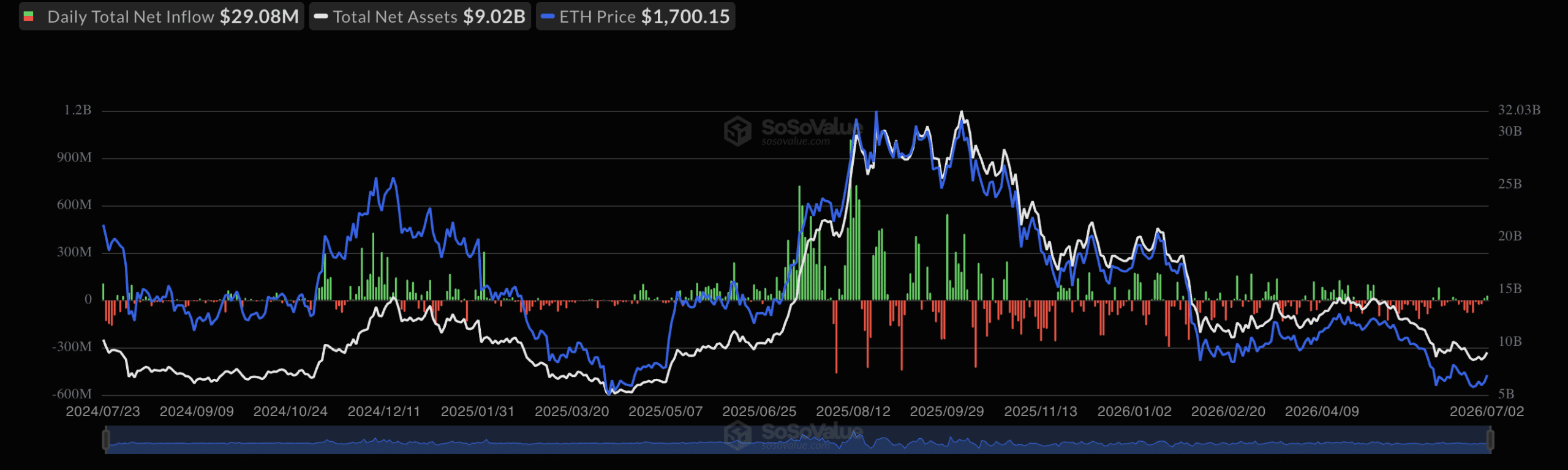
At the same time, Ethereum’s price has recovered over the past week despite ETF outflows earlier in the summer. Brief inflows at the beginning of July have renewed optimism, while traders continue watching the $1,750-$1,800 price range as a key resistance zone.
Some market analysts believe Ethereum’s growing stablecoin and real-world asset ecosystem could support substantially higher valuations over the coming years. Technical analysts have also pointed to a recent double-bottom pattern, often viewed as a bullish reversal signal if buying momentum continues.
Meanwhile, Ethereum’s long-term Lean Ethereum roadmap aims to modernize the network’s core architecture over the next several years, potentially improving scalability and efficiency.
The latest blockchain data suggests that both Solana and Ethereum are strengthening their positions through different competitive advantages.
Solana is proving it can deliver exceptional speed and transaction capacity, but improving capital efficiency and addressing inflationary tokenomics remain critical next steps. Ethereum, meanwhile, continues to benefit from deep stablecoin liquidity and expanding financial infrastructure, reinforcing its dominance in blockchain-based finance.
Also Read: Solana Price Prediction: 3 Signs SOL Could Surge Toward $80 Next
As institutional adoption and real-world blockchain usage continue to grow, network fundamentals may become a more important driver of long-term crypto valuations than short-term market speculation.
Disclaimer: The information in this article is for general purposes only and does not constitute financial advice. The author’s views are personal and may not reflect the views of Chain Affairs. Before making any investment decisions, you should always conduct your own research. Chain Affairs is not responsible for any financial losses.

I’m your translator between the financial Old World and the new frontier of crypto. After a career demystifying economics and markets, I enjoy elucidating crypto – from investment risks to earth-shaking potential. Let’s explore!