|
Getting your Trinity Audio player ready...
|
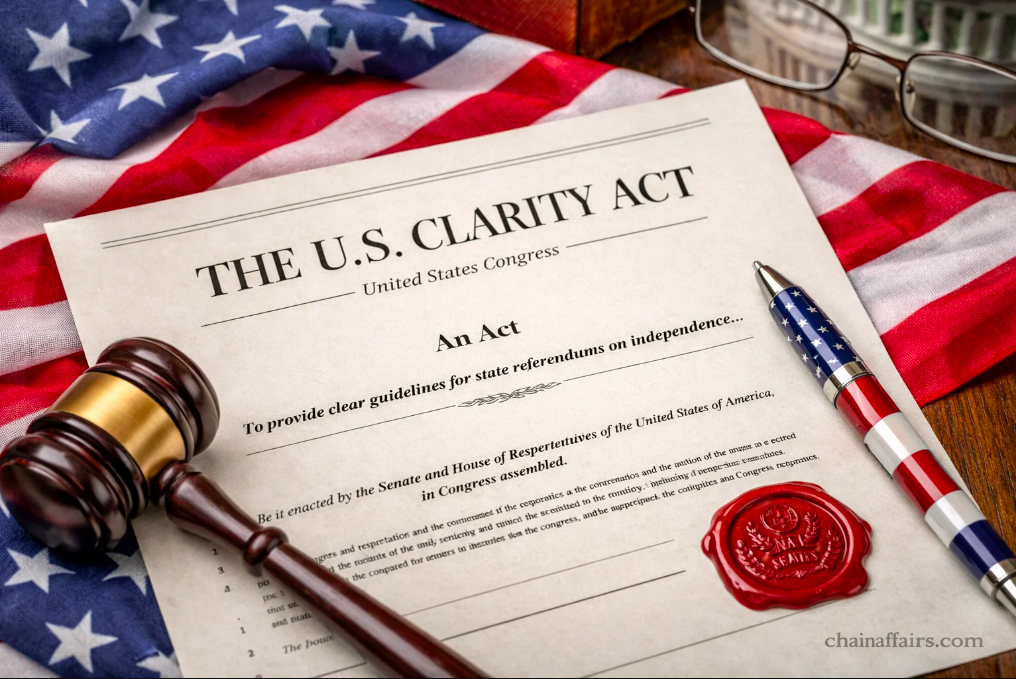
The United States may be days away from a pivotal moment in digital asset regulation. According to a senior Coinbase executive, the Senate Banking Committee could vote to advance the CLARITY crypto market structure bill as soon as next week — a development that would mark one of the most significant steps forward for crypto legislation in Washington’s history.
A Markup Could Come “Next Week,” Coinbase Official Says
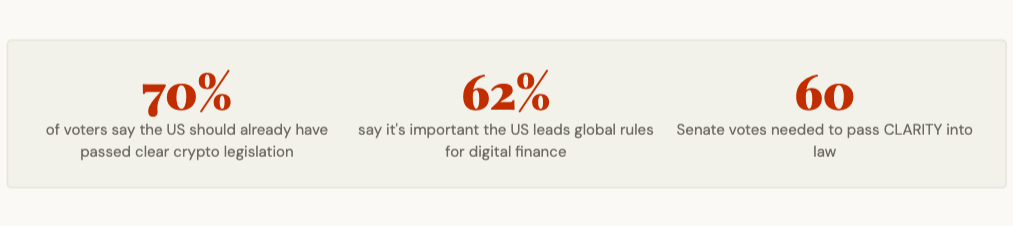
Kara Calvert, Coinbase’s vice president of US policy, told attendees at the Consensus 2026 conference in Miami that a committee markup — the formal process of debating and amending a bill before a full vote — is imminent. The bigger challenge, she acknowledged, is arithmetic. The CLARITY Act needs at least 60 Senate votes to clear procedural hurdles, which means Republican support alone won’t be enough.
“That means you need Democrats. We have all been working really hard to make sure that bipartisanship holds.”— Kara Calvert, VP US Policy, Coinbase
New polling adds weight to the push. A HarrisX survey released this week found that 70% of voters believe the US should already have enacted clear cryptocurrency laws, and 62% think America should be setting the global standards for digital finance — not following them. That kind of cross-party public pressure is exactly what Washington responds to.
The Unresolved Fault Lines Inside the Legislation
This isn’t CLARITY’s first attempt. The bill ground to a halt in January after Coinbase — ironically now one of its loudest champions — pulled its support. The objections were substantive: insufficient legal cover for open-source software developers, a ban on stablecoin yield products, and DeFi regulations that critics argued were unworkable. Those tensions haven’t entirely disappeared, and the next few days of Senate maneuvering will determine whether the fixes satisfy enough stakeholders to hold the coalition together.
Also Read: CLARITY Act Delay: 5 Key Reasons Crypto Regulation Is Stalling Now
Banking and crypto industry lobbies are still poring over the fine print. The outcome will hinge less on ideology and more on whether specific provisions survive the amendment process intact.
Tax Reform Is What Institutions Actually Want
For all the noise around market structure, Calvert identified a more pressing problem holding back institutional money: the tax code. Under current IRS rules, every single crypto transaction must be individually documented via a 1099-DA form — regardless of size. That means exchanges are filing millions of forms for transactions that amount to pocket change.
“We’re sending out millions of 1099-DAs for things like $1 transactions — that makes zero sense,” Calvert said.
The compliance burden, she argued, is more of a deterrent to institutional participation than any structural regulatory gap. Lawmakers are moving to address this: proposals like the Digital Asset PARITY Act, introduced in March by Representatives Max Miller and Steven Horsford, aim to create a framework that treats crypto tax reporting like other asset classes.
Calvert expects action on tax reform in the Senate and believes House legislation could materialize within one to two months.
What Happens Next
Washington rarely moves fast, but the convergence of polling data showing lopsided public support, a looming committee vote, and bipartisan pressure from both sides of the aisle suggests that this time may be different. Whether CLARITY emerges from markup intact — or gets picked apart in the process — will say a lot about whether Congress is serious about becoming the global anchor for digital asset regulation, or content to keep ceding that ground to Europe and Asia.
Disclaimer: The information in this article is for general purposes only and does not constitute financial advice. The author’s views are personal and may not reflect the views of Chain Affairs. Before making any investment decisions, you should always conduct your own research. Chain Affairs is not responsible for any financial losses.

I’m a crypto enthusiast with a background in finance. I’m fascinated by the potential of crypto to disrupt traditional financial systems. I’m always on the lookout for new and innovative projects in the space. I believe that crypto has the potential to create a more equitable and inclusive financial system.