|
Getting your Trinity Audio player ready...
|
- MoneyGram introduces MGUSD stablecoin built on Stellar for cross-border payments.
- USDT and USDC dominance poses major competition in a $320B market.
- Regulatory clarity could be key to MGUSD’s global adoption success.
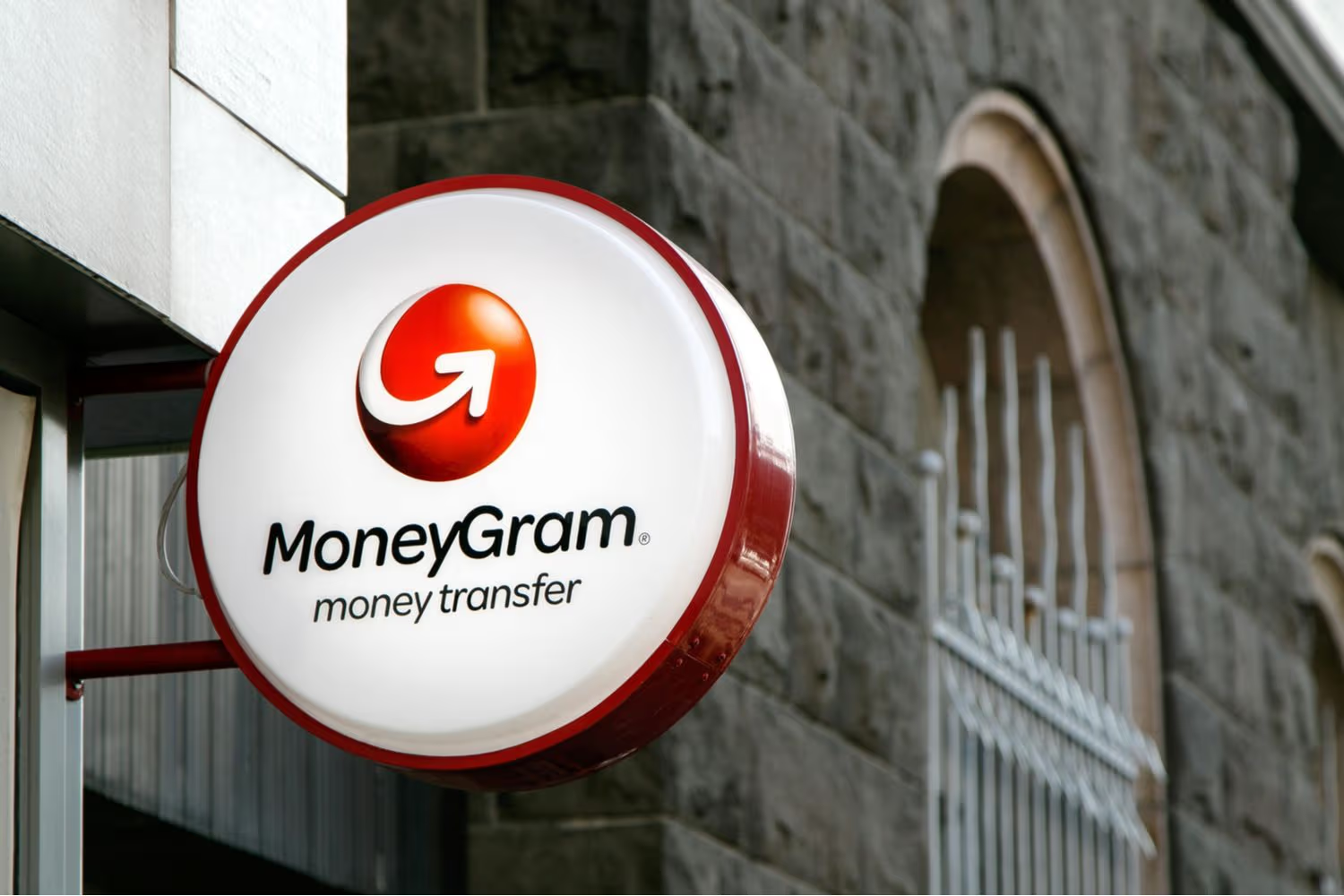
MoneyGram has entered the fast-evolving stablecoin race with the launch of MGUSD, a U.S. dollar-backed digital asset designed to streamline cross-border payments and expand financial access. Announced on 02 June, the move positions the global payments company directly against dominant stablecoins like USDT and USDC at a time when the sector has ballooned to a multi-hundred-billion-dollar market. While the ambition is clear, MGUSD steps into a highly competitive and regulation-sensitive environment where scale and trust are already firmly established.
MGUSD Launch Strategy and Infrastructure
MGUSD is built on the Stellar blockchain, chosen for its speed and low-cost transaction capabilities. The stablecoin’s minting and burning processes are managed through M0’s smart contract infrastructure, ensuring controlled issuance and redemption. Bridge, a Stripe subsidiary, serves as the regulated issuer under the GENIUS Act framework, adding a compliance layer aimed at institutional confidence.
MoneyGram will custody the stablecoin using Fireblocks wallets before distributing it through its app-integrated customer wallets. The rollout begins in the United States, with plans for global expansion. According to CEO Anthony Soohoo, the strategy focuses less on the asset itself and more on leveraging MoneyGram’s global distribution network to build new financial applications.

Competing in a USDT and USDC-Dominated Market
The stablecoin market has reached a valuation of roughly $320 billion, with USDT and USDC controlling the majority of liquidity and transaction volume. Their deep integration across exchanges, payment rails, and DeFi platforms creates a significant barrier for new entrants.
However, MoneyGram holds a potential advantage through its real-world footprint, including over 60 million users and hundreds of thousands of retail locations worldwide. If successfully integrated, MGUSD could bridge traditional cash-based remittance users with blockchain-based settlement systems.

Regulation and the CLARITY Act Factor
Regulatory momentum remains a critical variable. The pending CLARITY Act continues to shape expectations for how digital assets will be governed in the U.S., though approval odds recently dipped to around 55% on prediction markets. Still, Senator Cynthia Lummis has expressed optimism, suggesting the industry is closer than ever to a structured regulatory framework.
For MoneyGram, clearer regulation could be a catalyst, especially as its model prioritizes payments and remittances rather than yield generation or speculative use cases.
Also Read: Kraken IPO Is “80% Ready” — Will 2026 Be the Breakout Year?
MGUSD marks a strategic shift for MoneyGram as it attempts to merge traditional remittance infrastructure with blockchain-based settlement. While USDT and USDC remain dominant, MoneyGram’s distribution strength and compliance-first approach could carve out a niche in cross-border payments—if regulation and adoption align.
Disclaimer: The information in this article is for general purposes only and does not constitute financial advice. The author’s views are personal and may not reflect the views of Chain Affairs. Before making any investment decisions, you should always conduct your own research. Chain Affairs is not responsible for any financial losses.

I’m your translator between the financial Old World and the new frontier of crypto. After a career demystifying economics and markets, I enjoy elucidating crypto – from investment risks to earth-shaking potential. Let’s explore!