|
Getting your Trinity Audio player ready...
|
- MiCA now requires crypto providers in Europe to hold valid licenses to operate legally.
- The new EU framework may accelerate institutional adoption of digital assets.
- Regulated crypto companies could gain an advantage as the market consolidates.
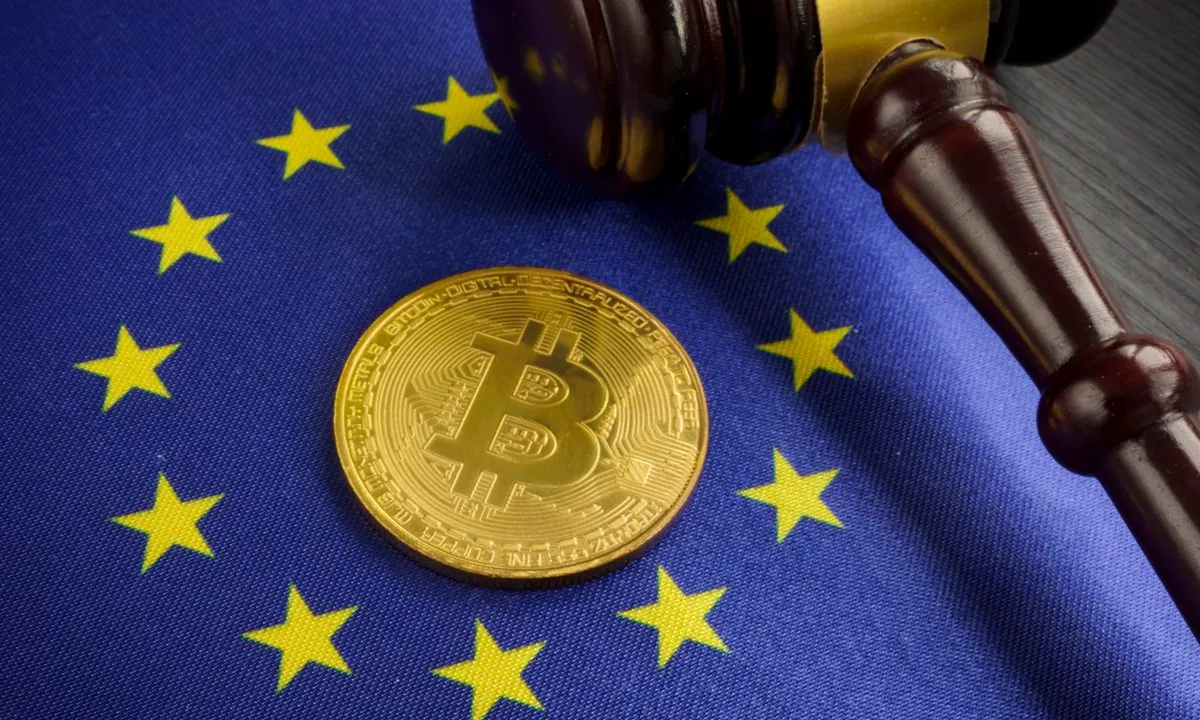
Europe’s cryptocurrency industry has reached a major turning point as the transition period for the Markets in Crypto-Assets Regulation (MiCA) officially ends. The new rules mark the beginning of a fully regulated environment where only licensed crypto-asset service providers can legally operate across the European Economic Area (EEA).
The move is expected to reshape the European digital asset sector, pushing out non-compliant firms while giving regulated companies a stronger foundation to expand. For investors, banks, and crypto businesses, MiCA introduces a clearer framework that could influence the next stage of institutional adoption.
MiCA Creates a Unified Crypto Framework Across Europe
Before MiCA, crypto companies operating in Europe faced different rules in each country. The new regulation replaces that fragmented system with a single EU-wide framework.
Under the passporting system, a company that receives a valid MiCA license in one member state can provide services across the entire European Union. This change reduces compliance complexity and creates a more predictable environment for businesses looking to scale.
The regulation introduces clearer requirements for areas such as crypto custody, governance standards, and financial safeguards. These rules are designed to give traditional financial institutions more confidence when entering the digital asset market.
For banks and asset managers that previously avoided crypto because of regulatory uncertainty, MiCA provides a clearer path to participation.
Crypto Industry Faces Consolidation After MiCA Deadline
The end of the transition period has already triggered changes among major crypto companies. Some international exchanges have reduced their European operations, while others have focused on securing regulatory approval.
Companies with existing licenses and compliance systems are now positioned to benefit from the new landscape. Regulated firms are expected to gain a competitive advantage as customers increasingly prioritize security and transparency.
Meanwhile, several major financial players are preparing for broader involvement in digital assets. Some institutions may choose partnerships with licensed crypto providers instead of building their own infrastructure, especially as compliance requirements become more demanding.
The rise of euro-based stablecoins under the MiCA framework also signals growing interest in regulated digital assets.
Institutional Crypto Adoption Could Accelerate
A key question now is whether MiCA will encourage more traditional financial institutions to enter the crypto market. Thousands of European banks have yet to launch digital asset services, largely because of the cost and operational challenges involved.
With clearer rules in place, regulated crypto platforms may become essential partners for banks seeking exposure to digital assets without taking on the full burden of development and compliance.
Industry leaders believe trust will become a major factor in Europe’s crypto competition. Companies that combine regulatory approval, security, and innovation may be better positioned as digital finance and traditional banking continue to merge.
Also Read: Utorg Obtains MiCA License as July 1 Deadline Forces Much of the Industry Out of Europe
The end of the MiCA transition period represents a defining moment for Europe’s crypto industry. While the regulation may remove some players from the market, it also creates a more structured environment for long-term growth.
The coming months will show whether MiCA becomes the foundation for wider institutional crypto adoption or simply another compliance hurdle. For now, Europe’s digital asset market has entered a new era where regulation and trust are becoming central to success.
Disclaimer: The information in this article is for general purposes only and does not constitute financial advice. The author’s views are personal and may not reflect the views of Chain Affairs. Before making any investment decisions, you should always conduct your own research. Chain Affairs is not responsible for any financial losses.

I’m your translator between the financial Old World and the new frontier of crypto. After a career demystifying economics and markets, I enjoy elucidating crypto – from investment risks to earth-shaking potential. Let’s explore!