|
Getting your Trinity Audio player ready...
|
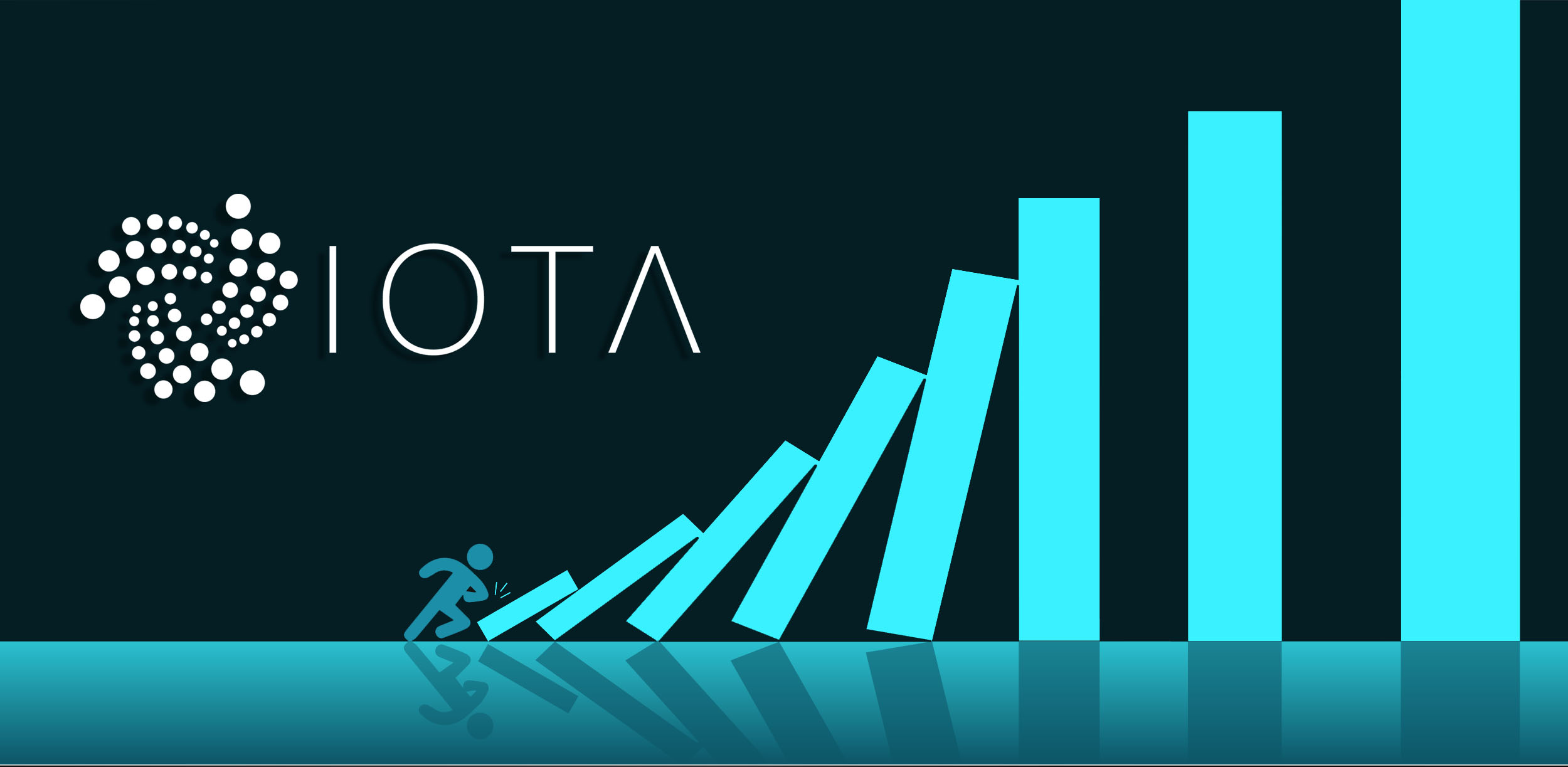
The IOTA Foundation’s latest quarterly report reads like a project positioning itself for institutions rather than traders. Published October 13 and covering July through September 2026, the update centers on how easily the network can be verified, operated and built on. It also offers early evidence that public bodies and trade networks are putting IOTA to work.
A health authority puts its identity on IOTA
The most concrete adoption data point came from Argentina. The national organ-transplant authority INCUCAI, working with identity provider Extrimian, moved its institutional identities and document signing onto IOTA Mainnet. The authority and all 24 of its provincial agencies now hold verifiable digital identities, and official documents are notarized on the network. The foundation stressed that no patient data goes onchain, which speaks to the privacy objection that often stalls public-sector blockchain projects.
The setup shows how IOTA wants to be seen: as a ledger that proves who signed what and when, not a place to store sensitive records. A new notarization page in the IOTA Explorer this quarter points the same way.
Trust-minimized infrastructure
Much of the engineering work aimed at reducing how much operators and users must take on faith. Nodes can now bootstrap from formal snapshots that include everything needed to verify them, so nobody has to rely on the publisher’s word. These snapshots replace the public RocksDB ones, which have been discontinued. They are produced on testnet and mainnet at the latest epoch and at the start of each month.
Nodes also retain epoch information back to genesis. That lets light clients verify the chain from its first block through any fullnode serving the gRPC API. For institutions with audit requirements, an independently checkable history is a practical selling point.
Speed improved too. Node sync is 2.6 times faster, and a syncing node now reports how far behind it is and when it should catch up.
Consensus upgrade and security work
Starfish-Speed, an upgrade to the Starfish consensus protocol, reached mainnet in September after running on devnet in July and testnet in August. When network conditions allow, validators commit a block one round earlier, which brings transaction finality forward.
Consensus, networking and API services also went through security reviews during the quarter, and the resulting fixes are live on mainnet. The core team’s next priority is P-COOL, a certificate-less transaction flow. Public-network stress testing is expected to start next quarter.
Developer and data tooling
Builders got a steadier foundation. The Rust SDK and its bindings for other languages reached their first beta, 1.0.0-beta.1, with documentation in every language, and local transaction simulation now matches what the node returns. Move gained view functions, a cheap and safe way for apps to read onchain data, supported by docs, worked examples and the IOTA Move VS Code extension. A smaller dependency cache, early warnings when a package nears the size limit and clearer error codes round out the changes.
The public Indexer now keeps 30 days of data by default. Key lookups and transactions touching a specific IOTA address still reach older records through an archival store in both JSON-RPC and GraphQL, but other filtered queries on transactions and events stay within that window. Operators can restore an Indexer from a formal snapshot instead of replaying every checkpoint from genesis, and the mainnet Indexer now sits behind a load balancer for interruption-free updates. Public endpoints on all three networks are rate limited to 100 requests per second per IP, which nudges heavier applications toward running their own node or Indexer.
Elsewhere, IOTA L1 connected to Pyth Pro, the next generation of Pyth’s price feeds, with lower latency and more feeds. Pyth Core was retired there on August 18. The Explorer now opens on network analytics, the Wallet gained a balance toggle, a dApp gallery and fiat values, and the EVM bridge supports Rabby.
Research and trade
Two research protocols were prepared this quarter. Bluestreak would cut block metadata to a constant size in uncertified DAG protocols like Starfish, which works out to a roughly 75% reduction in consensus metadata on mainnet. Vantage is a signature-free BFT design with multiple data proposers that aims to match the latency of signature-based approaches. Neither is deployed. Separate work on pre-consensus validation messages could cut redundant checking and price transactions across computation, memory and bandwidth. Early calibration runs on reference hardware looked promising.
On the TWIN side, the document extraction service, which turns trade documents into structured data, now aligns with UN/CEFACT trade data standards. Platform releases also cut latency for reading shared consignment and document data by about 70% between core releases. Trade finance and payments tooling on IOTA’s L1 remains in development, with more promised.
The foundation’s messaging matched that focus. Its social channels leaned on trade education, and its X posts drew 1.05 million impressions, with average reach per post up 64% to roughly 15,900. The team also appeared at FUTUREMODE 2026 in Taipei, spoke at ETHTaipei on how institutions choose between private and public chains, and presented its account abstraction model at an academic blockchain conference.
Also Read: IOTA Rebuilt Everything Since 2015, So Why Is the Token Still 95% Below Its High?
What to watch
P-COOL’s stress tests and any detail on the trade finance work are the next milestones. This quarter’s report suggests IOTA is judging itself on verifiability and real deployments. The next one will show how that holds up under load.
Disclaimer: The information in this article is for general purposes only and does not constitute financial advice. The author’s views are personal and may not reflect the views of Chain Affairs. Before making any investment decisions, you should always conduct your own research. Chain Affairs is not responsible for any financial losses.

With a keen eye on the latest trends and developments in the crypto space, I’m dedicated to providing readers with unbiased and insightful coverage of the market. My goal is to help people understand the nuances of cryptocurrencies and make sound investment decisions. I believe that crypto has the potential to revolutionize the way we think about money and finance, and I’m excited to be a part of this unfolding story.