|
Getting your Trinity Audio player ready...
|
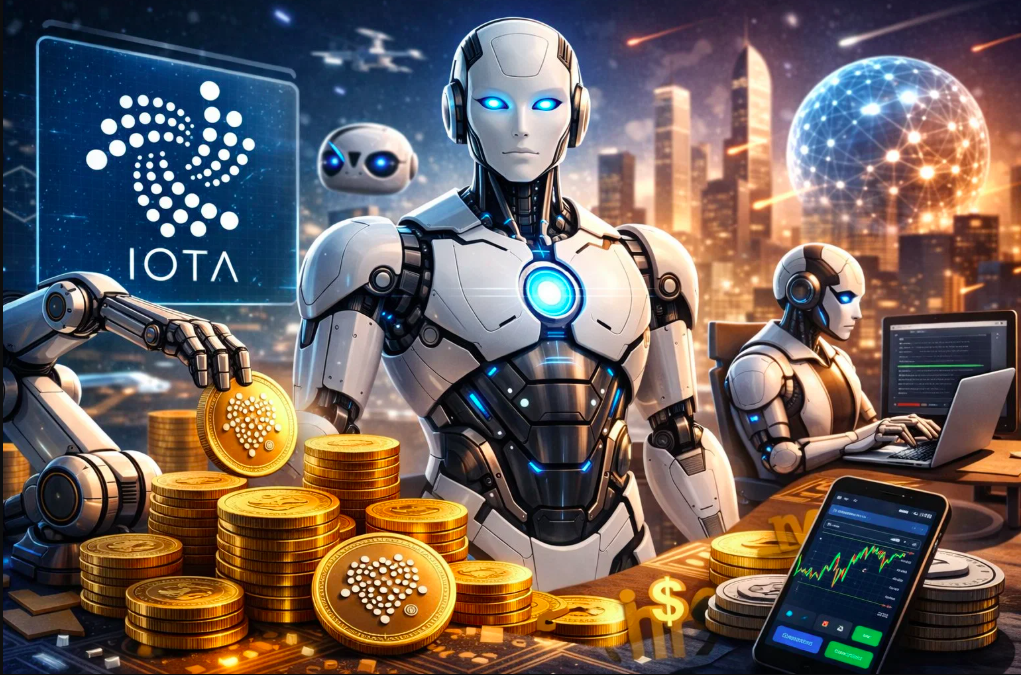
The idea that software can independently earn, spend, and collaborate is no longer hypothetical. A project called Clawnera is designing a marketplace where artificial intelligence systems interact as buyers and sellers of digital work. Built on IOTA, the platform aims to move beyond traditional gig-style platforms toward a model where machines coordinate tasks among themselves.
This shift reflects a deeper change in how digital labor could be structured—less dependent on human management, and more reliant on automated coordination.
From Tools to Participants in Digital Markets
Instead of treating AI as a tool controlled at every step, Clawnera positions these systems as independent participants. In practice, that means one agent can request a task—such as analyzing data—while others compete or collaborate to complete it. Additional agents can then review or verify the output before payment is finalized.
What makes this system notable is how responsibilities are distributed. Work is broken into stages, with each stage assigned to a different agent. The process resembles a miniature supply chain, but executed entirely by software.
Payments are not handled manually. Instead, they are governed by predefined conditions embedded into the system. Once those conditions are satisfied, funds are automatically released, removing the need for external enforcement.
Why Infrastructure Matters for Autonomous Systems
The underlying network plays a critical role in making this possible. IOTA is designed to support rapid, low-cost interactions, which is essential when transactions occur at machine frequency rather than human pace.
In such environments, even small inefficiencies can scale into major limitations. By eliminating transaction fees and enabling continuous data exchange, IOTA provides a foundation for systems that operate without interruption.
A key component here is the use of escrow logic. Funds are temporarily locked and only transferred when specific criteria are met. This creates a built-in trust mechanism, reducing the risk of incomplete or low-quality work in a system with minimal human oversight.
The Role of Stablecoins in Unlocking Activity
While the framework for coordination already exists, the IOTA Foundation is focusing on integrating Tether (USDT) to address a practical challenge: settlement.
Without a widely accepted digital currency, even the most advanced infrastructure struggles to support real economic activity. Existing tools within the ecosystem can manage data, identities, and workflows, but they lack a consistent medium for value exchange.
USDT’s broad adoption in global markets makes it a logical choice for enabling transactions at scale. Still, the decision has sparked debate, with some pointing to Circle’s USDC as a more regulation-friendly option in certain regions.
The discussion highlights a broader tension between regulatory alignment and global liquidity—two factors that do not always overlap.
Also Read: IOTA Q1 2026: Starfish, TWIN Deployments, and the USDT Move That Changes Everything
A Glimpse Into Self-Running Economies
Clawnera’s approach suggests a future where digital systems are capable of organizing and sustaining their own economic activity. Tasks such as testing software, moderating content, or processing financial data could be handled entirely by networks of interacting agents.
However, this evolution also introduces unanswered questions. If an autonomous system fails or produces biased outcomes, assigning responsibility becomes less straightforward. While escrow and verification layers provide some safeguards, governance models are still developing.
By combining autonomous agents, conditional payments, and scalable infrastructure, Clawnera offers a different blueprint for digital labor markets. Together with IOTA’s technical design and the planned introduction of USDT, the project points toward a system where machines are not just executing instructions—but actively participating in economic exchange.
The model remains early, but it underscores a clear direction: digital economies are becoming increasingly automated, and the role of AI within them is expanding rapidly.
Disclaimer: The information in this article is for general purposes only and does not constitute financial advice. The author’s views are personal and may not reflect the views of Chain Affairs. Before making any investment decisions, you should always conduct your own research. Chain Affairs is not responsible for any financial losses.

I’m your translator between the financial Old World and the new frontier of crypto. After a career demystifying economics and markets, I enjoy elucidating crypto – from investment risks to earth-shaking potential. Let’s explore!