
|
Getting your Trinity Audio player ready...
|
- India’s USDT premium has climbed above 8.5% due to reduced stablecoin supply and strong demand.
- Regulatory pressure is limiting USDT inflows and weakening market liquidity.
- Clearer regulations could restore stablecoin efficiency and reduce price gaps.
India’s stablecoin market is facing growing pressure as the price of Tether’s USDT rises significantly above the official dollar exchange rate. The premium on USDT in India has moved beyond 8.5%, highlighting a widening gap between demand and available supply as regulatory scrutiny limits fresh stablecoin inflows.
The price imbalance shows that traders and businesses are paying more to access dollar-backed digital assets. With compliance concerns affecting liquidity channels, India’s crypto market is experiencing a shift in how stablecoins move through exchanges, peer-to-peer platforms, and over-the-counter markets.
Regulatory actions reduce USDT liquidity in India
The rise in India’s USDT premium appears to be linked to a decline in stablecoin availability rather than a sudden drop in demand. Enforcement actions and increased oversight have slowed the movement of USDT into domestic markets, reducing inventory levels across major trading channels.
USDT was trading around ₹102.88 while the official USD/INR rate stood near ₹94.65, creating a spread far above the usual 3–4% range. The difference suggests that normal arbitrage mechanisms are becoming less effective as market participants face higher compliance risks.
Despite lower supply, demand for stablecoins remains strong. Traders, businesses, and cross-border users continue to rely on USDT for international settlements, dollar exposure, and digital asset transfers.
Demand remains strong despite market imbalance
Blockchain activity shows that interest in stablecoins has not disappeared. Active wallet numbers and transaction activity remain relatively stable, indicating that users still see value in dollar-backed assets.
However, the market is showing signs of stress. Reduced USDT availability has created competition among buyers, while limited liquidity has made it harder for market makers to maintain balanced pricing.
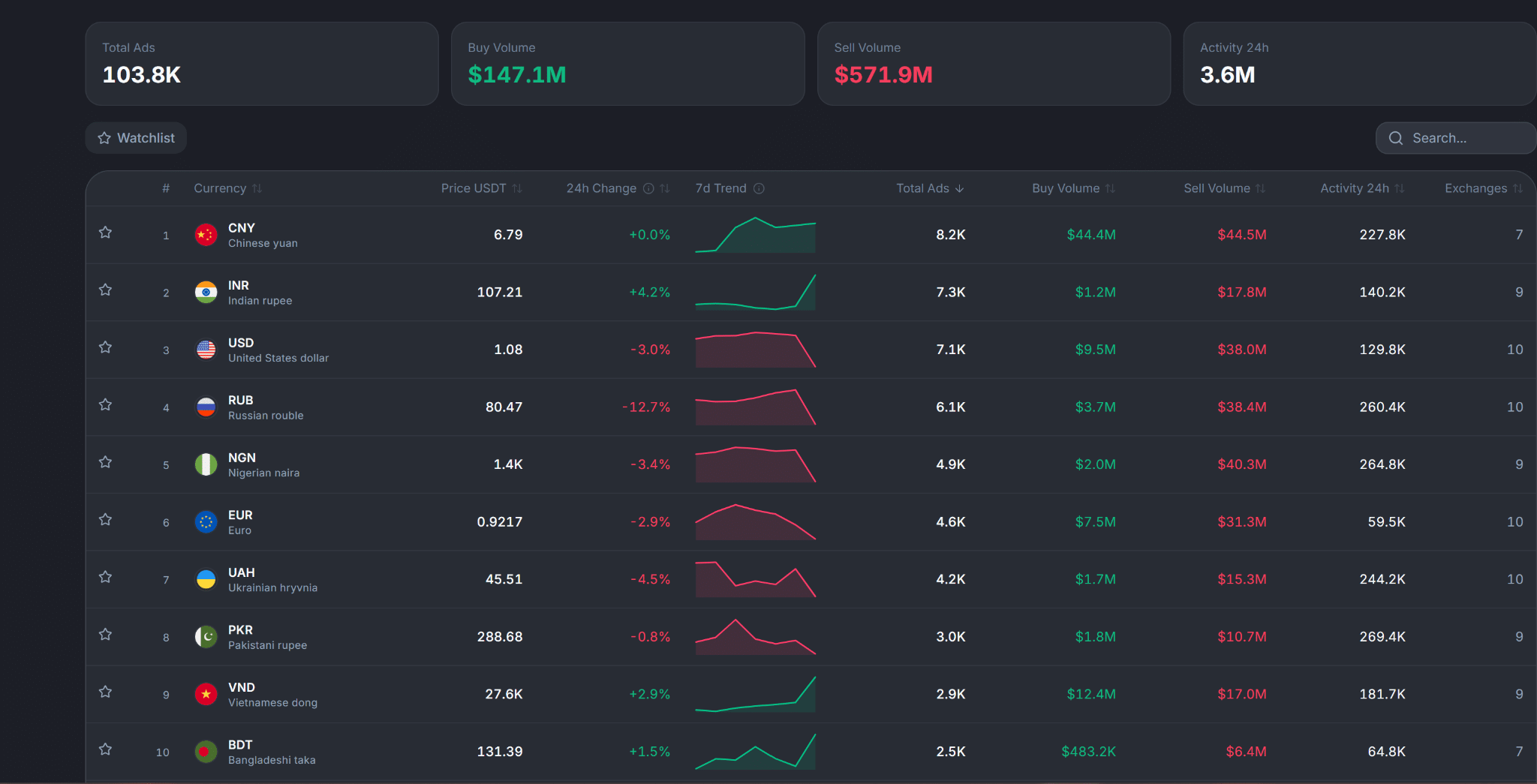
P2P data shows the INR/USDT rate reaching around ₹107.21, with daily transaction counts exceeding 140,000. However, trading volumes remain uneven, with buy activity estimated near $1.2 million compared with $17.8 million in sell volume. This gap reflects weaker liquidity support and fewer participants able to efficiently balance the market.
Can clearer regulations restore market efficiency?
The current USDT premium highlights the impact of regulatory uncertainty on India’s stablecoin ecosystem. Scrutiny around large virtual digital asset transfers has further discouraged new inflows, adding pressure to an already limited supply environment.
If restricted access continues, traders may increasingly look toward alternative channels or offshore liquidity sources. This could create additional challenges for transparency and market efficiency.
A clearer regulatory framework could help improve access to compliant stablecoin flows, increase liquidity, and reduce the premium over time. Better-defined rules may also restore arbitrage opportunities, allowing prices to move closer to global market levels.
Also Read: India Targets Crypto OTC Deals Over $10K: What FIU Wants Now
India’s rising USDT premium reflects a broader challenge facing the country’s digital asset market: strong demand meeting constrained supply. While regulatory oversight aims to strengthen compliance, limited liquidity is creating higher costs for users. The future of India’s stablecoin market may depend on finding a balance between regulation, transparency, and accessible dollar liquidity.
Disclaimer: The information in this article is for general purposes only and does not constitute financial advice. The author’s views are personal and may not reflect the views of Chain Affairs. Before making any investment decisions, you should always conduct your own research. Chain Affairs is not responsible for any financial losses.

I’m your translator between the financial Old World and the new frontier of crypto. After a career demystifying economics and markets, I enjoy elucidating crypto – from investment risks to earth-shaking potential. Let’s explore!