
|
Getting your Trinity Audio player ready...
|
- CME and ICE reportedly want U.S. regulators to examine Hyperliquid over manipulation concerns.
- HYPE token pulled back after rallying on Coinbase and Circle partnership news.
- Bitwise and 21Shares have launched spot HYPE ETFs amid growing institutional demand.
Traditional finance firms are turning up the pressure on decentralized trading platforms, with CME Group and Intercontinental Exchange (ICE), the parent company of the New York Stock Exchange, reportedly urging U.S. regulators to scrutinize crypto derivatives exchange Hyperliquid.
The push comes as Hyperliquid rapidly expands its footprint in perpetual futures trading and begins offering markets tied to traditional financial assets. At the same time, institutional interest in the platform is growing, highlighted by the launch of new spot HYPE exchange-traded funds in the United States.
TradFi Firms Raise Concerns Over Hyperliquid
According to reports, CME and ICE have raised concerns with the Commodity Futures Trading Commission (CFTC) and lawmakers in Washington over the risks tied to Hyperliquid’s decentralized structure.
The firms reportedly warned that the platform could become vulnerable to market manipulation, insider activity, and even sanctions evasion. Officials are said to be particularly focused on the possibility that trading activity on Hyperliquid could influence pricing in global commodities markets, including oil.
Hyperliquid has gained traction because of its always-open derivatives model, which allows traders to access crypto perpetuals around the clock without relying on centralized intermediaries.
The platform’s expansion into HIP-3 markets has added to concerns from traditional exchanges. These markets allow users to trade assets linked to stocks and commodities — areas historically dominated by exchanges like CME and NYSE.
Crypto Community Questions Motives
The regulatory push has sparked debate across the crypto industry. Some market participants believe the concerns are less about consumer protection and more about growing competition from decentralized platforms.
On-chain investigator ZachXBT publicly questioned why ICE appeared focused on Hyperliquid while showing less concern about prediction market platform Polymarket.
The discussion intensified after Hyperliquid rolled out its HIP-4 mainnet upgrade, enabling the creation of outcome-based markets that could directly compete with prediction platforms.
HYPE Price Pulls Back After Rally
The HYPE token initially rallied after Coinbase and Circle announced a partnership tied to Hyperliquid’s USDC infrastructure.
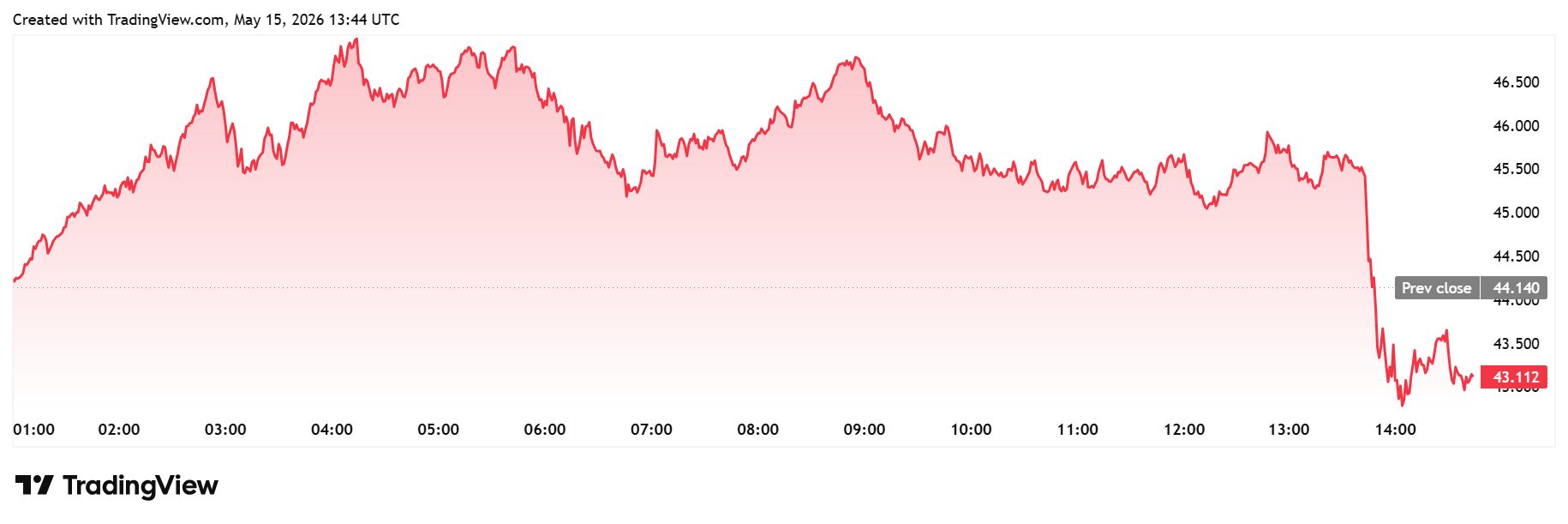
However, sentiment shifted following reports of the regulatory pressure. HYPE fell from an intraday peak near $45 and later traded around $43, marking a modest daily decline.
Despite the pullback, institutional demand for HYPE-related investment products continues to grow.
Asset manager Bitwise has officially launched its spot Hyperliquid ETF on the NYSE under the ticker BHYP. The fund became the second U.S.-listed spot HYPE ETF after 21Shares introduced its own product earlier in the week.
Bitwise also plans to stake the ETF’s holdings through its internal staking division, a move increasingly being explored across crypto ETF products.
Also Read: Hyperliquid ETF Hits Wall Street: Can THYP Become the Next Big Crypto Fund?
Meanwhile, Grayscale is also seeking approval for a HYPE ETF and has reportedly updated its filing to include staking features.
Early trading activity for the 21Shares product has been relatively strong, signaling continued investor appetite for exposure to Hyperliquid despite rising regulatory attention.
Disclaimer: The information in this article is for general purposes only and does not constitute financial advice. The author’s views are personal and may not reflect the views of Chain Affairs. Before making any investment decisions, you should always conduct your own research. Chain Affairs is not responsible for any financial losses.

I’m your translator between the financial Old World and the new frontier of crypto. After a career demystifying economics and markets, I enjoy elucidating crypto – from investment risks to earth-shaking potential. Let’s explore!