|
Getting your Trinity Audio player ready...
|
- The Fed is expected to keep interest rates unchanged due to persistent inflation concerns.
- Kevin Warsh has pledged to maintain central bank independence despite political pressure.
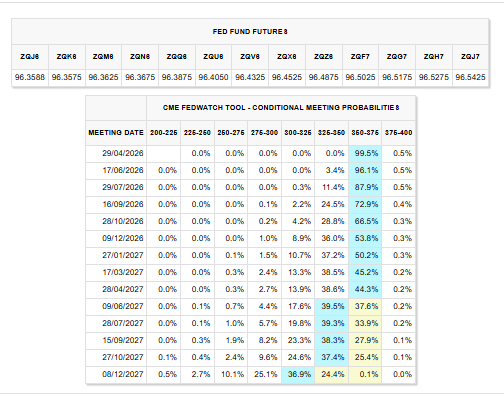
- Market data shows investors are not expecting rate cuts in the near term.
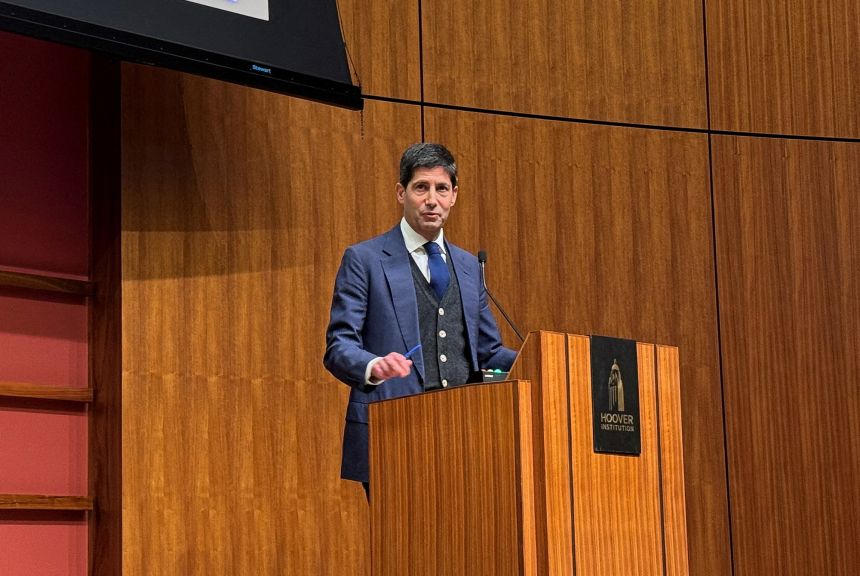
The future direction of U.S. monetary policy is back in focus as Kevin Warsh prepares for his confirmation hearing. His expected commitment to protecting the Federal Reserve’s independence comes at a time of growing political pressure from Donald Trump, who has repeatedly pushed for lower interest rates. However, with inflation still a concern, markets are increasingly skeptical that rate cuts are coming anytime soon.
Warsh Pledges to Safeguard Fed Autonomy
In prepared remarks ahead of his Senate appearance, Warsh is expected to emphasize that monetary policy decisions must remain free from political influence. His stance aligns with longstanding principles of central bank independence, even as political scrutiny intensifies.
Warsh, a former Fed governor, acknowledged that independence is not automatic—it must be reinforced through disciplined decision-making. His comments suggest a pragmatic approach: maintaining credibility by focusing squarely on inflation and economic stability.
The issue has gained urgency following tensions between the White House and the Fed. President Trump has openly called for rate cuts, while current Fed Chair Jerome Powell has resisted such pressure, citing inflation risks.
Political Pressure Meets Economic Reality
The friction between fiscal leadership and the central bank has been unusually visible. At one point, the Department of Justice even launched a probe involving Powell, a move widely interpreted as linked to disagreements over rate policy.
Despite this backdrop, Warsh appears to downplay the impact of political commentary on Fed operations. He has suggested that as long as the Fed achieves its inflation targets, its independence will remain intact.
Still, questions linger. Warsh previously built a reputation as an inflation-focused policymaker, but recent signals indicate a more flexible stance—fueling speculation about how he might lead if confirmed.
Markets Expect Rates to Stay Higher for Longer
While political calls for rate cuts persist, market expectations tell a different story. Data from CME Group’s FedWatch tool indicates that investors largely expect the Fed to hold rates steady through the year.
Several factors are shaping this outlook. Ongoing geopolitical tensions, including the U.S.-Iran conflict, have added uncertainty to the economic landscape. Meanwhile, many Federal Open Market Committee members continue to favor a cautious, wait-and-see approach.
If confirmed, Warsh may still face structural limits in shifting policy quickly. Powell is expected to remain on the Fed’s board during the ongoing DOJ inquiry, potentially limiting any rapid pivot toward lower rates.
Also Read: Solana, Uniswap, and Consensys Donated to Donald Trump Before SEC Dropped Investigations
As Warsh steps into the spotlight, he faces a delicate balancing act: preserving institutional independence while navigating political expectations and economic uncertainty.
For now, the message from both policymakers and markets is clear—rate cuts are not imminent. Whether Warsh ultimately reshapes that outlook will depend less on political pressure and more on how inflation and broader economic conditions evolve in the months ahead.
Disclaimer: The information in this article is for general purposes only and does not constitute financial advice. The author’s views are personal and may not reflect the views of Chain Affairs. Before making any investment decisions, you should always conduct your own research. Chain Affairs is not responsible for any financial losses.

I’m your translator between the financial Old World and the new frontier of crypto. After a career demystifying economics and markets, I enjoy elucidating crypto – from investment risks to earth-shaking potential. Let’s explore!