|
Getting your Trinity Audio player ready...
|
- Standard Chartered sees $1T outflow from EM bank deposits into stablecoins by 2028.
- Stablecoin savings offer USD exposure with fewer barriers than local banks.
- EM banks and regulators may adapt through CBDCs and stablecoin integration.
Stay ahead with real-time updates and insights—Join our Telegram channel!
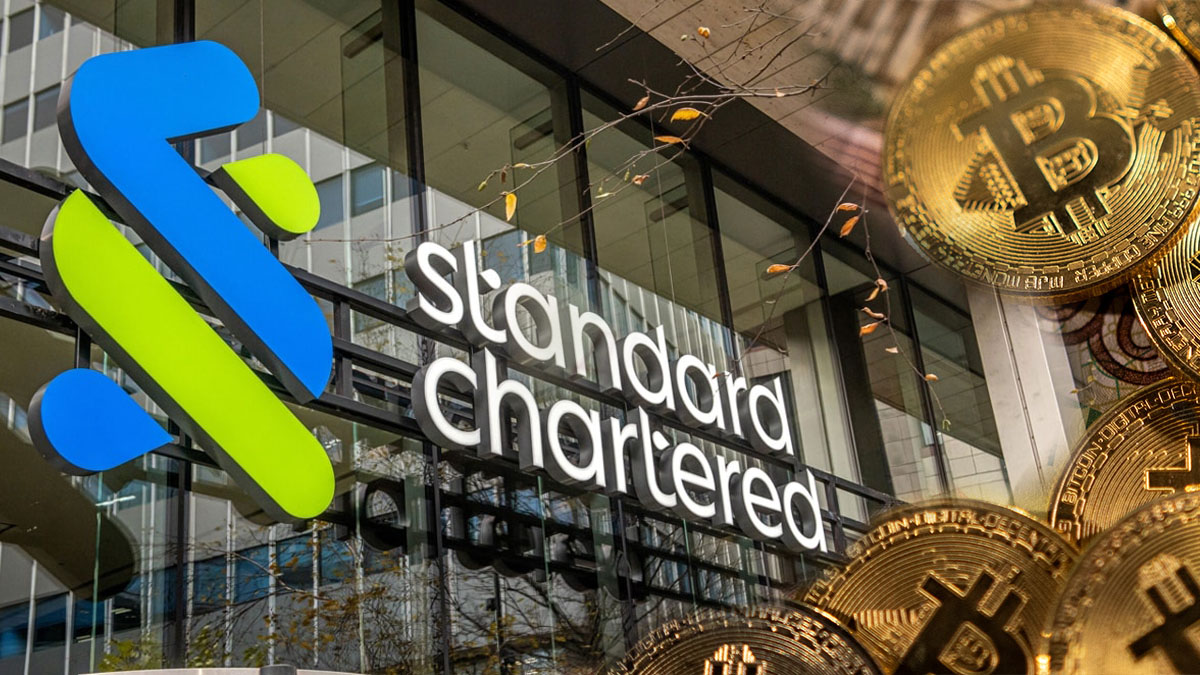
Standard Chartered Bank projects that up to $1 trillion could exit emerging market (EM) bank deposits over the next three years as stablecoins offer easier, faster, and more secure access to the U.S. dollar. The forecast highlights a deep shift in how individuals and businesses across EMs are storing value — away from traditional banks and toward digital dollar alternatives.
Stablecoins, such as Tether (USDT) and Circle’s USDC, maintain a 1:1 peg to the U.S. dollar, giving users stability and liquidity without the limitations of local financial systems. For many in emerging markets, they’ve become “USD-based bank accounts,” according to Geoffrey Kendrick and Madhur Jha of Standard Chartered.
$1 Trillion in Potential Bank Deposit Outflows
The bank estimates that stablecoin savings could rise from $173 billion today to $1.22 trillion by 2028, implying over $1 trillion in potential outflows from EM banks. This trend could reshape local banking systems, particularly in countries like Egypt, Pakistan, Colombia, Bangladesh, and Sri Lanka, which are among the most exposed.
Even under the recently passed U.S. GENIUS Act, which restricts compliant issuers from paying yields, the analysts argue that stablecoins will remain attractive. “Return of capital matters more than return on capital,” they noted, emphasizing that reliability and liquidity outweigh interest returns for many savers.
How EM Banks Could Adapt
While outflows pose risks to FX revenues and payments infrastructure, Standard Chartered believes there’s also opportunity. Banks could integrate stablecoins into treasury operations, custody services, and cross-border settlements, turning disruption into partnership.
Also Read: Standard Chartered Unveils Spot BTC and ETH Trading for Institutional Clients
Authorities are also taking notice. Many EMs are advancing CBDC pilots and “fast payment” systems to strengthen digital finance resilience. Meanwhile, major players like Tether, Stripe, and Coinbase are expanding stablecoin tools, signaling broader adoption ahead.
A Base Case, Not a Tail Risk
The report concludes that stablecoin adoption in EMs is no longer a niche scenario — it’s becoming the base case. As inflation, remittance needs, and tech-driven accessibility reshape global finance, tokenized dollars may soon rival traditional savings accounts as the preferred store of value for millions.
Stay ahead with real-time updates and insights—Join our Telegram channel!
Disclaimer: The information in this article is for general purposes only and does not constitute financial advice. The author’s views are personal and may not reflect the views of Chain Affairs. Before making any investment decisions, you should always conduct your own research. Chain Affairs is not responsible for any financial losses.

I’m a crypto enthusiast with a background in finance. I’m fascinated by the potential of crypto to disrupt traditional financial systems. I’m always on the lookout for new and innovative projects in the space. I believe that crypto has the potential to create a more equitable and inclusive financial system.