
|
Getting your Trinity Audio player ready...
|
- Standard Chartered has become the first bank distributor of Hong Kong dollar-backed HKDAP.
- HKDAP could support tokenized money market funds and 24/7 corporate settlement.
- Stablecoins recorded about $6.5 trillion in transaction volume over the past 30 days.
Standard Chartered is taking a deeper step into digital assets by preparing to use a regulated Hong Kong dollar stablecoin in financing and settlement activities. The move marks a shift from traditional banking support for stablecoins toward practical institutional use of tokenized money.
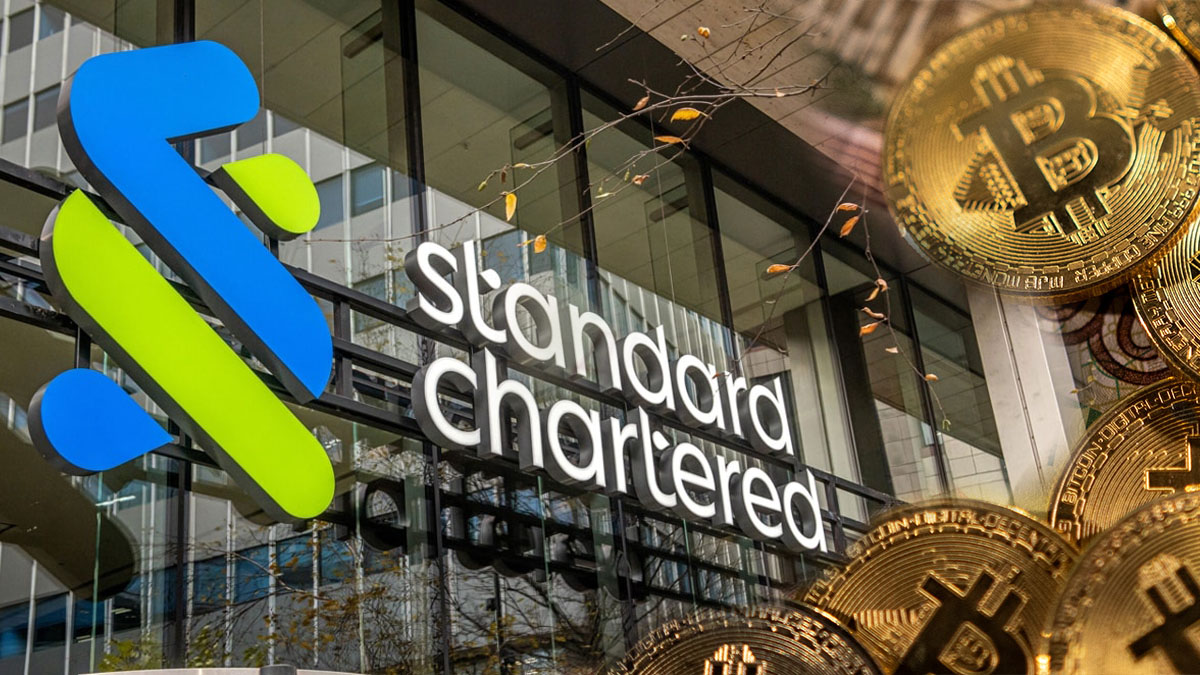
According to an August 24 press release, Standard Chartered has become the first bank distributor of HKDAP (HKD At Par), a Hong Kong dollar-backed stablecoin issued by Anchorpoint Financial. The arrangement gives eligible institutional clients access to a regulated digital representation of the Hong Kong dollar.
Standard Chartered Expands Stablecoin Strategy
The development could give asset managers, multinational companies and large corporations another way to transfer and settle Hong Kong dollar-denominated value.
Rather than relying exclusively on conventional settlement infrastructure, eligible clients could use HKDAP for transactions where stablecoin-based settlement is supported. Standard Chartered said the initiative is designed to provide secure access to the Hong Kong dollar-backed digital asset.
The bank’s role is notable because it connects a regulated stablecoin with an established international banking network, potentially making institutional adoption easier.
Tokenized Funds and Corporate Transfers Lead Use Cases
One of the first potential applications is tokenized money market funds. Investors could subscribe to fund units and complete settlement on-chain using digital Hong Kong dollars.
Intragroup transfers represent another possible use. Multinational companies could move tokenized Hong Kong dollar value between subsidiaries around the clock, potentially reducing dependence on banking cut-off times and simplifying reconciliation.
However, the technology will not automatically remove foreign exchange requirements, regulatory obligations or banking intermediaries. Its benefits will depend on the jurisdictions, institutions and transaction systems involved.
Anchorpoint said Standard Chartered’s international reach and digital-asset expertise could help expand commercial and cross-border applications for HKDAP.
Stablecoin Activity Continues to Grow
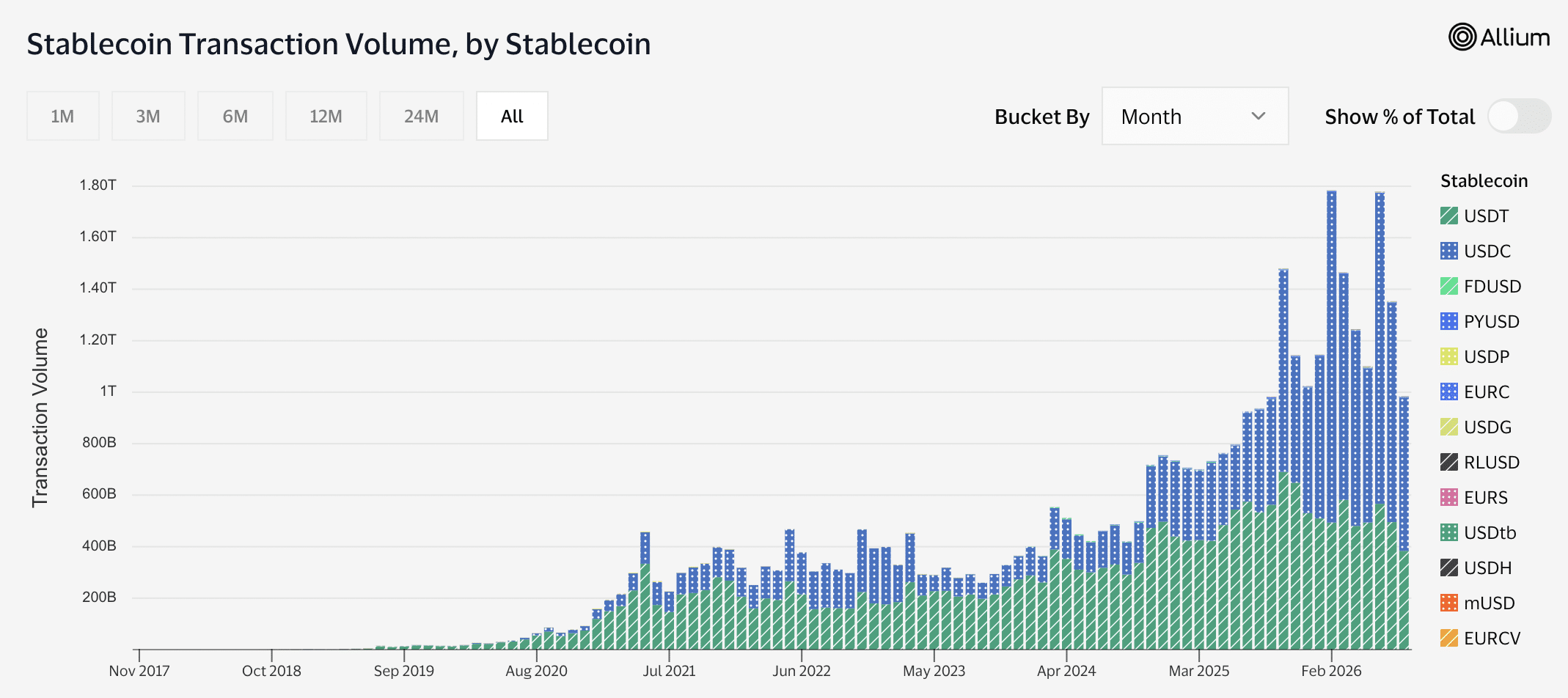
Standard Chartered’s move comes as broader stablecoin activity remains substantial. Visa on-chain analytics data cited in the context shows stablecoins recorded approximately $6.5 trillion in transaction volume over the previous 30 days.

Meanwhile, CryptoQuant data indicates Bitcoin’s Stablecoin Supply Ratio, or SSR, remained around 11.2 to 11.6 for much of August before rising to roughly 14.2 following Bitcoin’s price rally.
A higher SSR can indicate that Bitcoin’s market value is increasing faster than the available stablecoin supply. That suggests the growth in Bitcoin’s valuation has not been matched by an equivalent increase in stablecoin purchasing capacity.
Also Read: Standard Chartered to Cut 7,000 Jobs as AI Takes Over Banking Roles
Standard Chartered’s HKDAP initiative highlights how stablecoins are increasingly moving beyond crypto trading into institutional finance. If adoption expands, regulated digital currencies could become an important part of fund settlement, corporate transfers and cross-border financial infrastructure.
Disclaimer: The information in this article is for general purposes only and does not constitute financial advice. The author’s views are personal and may not reflect the views of Chain Affairs. Before making any investment decisions, you should always conduct your own research. Chain Affairs is not responsible for any financial losses.


I’m your translator between the financial Old World and the new frontier of crypto. After a career demystifying economics and markets, I enjoy elucidating crypto – from investment risks to earth-shaking potential. Let’s explore!