
|
Getting your Trinity Audio player ready...
|
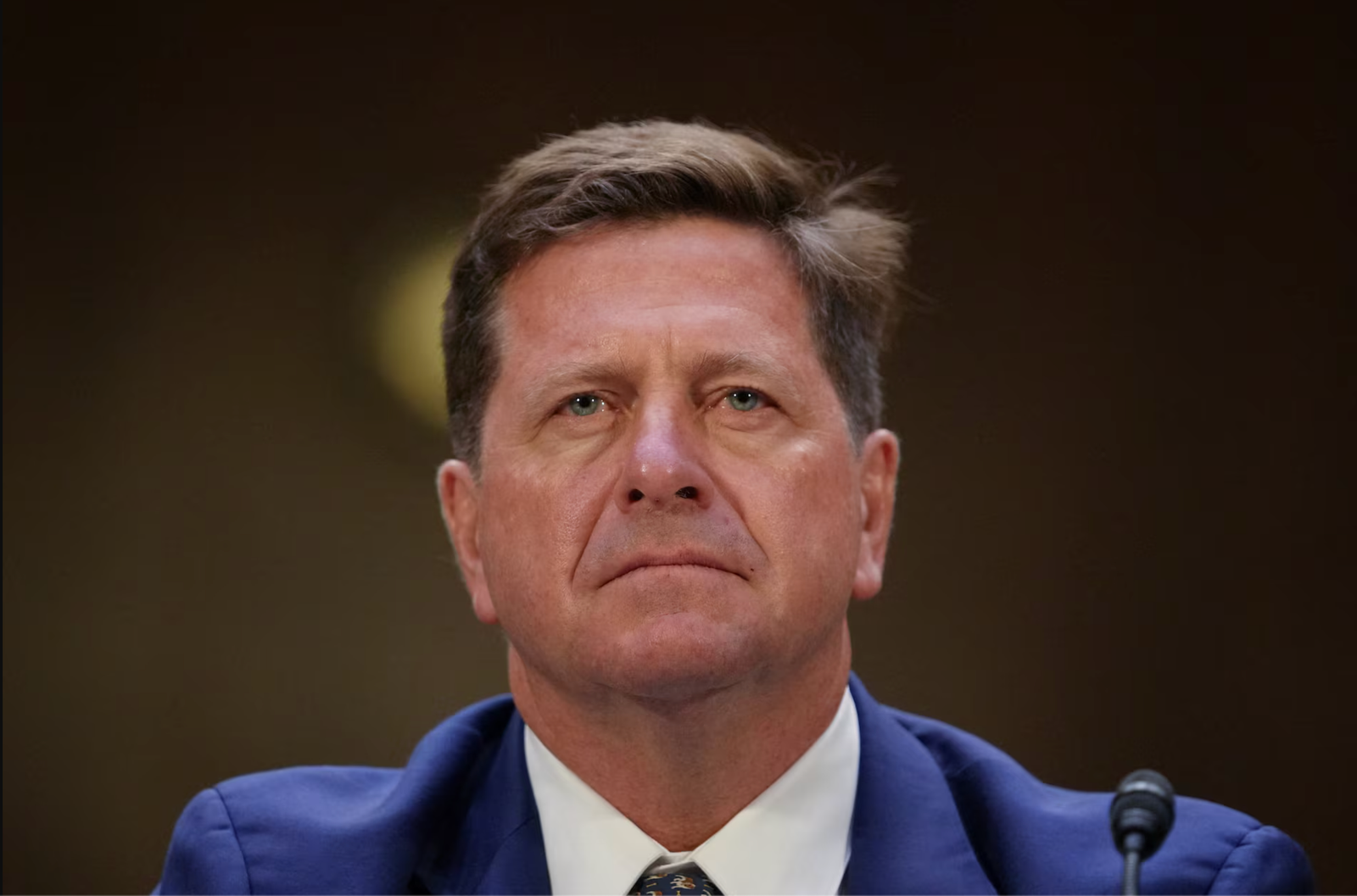
Jay Clayton, the former SEC chair who launched the December 2020 lawsuit against Ripple, is back in the spotlight. This time the focus is artificial intelligence, not crypto enforcement.
Trump Names Jay Clayton to Lead the Super Intelligence Force
On October 4, 2026, President Donald Trump announced on Truth Social that Clayton will head a new White House “Super Intelligence Force” (SIF). The Wall Street Journal first detailed the appointment, which effectively makes him the administration’s AI czar.
Clayton keeps his post as Director of National Intelligence, overseeing all 18 U.S. intelligence agencies. He is joined by vice chairs including FTC Chairman Andrew Ferguson and Pentagon CTO Emil Michael. The group reports directly to Trump and White House Chief of Staff Susie Wiles.
The mandate is tight: a report within 120 days on the risks, opportunities, and federal responsibilities tied to AI, which an executive order has rebranded as “Super Intelligence.” Clayton has been blunt about the stakes, saying the risk of not being first is high. Trump has also floated government equity stakes in OpenAI and Anthropic, echoing an Intel-style investment model.
Why the Ripple Lawsuit Is No Longer a Risk for XRP
During his SEC tenure, Clayton oversaw roughly 57 crypto-related enforcement cases, including the Ripple suit. For XRP holders, his new role may stir old memories, but the legal fight is over.
Judge Torres confirmed that XRP is not a security in secondary-market sales. The appeals were jointly dismissed in 2025, and a March 2026 SEC-CFTC joint interpretation treated XRP as a digital commodity alongside BTC and ETH. Clayton’s name may trigger memory, but not legal risk.
Also Read: SEC Proposes Letting Investment Advisers Hold Client Crypto Themselves
The 120-Day Report: A Catalyst for Crypto-AI Investors
The SIF’s charter explicitly stresses avoiding overregulation, a stance that fits with former AI czar David Sacks, who has warned that heavy pre-approval rules could cost the U.S. the AI race.
The 120-day report is the real event to watch. Any language on agentic systems, stablecoin settlement, or dual-use technology could ripple directly into crypto-AI hybrids, and that intersection is already live. The XRP Ledger recently passed 10 million x402 AI-agent payments, largely for inference and data services settled in XRP or RLUSD. Daily volumes now exceed 600,000 transactions.
Institutional interest is building too. Evernorth secured 94% shareholder approval for a $473 million XRP treasury merger, set to trade on Nasdaq as XRPN.
What It Means for XRP Price and Market Outlook
XRP is trading near $1.50, supported by ETF inflows and steady on-chain account growth. Clayton’s appointment is not an immediate fundamental change for the token.
The tone of the report will matter, though. If it leans toward permissionless innovation, AI-native crypto rails could benefit. If it favors structured oversight, the sector may face new compliance questions. Either way, the next 120 days will show how Washington plans to treat the point where AI and crypto meet.
Disclaimer: The information in this article is for general purposes only and does not constitute financial advice. The author’s views are personal and may not reflect the views of Chain Affairs. Before making any investment decisions, you should always conduct your own research. Chain Affairs is not responsible for any financial losses.