
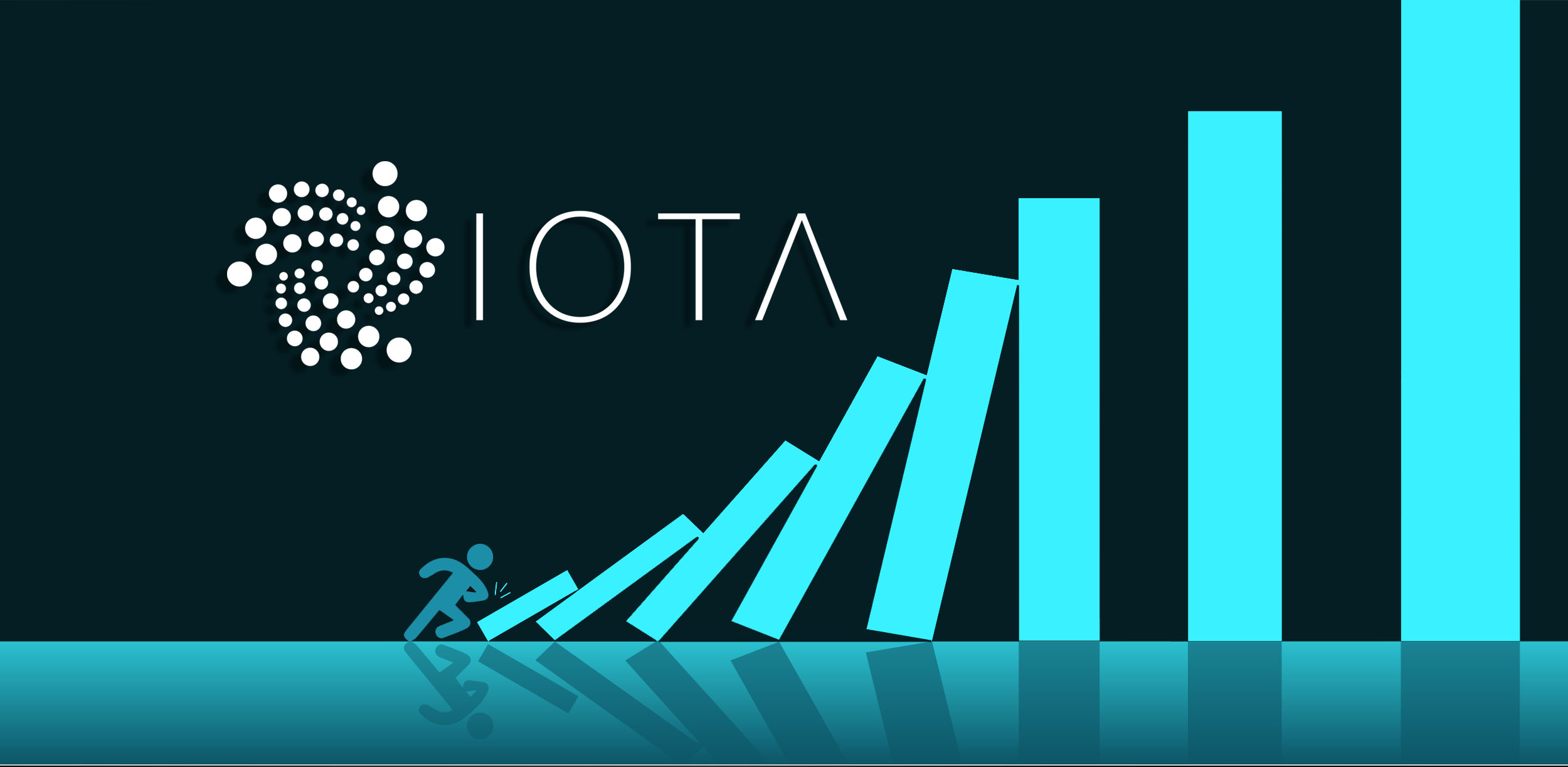
In January, IOTA co-founder Dominik Schiener bet the network’s future on one idea: become the blockchain for a $35 trillion global trade market, a sector he said had no large competitor. He backed it with targets, including 30 countries on TWIN by 2030. Ten months on, the IOTA Foundation’s own progress reports show what has shipped and what is still pending. The protocol upgrades have landed, but the adoption numbers have not.
The Foundation Reorganized Around Trade
The clearest change is structural. By Q2, the Foundation said its engineering, research, design and product teams had been merged into a single pipeline focused on TWIN, the open trade infrastructure it backs. That is a real commitment, because it ends the general-purpose, something-for-everyone approach the manifesto criticized.
A Faster, Sturdier Network
The core protocol work has been substantial. The Starfish consensus upgrade went live on mainnet on April 23. Its follow-up, Starfish-Speed, reached mainnet in September and lets validators commit blocks a round earlier when conditions allow, so transactions finalize sooner.
Running the network also got easier. Nodes now bootstrap from formal snapshots that can be verified without trusting whoever published them, and node sync is 2.6 times faster. Storage optimizations cut the node data footprint by about a third in testing. The Rust SDK reached its first beta, and account abstraction went live on mainnet, which the team says eases a future move to quantum-resistant signatures.
The Adoption Scorecard
This is where the manifesto’s claims get tested. The ADAPT initiative named Kenya, Nigeria and Morocco as its first three countries in May. In the UK, five signatories backed a memorandum of understanding for the International Supply Network. In Kenya, TLIP v1.3.9 passed 95% of its test profiles.
The most concrete real-world case may be Argentina’s national organ-transplant authority, INCUCAI. With Extrimian, it moved its institutional identities and document signing onto mainnet, and its 24 provincial agencies now hold verifiable digital identities. No patient data goes onchain. In trade software, TWIN’s document extraction now follows UN/CEFACT standards, and platform releases cut the time to read shared consignment and document data by about 70% between core releases.
What Is Still Pending
The manifesto’s big transaction numbers do not appear in the Foundation’s progress reports. Those reports describe milestones, not transaction counts or fee-burn totals, so the token model remains a thesis.

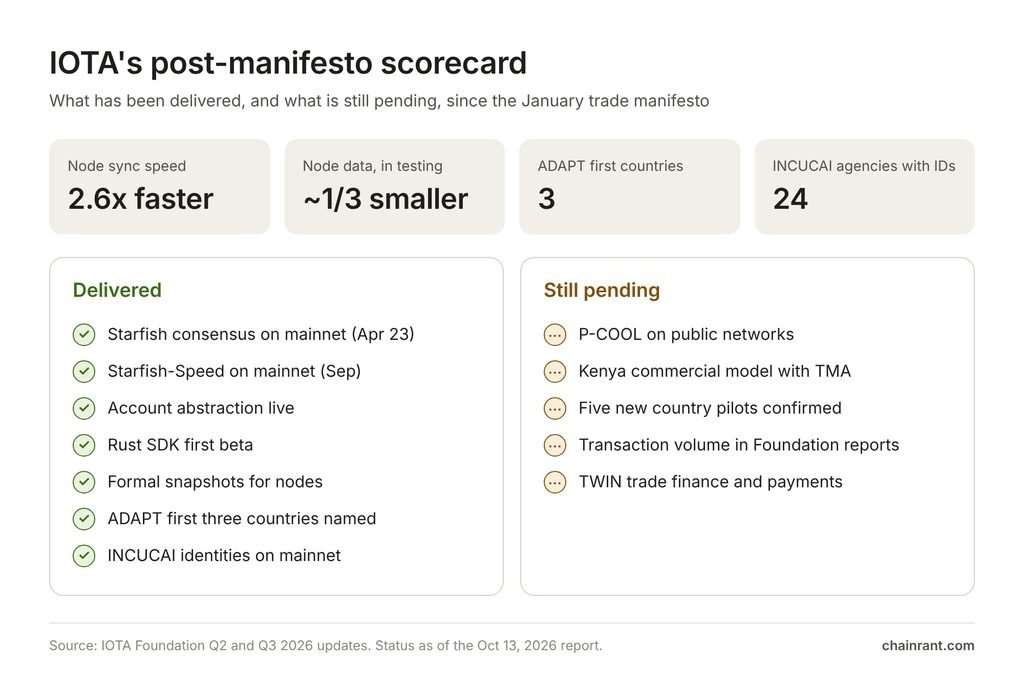
Several promises are also still pending. P-COOL, the certificate-less transaction flow, was not yet on public networks as of the Q3 report, and stress testing there was expected to start in the fourth quarter. No confirmation had been published at the time of writing. In Kenya, the Foundation was still working on a commercial model with TradeMark Africa as of its Q2 report. The five new country pilots promised for 2026 have not been confirmed in the reports reviewed. TWIN’s trade finance and payments features are listed as in development, with “more to share soon.”
The Verdict
In our view, IOTA has delivered most of what sat within its own control: consensus upgrades, tooling and institutional-grade security work. Adoption depends on governments, banks and port authorities moving at their own pace. The next test is whether ADAPT’s first three countries and the UK corridor produce measurable volume in 2027.
Disclaimer: The information in this article is for general purposes only and does not constitute financial advice. The author’s views are personal and may not reflect the views of Chain Affairs. Before making any investment decisions, you should always conduct your own research. Chain Affairs is not responsible for any financial losses.