- Ethereum’s EEZ aims to unify liquidity across rollups and external chains.
- Strict technical requirements may limit which networks can join.
- Bitcoin’s rebound is supported by rising liquidity and strong technical signals.
Ethereum’s long-running scalability trade-offs may be entering a new phase. A fresh proposal led by Gnosis introduces the Ethereum Economic Zone (EEZ), a framework designed to unify liquidity and activity across the ecosystem—and potentially beyond it. At the same time, Bitcoin is showing renewed momentum, supported by improving technical and liquidity conditions.
Together, these developments highlight a crypto market balancing structural evolution with short-term price recovery.
Ethereum Economic Zone Targets Fragmented Liquidity
The EEZ, developed in collaboration with Zisk, seeks to reconnect Ethereum’s increasingly fragmented ecosystem. Over time, the shift to rollups helped reduce fees on Ethereum, but it also scattered liquidity across dozens of layer-2 networks.
According to Frederike Ernst, the EEZ introduces atomic cross-chain execution, allowing smart contracts on different networks to interact within the same transaction. The goal is simple: make multiple chains behave like one unified market.
This could eliminate the need for duplicated applications across rollups, reducing inefficiencies for both developers and users. Instead of fragmented pools of liquidity, the EEZ envisions a single, interconnected economic system.
Beyond Ethereum: Opening the Door to Other Chains
While initially focused on Ethereum rollups, the EEZ is designed with broader ambitions. Networks outside the Ethereum ecosystem—including institutional platforms like Canton Network—have reportedly shown interest.
However, joining comes with strict requirements. Chains must be able to:
- Clearly define their state transitions
- Provide cryptographic proofs of their state
- Synchronize with Ethereum during block reorganizations
The final requirement remains the biggest hurdle. Ethereum’s occasional “reorgs” can disrupt transaction ordering, and any participating chain must adapt in real time to maintain atomic execution.
Not all networks will find this trade-off worthwhile. Even within Ethereum, only a few layer-2s—such as Base and Arbitrum—are seen as strong enough to operate independently.
Bitcoin Rebound Gains Momentum Amid Rising Liquidity
While Ethereum works to solve structural issues, Bitcoin is focused on price recovery. BTC has climbed more than 28% from its February lows, supported by both technical patterns and improving liquidity.
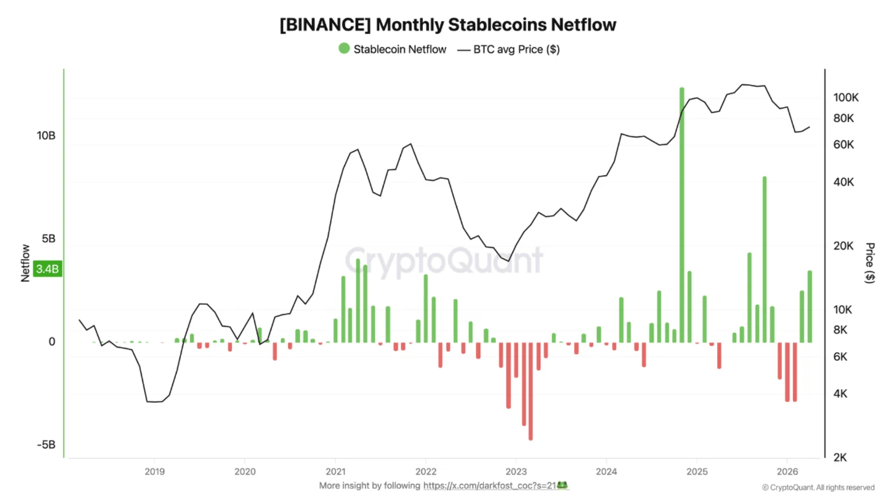
Data from CryptoQuant shows a surge in stablecoin inflows to Binance, signaling fresh capital entering the market. Historically, such inflows often precede upward price movements.
On-chain metrics also point to potential upside. According to analyst Willy Woo, Bitcoin is still forming a bottom, with key resistance levels likely to determine whether the rally can evolve into a sustained trend.
The EEZ represents a bold attempt to reshape Ethereum into a coordination layer for multiple blockchains, rather than just a base layer. If successful, it could consolidate liquidity and reduce inefficiencies across the ecosystem.
Also Read: Ethereum Unstaking Sparks Panic as Trading Volumes Collapse
Meanwhile, Bitcoin’s recovery suggests renewed confidence, though uncertainty remains around whether the current move marks a lasting trend.
Both narratives point to the same conclusion: crypto markets are maturing—but not without friction.
Disclaimer: The information in this article is for general purposes only and does not constitute financial advice. The author’s views are personal and may not reflect the views of Chain Affairs. Before making any investment decisions, you should always conduct your own research. Chain Affairs is not responsible for any financial losses.

I’m your translator between the financial Old World and the new frontier of crypto. After a career demystifying economics and markets, I enjoy elucidating crypto – from investment risks to earth-shaking potential. Let’s explore!