
|
Getting your Trinity Audio player ready...
|
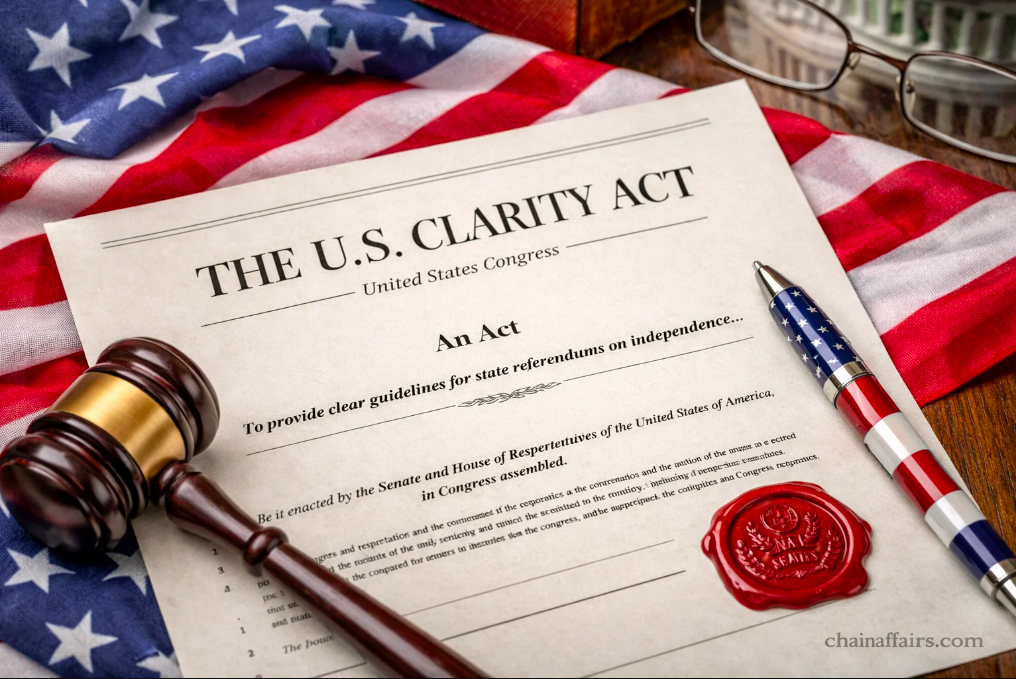
- The CLARITY Act delay is increasingly being framed as an economic and national security issue.
- James Thorne warns regulatory uncertainty could push crypto infrastructure and innovation outside the U.S.
- Polymarket odds cited in the context show only a 20% chance of passage, underscoring uncertainty around the bill.
The prolonged delay surrounding the CLARITY Act could have implications far beyond the regulation of cryptocurrencies, according to James Thorne, chief market strategist at Wellington-Altus Private Wealth. He argues that continued uncertainty in Washington could weaken the United States’ position in the emerging global digital-asset economy and give countries such as China an opportunity to gain ground.
Thorne’s argument comes as lawmakers remain divided over the proposed market-structure legislation and confidence in its eventual passage appears to be fading.
CLARITY Act Becomes a National Security Question
The CLARITY Act has largely been viewed as an effort to establish clearer rules for the U.S. crypto industry. Thorne, however, believes the legislation should also be considered through the lens of economic and national security.
He compares the current situation with America’s experience in semiconductor manufacturing, where the movement of strategic production overseas created dependencies that later became national security concerns.
Thorne argues that a similar pattern could emerge in digital assets. If regulatory uncertainty pushes blockchain developers, crypto exchanges and tokenization businesses to other jurisdictions, foreign governments could gain greater influence over the infrastructure and rules shaping the next generation of financial markets.
In his view, the United States currently has a strategic advantage, but that lead is not guaranteed to last.
Could China Gain Ground in Digital Assets?
Thorne specifically warned that China could benefit if the U.S. fails to establish a clear regulatory framework. His argument is not that China has already overtaken the United States in crypto, but that regulatory hesitation could allow competing financial centers to build influence while American firms face greater uncertainty.
That concern adds a geopolitical dimension to the CLARITY Act debate. What began primarily as a dispute over crypto market rules could increasingly become a question of where digital-asset innovation, capital and infrastructure are concentrated.
Bitcoin Weakness May Be a Temporary Phase
Thorne also pushed back against the idea that Bitcoin’s recent decline signals a breakdown in its long-term monetary case.
Bitcoin has fallen roughly 50% from its October 2025 peak near $124,500, according to the supplied context. Thorne interprets the weakness instead as a shift in investor capital toward areas such as prediction markets and artificial intelligence stocks.
Such rotations, he suggests, are part of normal market behavior when speculative enthusiasm moves between sectors. In this view, Bitcoin’s current weakness does not necessarily invalidate its broader investment thesis.
Senator Elizabeth Warren remains a prominent critic of the CLARITY Act, arguing that the legislation could create opportunities for sanctions evasion. Her opposition adds another obstacle as lawmakers debate the bill.
Meanwhile, Polymarket odds cited in the context placed the probability of passage at just 20%, highlighting weak market confidence in the legislation’s near-term prospects.
Also Read: Wall Street Moves Ahead as CLARITY Act Stalls: 3 Crypto Developments to Watch
Ultimately, the CLARITY Act debate may be about more than crypto regulation. For Thorne, the bigger issue is whether the U.S. can preserve its leadership in digital finance—or allow regulatory uncertainty to shift that advantage elsewhere.
Disclaimer: The information in this article is for general purposes only and does not constitute financial advice. The author’s views are personal and may not reflect the views of Chain Affairs. Before making any investment decisions, you should always conduct your own research. Chain Affairs is not responsible for any financial losses.


I’m a crypto enthusiast with a background in finance. I’m fascinated by the potential of crypto to disrupt traditional financial systems. I’m always on the lookout for new and innovative projects in the space. I believe that crypto has the potential to create a more equitable and inclusive financial system.