

|
Getting your Trinity Audio player ready...
|
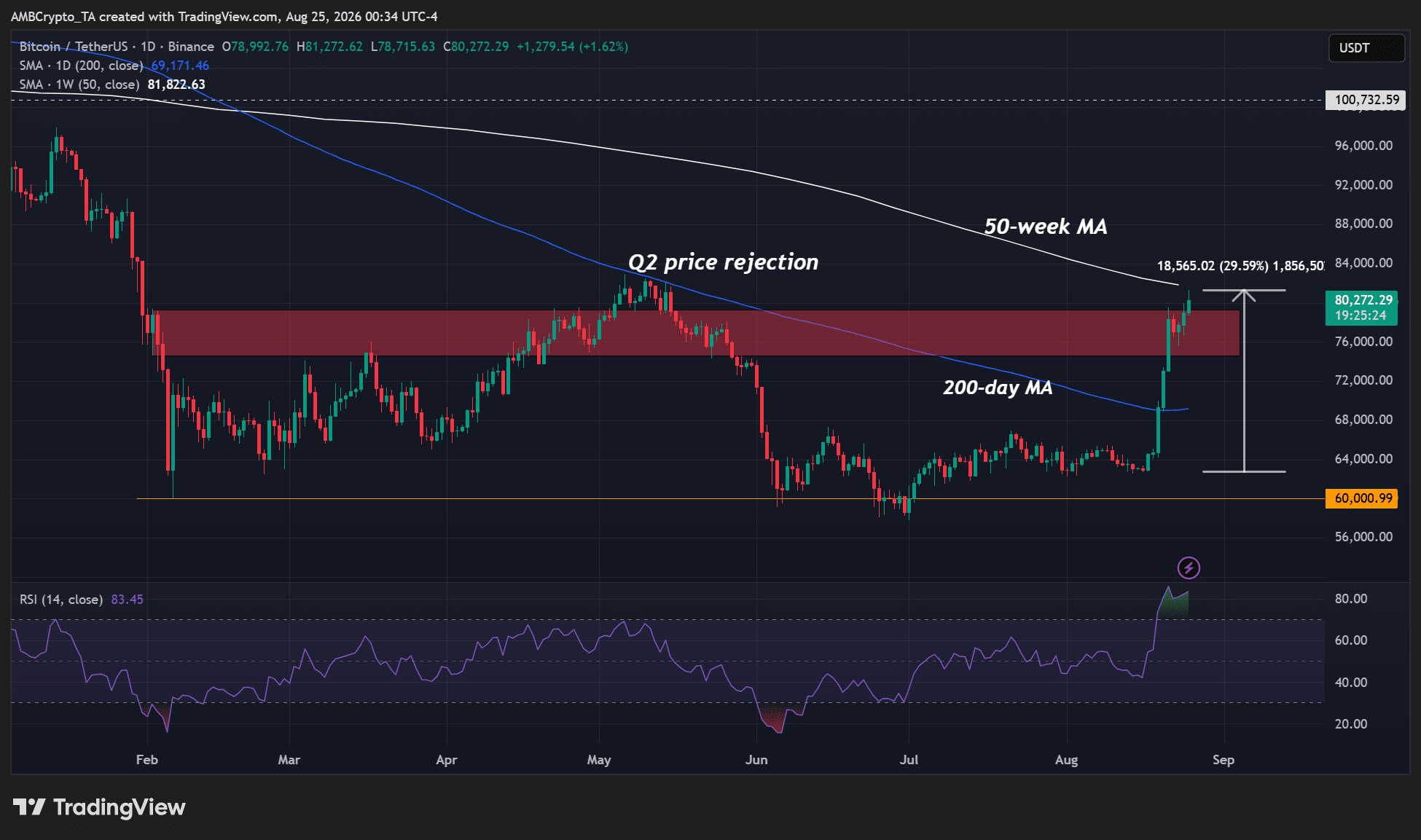
- Bitcoin reached $81,200, with the $82,000 50-week moving average emerging as a crucial technical level.
- Spot Bitcoin ETFs attracted nearly $2 billion last week, while on-chain demand indicators also improved.
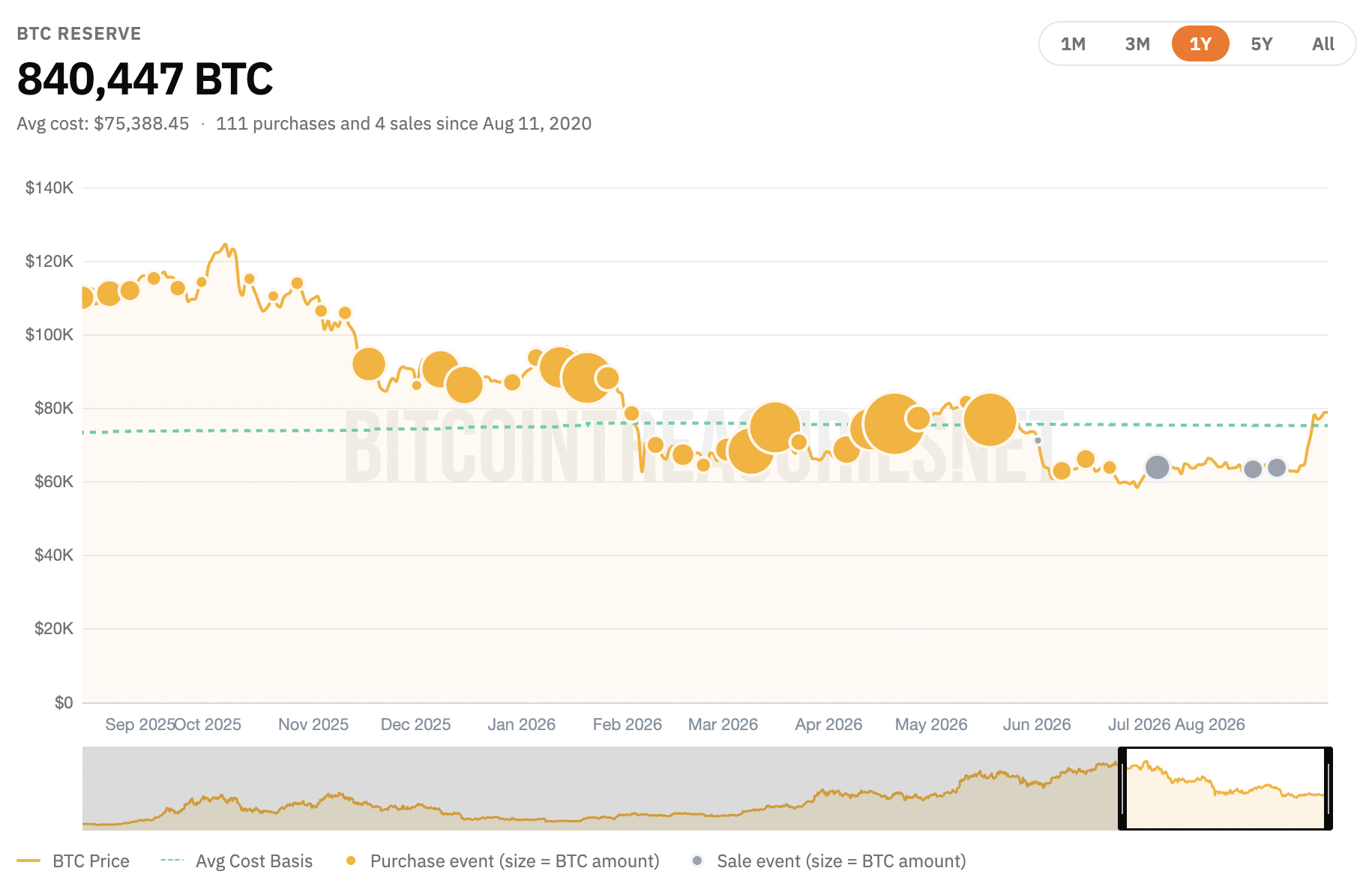
- Strategy holds 840,447 BTC but raised $2.0065 billion through MSTR shares instead of buying Bitcoin last week.
Bitcoin extended its recent recovery on August 25, climbing to a three-month high near $81,200 as investors increasingly turned to scarce assets amid renewed concerns over inflation, government borrowing and U.S. Treasury intervention. The move has strengthened the debate over whether Bitcoin is entering the early stages of a new bull market.
The latest rally is being supported by several forces, including stronger spot Bitcoin ETF demand, improving on-chain indicators and expectations that efforts to stabilize the U.S. bond market could ultimately boost liquidity.
Treasury Bond Intervention Fuels the Debasement Trade
Bitcoin’s latest advance accelerated after the U.S. Treasury announced plans to double its bond-buyback program from $4 billion to $8 billion, with the goal of reducing borrowing costs on long-dated debt.
Instead, the 30-year Treasury yield moved higher, raising questions about how effectively the intervention can influence the bond market.
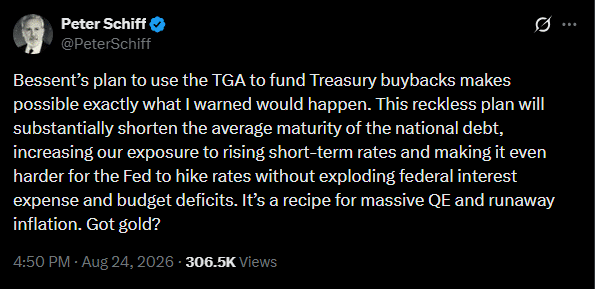
Treasury Secretary Scott Bessent has indicated that the government could use part of its roughly $1 trillion Treasury General Account to accelerate purchases. Critics, including investors Stanley Druckenmiller and Peter Schiff, have warned that such measures could weaken market discipline and increase inflationary risks.
The reaction has benefited hard assets. Gold climbed to a three-month high around $4,600, while Bitcoin followed higher.
Fundstrat’s Tom Lee has argued that easier liquidity conditions could support long-duration assets, including crypto, equities, gold and real estate.
Bitcoin ETF Demand and On-Chain Signals Improve
Bitcoin’s recovery is also being reinforced by institutional demand. U.S. spot Bitcoin ETFs recorded nearly $2 billion in net inflows last week, followed by another $337.5 million on August 24.
CryptoQuant data has also shown aggregated Bitcoin demand turning positive for the first time in August since November, suggesting that buying pressure is improving.
Another important signal came from Glassnode’s Supply Profitability Crossing indicator, which has historically appeared during Bitcoin market recoveries. Previous occurrences were followed by substantial gains over subsequent months, although historical performance does not guarantee future results.
Bitcoin still faces a key technical hurdle. The cryptocurrency was trading around $80,200, below its 50-week moving average near $81,800-$82,000. A sustained move above that level could strengthen the argument that the prolonged bear phase has ended.
Strategy Holds Bitcoin While Building Cash
Meanwhile, Michael Saylor’s Strategy did not buy or sell Bitcoin last week, despite raising more than $2 billion through the sale of 18.26 million MSTR shares.
The company used approximately $136.4 million to repurchase preferred stock and added $300 million to its existing dollar reserve, which reached about $5.1 billion. Its newly established USD Cash account held roughly $1.59 billion as of August 23.
Strategy still holds 840,447 BTC, worth roughly $67.8 billion at recent prices. Its average acquisition price stands near $75,385 per Bitcoin, leaving the holdings with an estimated unrealized gain of about $4.47 billion.
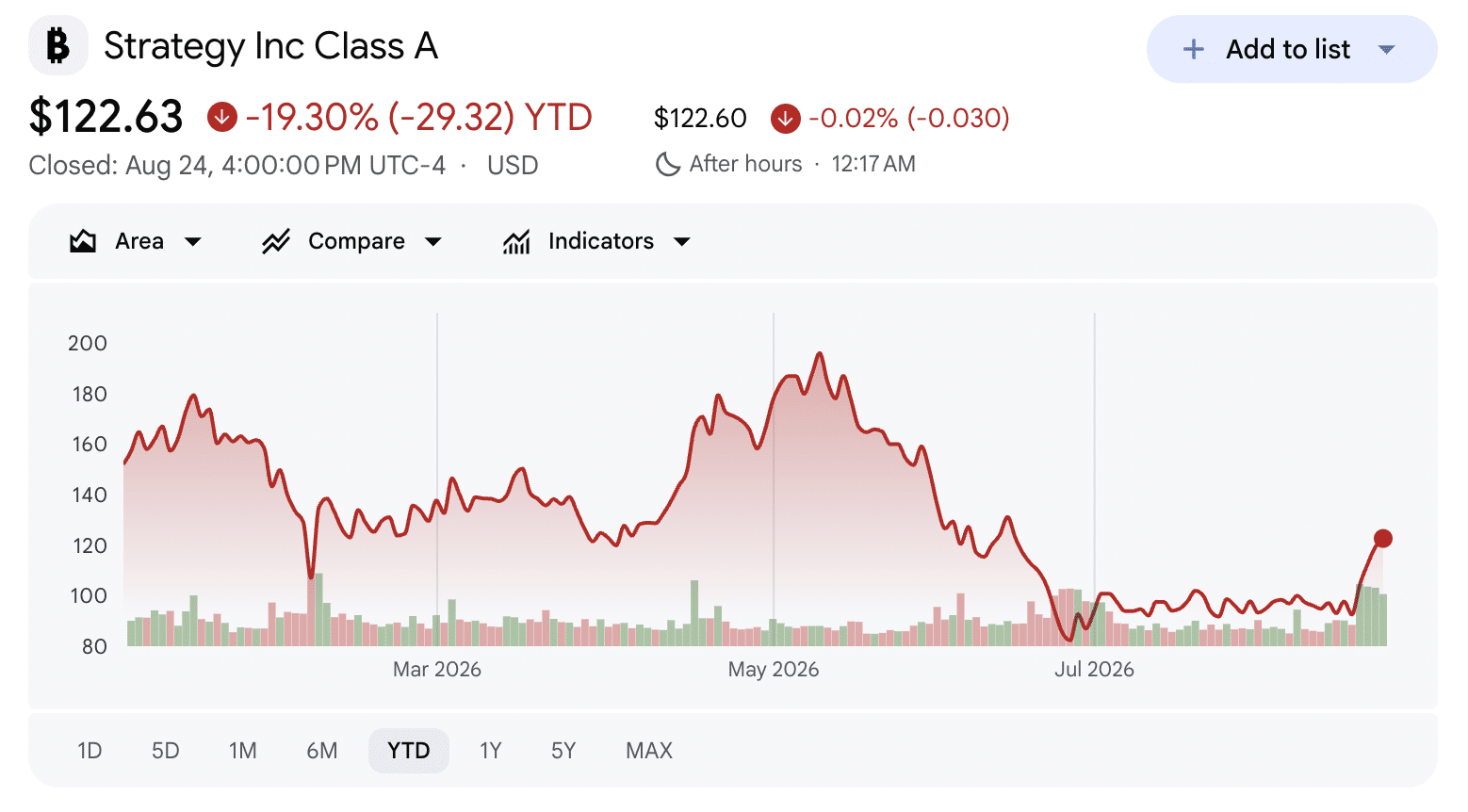
MSTR stock also gained around 25.5% over the previous week, closing at $122.63 on August 24. However, it remains well below its May close of $195.94, highlighting the gap the stock still needs to recover.
Bitcoin’s rally now faces several potential volatility triggers, including U.S. PCE inflation data, Nvidia earnings and Federal Reserve Chair Kevin Warsh’s speech at Jackson Hole.
Also Read: Coldcard Releases Critical Security Update After $112M Bitcoin Exploit
If liquidity expectations remain supportive and Bitcoin decisively reclaims the $82,000 50-week moving average, the market could have a stronger technical and fundamental case for a broader bull-market recovery.
Disclaimer: The information in this article is for general purposes only and does not constitute financial advice. The author’s views are personal and may not reflect the views of Chain Affairs. Before making any investment decisions, you should always conduct your own research. Chain Affairs is not responsible for any financial losses.

I’m your translator between the financial Old World and the new frontier of crypto. After a career demystifying economics and markets, I enjoy elucidating crypto – from investment risks to earth-shaking potential. Let’s explore!