
|
Getting your Trinity Audio player ready...
|
- Aave V4 has exceeded $250 million in deposits, showing strong demand for its upgraded lending platform.
- Bitcoin’s future may increasingly depend on institutional investment rather than halving cycles, according to Michael Saylor.
- Both trends highlight growing importance of liquidity, infrastructure, and long-term capital across crypto markets.
Aave is showing renewed momentum in decentralized finance as its latest lending platform continues to attract capital despite an uneven recovery across the broader DeFi market. At the same time, Strategy Executive Chairman Michael Saylor believes Bitcoin is entering a new chapter where institutional money—not protocol upgrades or halving cycles—will play the biggest role in determining long-term growth.
Together, the developments highlight a broader trend across crypto: investors are increasingly focusing on infrastructure, liquidity, and institutional adoption rather than speculation alone.
Aave V4 Passes $250 Million in Deposits
Aave V4 has surpassed $250 million in deposits, marking an important milestone for the protocol’s newest lending infrastructure. The achievement reflects strong early adoption driven by improved capital efficiency, updated risk management tools, and expanded lending opportunities designed to attract more liquidity.
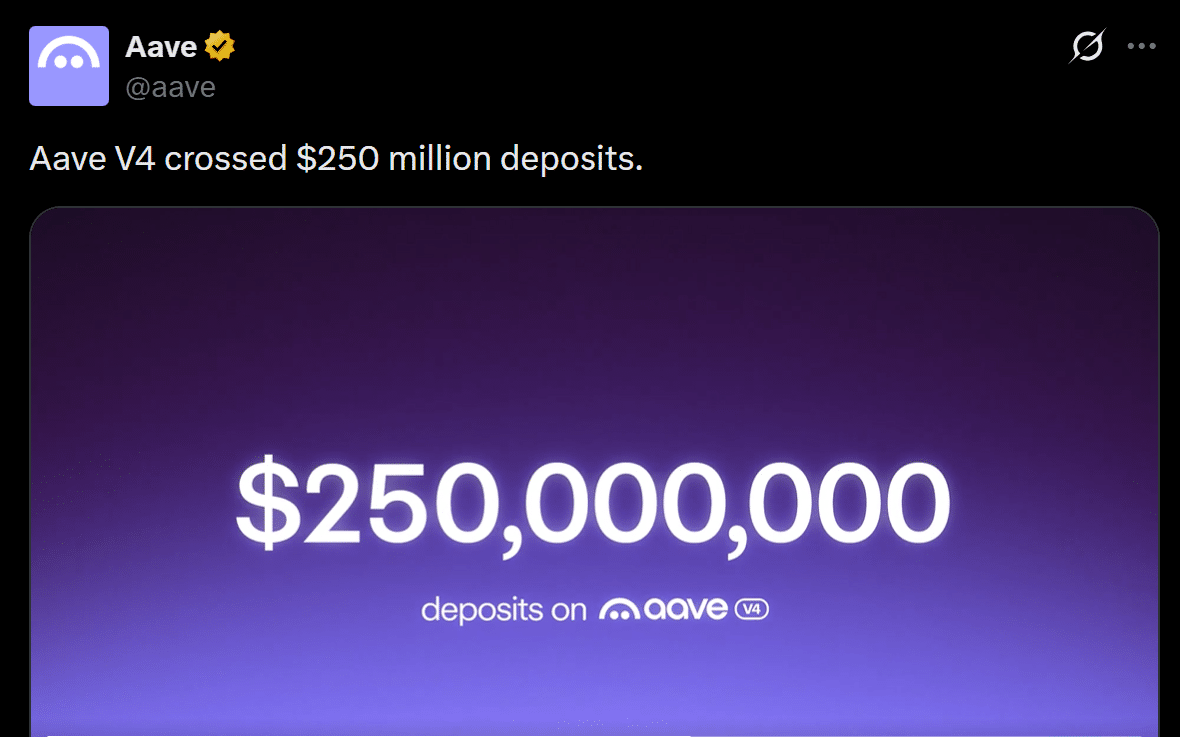
However, the deposit figure tells only part of the story. Some of the assets came from users migrating positions from Aave V3 rather than bringing entirely new capital into the ecosystem.
Even so, fresh deposits continue to enter the platform, suggesting growing confidence in V4. Sustained success will depend on whether Aave can consistently generate positive net inflows instead of simply shifting liquidity from older versions.
DeFi Liquidity Recovery Remains Uneven
While Aave V4 is gaining traction, the broader DeFi landscape remains below previous highs.
Total value locked (TVL) across the protocol has recovered from its market downturn but remains significantly below its earlier peak. That suggests capital is returning gradually rather than flooding back into decentralized finance.
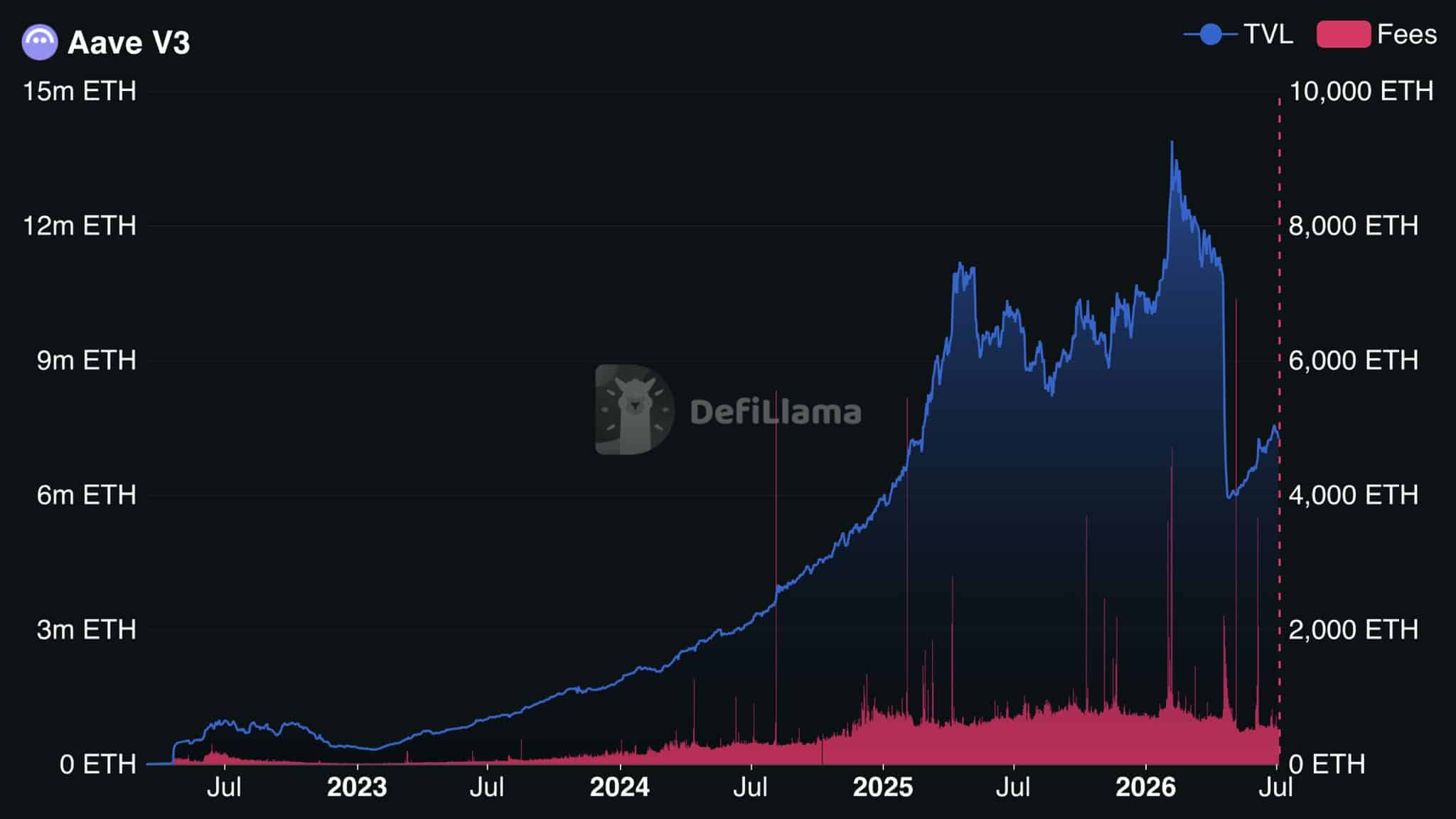
One bright spot has been the rapid increase in cbETH deposits, which climbed sharply from roughly $20 million earlier in the year to around $70 million in recent weeks. The rise points to growing demand for liquid staking assets and strengthens Aave’s lending capacity.
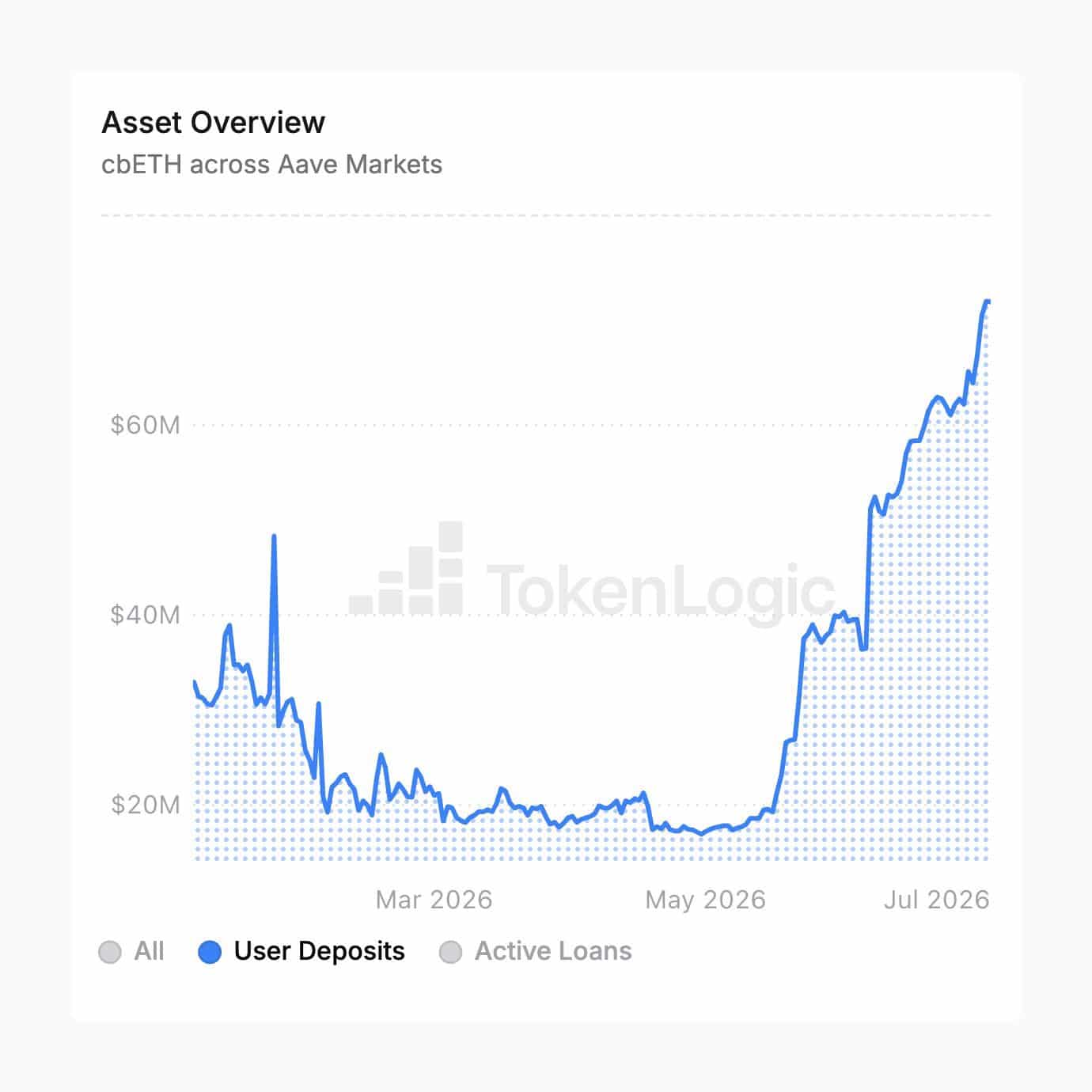
If new liquidity continues to outpace withdrawals over time, Aave could further strengthen its leadership position in the DeFi lending sector.
Saylor Sees Institutions Driving Bitcoin’s Future
Meanwhile, Michael Saylor argues that Bitcoin’s biggest transformation over the next decade will happen outside the blockchain itself.
According to Saylor, Bitcoin’s stability at the protocol level is one of its greatest advantages. Instead of relying primarily on supply reductions from halving events, future price appreciation is likely to come from increasing institutional participation.
He expects spot Bitcoin ETFs, corporate treasuries, banks, pension funds, sovereign wealth funds, insurance firms, and derivatives markets to become the dominant sources of demand.
Saylor also acknowledged several challenges that could emerge alongside greater institutional adoption.
Among the biggest concerns are the rise of “paper Bitcoin,” where institutions create more Bitcoin-backed claims than the assets they actually hold, increased concentration of custody among large firms, tighter regulatory oversight, and questions surrounding Bitcoin’s long-term security model as block rewards decline.
Despite those risks, Saylor remains confident that Bitcoin will become more deeply integrated into the global financial system over the next decade.
Aave V4’s rapid deposit growth demonstrates that high-quality DeFi infrastructure continues to attract users even during a slower market recovery. At the same time, Michael Saylor’s outlook reflects a growing belief that Bitcoin’s next phase will be shaped less by technical changes and more by institutional capital.
Also Read: Aave Hits $1M Revenue Milestone as Bitcoin Faces $103M Seizure Shock
Both stories point to the same underlying theme: the crypto industry’s future increasingly depends on sustainable liquidity, stronger financial infrastructure, and broader participation from traditional markets.
Disclaimer: The information in this article is for general purposes only and does not constitute financial advice. The author’s views are personal and may not reflect the views of Chain Affairs. Before making any investment decisions, you should always conduct your own research. Chain Affairs is not responsible for any financial losses.

I’m your translator between the financial Old World and the new frontier of crypto. After a career demystifying economics and markets, I enjoy elucidating crypto – from investment risks to earth-shaking potential. Let’s explore!