
|
Getting your Trinity Audio player ready...
|
- Bitcoin’s weakening U.S. demand and ETF outflows are creating pressure near the $58K support zone.
- Ethereum has fallen nearly 50% in 2026 but strong staking activity may challenge bearish expectations.
- Current market uncertainty could create opportunities as traders watch major support levels.
Bitcoin and Ethereum are entering a critical phase as weakening demand, institutional selling pressure, and uncertain market sentiment weigh on the crypto sector. While Bitcoin’s rally has slowed due to fading U.S. demand, Ethereum is showing signs of stress after a sharp first-half decline. However, both assets are also showing signals that could create opportunities if buyers return.
Bitcoin’s U.S. Demand Weakens as Market Momentum Slows
For years, U.S. investors have played a major role in driving Bitcoin’s price cycles. That trend appears to be changing, with the U.S. to The Rest Reserve Ratio showing a decline from its recent high near 1.79 to around 1.59.
The metric tracks Bitcoin holdings linked to U.S. entities compared with the rest of the world. A falling ratio suggests that American demand is losing influence, creating additional pressure on Bitcoin’s price performance.
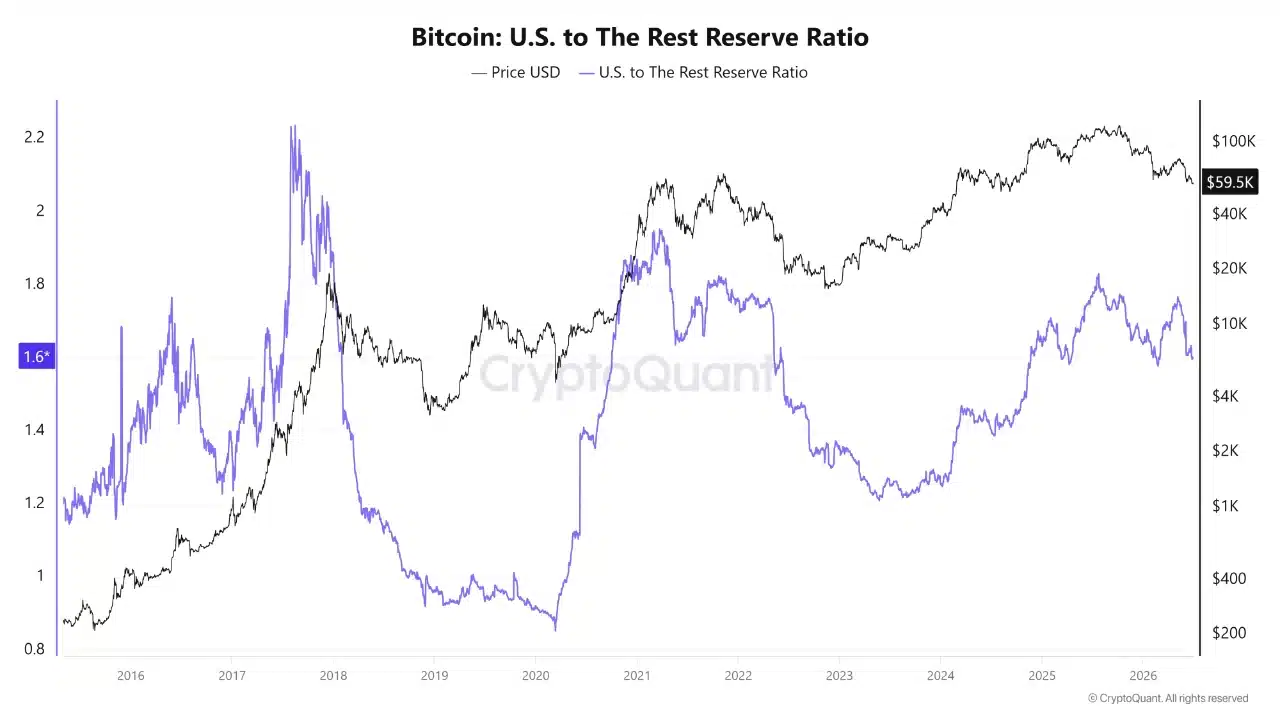
The weakness in U.S. demand appeared before Bitcoin’s recent decline, signaling that the market was already losing momentum. Without renewed institutional buying, analysts expect Bitcoin to face stronger resistance and possible further downside.
Bitcoin ETF Outflows Add Pressure Near $58K Support
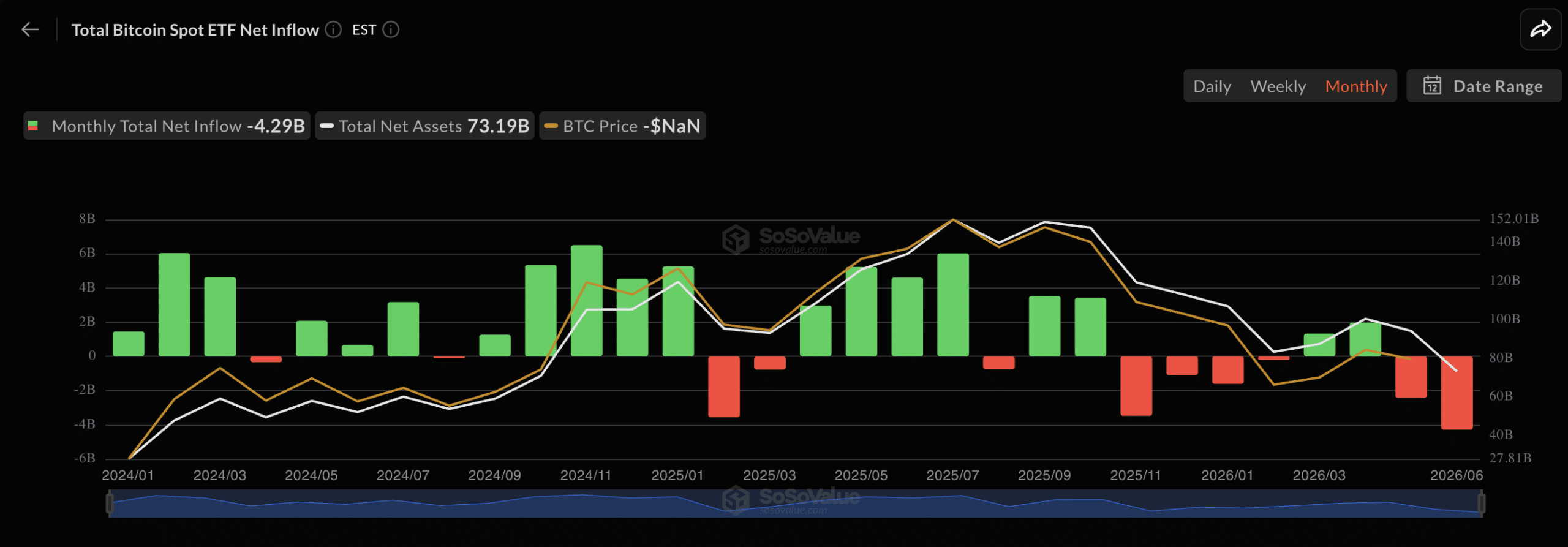
Spot Bitcoin ETFs were one of the strongest drivers behind the previous market rally, attracting institutional capital and helping stabilize prices. However, the trend has recently reversed.
Monthly ETF flows recorded approximately $4.29 billion in net outflows, marking a major shift in investor behavior. After months of consistent inflows, the sudden withdrawal of capital has increased uncertainty among traders.
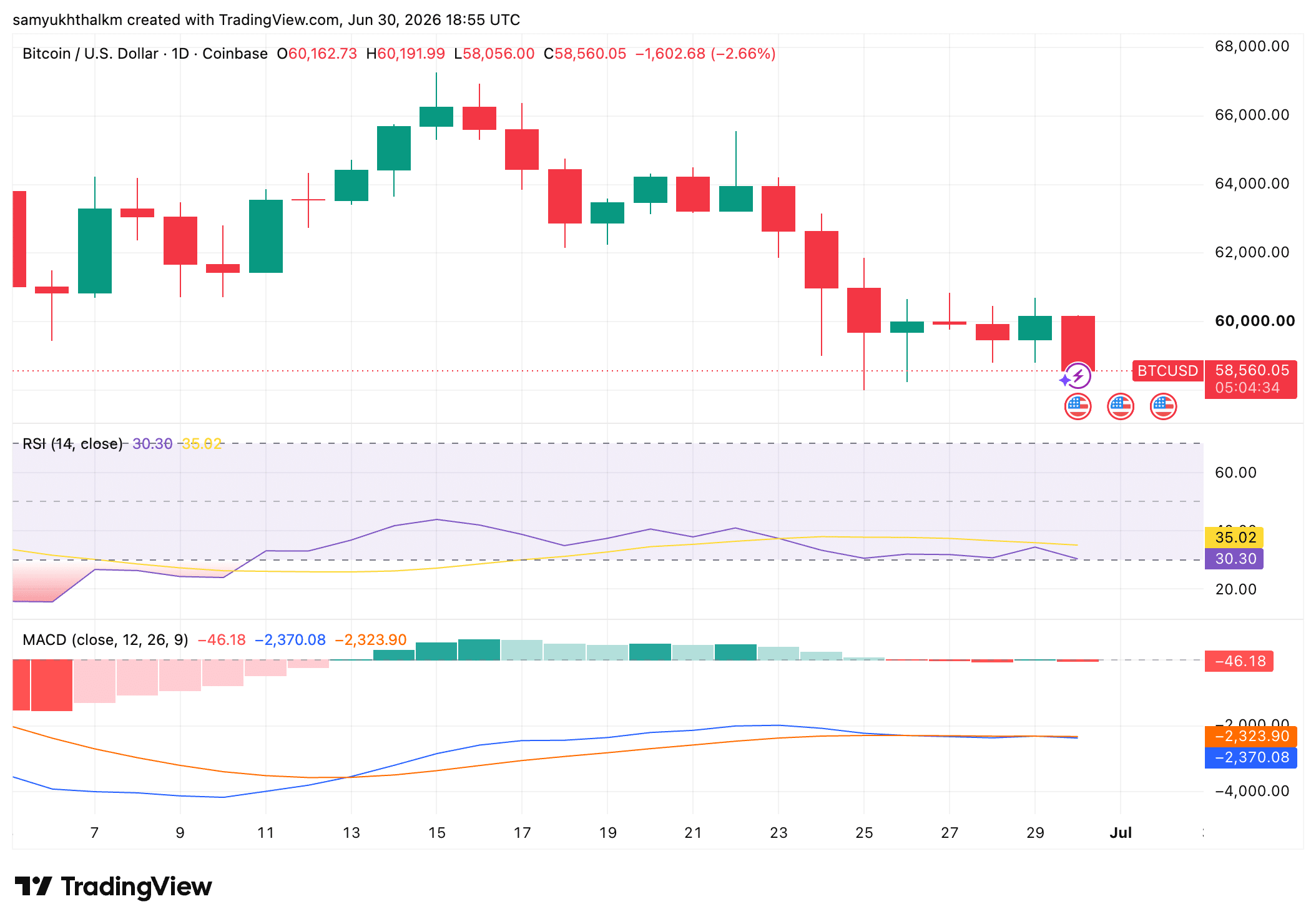
Bitcoin recently slipped below the $60,000 level and traded around $58,500. Technical indicators show sellers remain in control, with the Relative Strength Index approaching oversold conditions. A short-term recovery is possible, but Bitcoin may need to reclaim the $60,000–$62,000 range before a stronger bullish move develops.
Ethereum’s 2026 Decline Creates a Battle Between Bears and Long-Term Holders
Ethereum has experienced an even deeper correction. According to market data, ETH dropped 25.28% in Q2 2026 after falling 29.26% in Q1, leaving the asset down nearly 50% during the first half of the year.
Ethereum has lost major support zones, breaking below $3,200 in January and later falling under $2,000 in June. The price has since stabilized around the $1,500 area, where traders are watching for the next major move.
Large Ethereum transfers to exchanges have raised concerns about possible selling from whales. However, the situation is not straightforward. Rising stablecoin inflows suggest some large investors may be preparing capital to buy during weakness rather than exit completely.
Despite bearish sentiment, Ethereum’s current structure may challenge traders betting on further declines. Negative funding rates and weak market sentiment show many investors remain positioned against ETH.
At the same time, staking activity remains strong, exchange liquidity is declining, and long-term holders continue accumulating confidence. This creates a market imbalance where bearish traders and committed holders are competing for control.
Ethereum’s strong user retention rate also highlights continued network demand, suggesting that current price weakness may not reflect the entire long-term picture.
Also Read: Citigroup Cuts Bitcoin and Ethereum Targets Again: 5 Key Reasons Crypto Markets Are Under Pressure
Bitcoin and Ethereum are both facing significant market pressure, but their situations are more complex than simple selloffs. Bitcoin needs renewed institutional demand, while Ethereum’s declining price is being balanced by strong holder activity. The next moves around key support levels could determine whether this downturn continues or becomes a setup for a future recovery.
Disclaimer: The information in this article is for general purposes only and does not constitute financial advice. The author’s views are personal and may not reflect the views of Chain Affairs. Before making any investment decisions, you should always conduct your own research. Chain Affairs is not responsible for any financial losses.

I’m your translator between the financial Old World and the new frontier of crypto. After a career demystifying economics and markets, I enjoy elucidating crypto – from investment risks to earth-shaking potential. Let’s explore!