

|
Getting your Trinity Audio player ready...
|
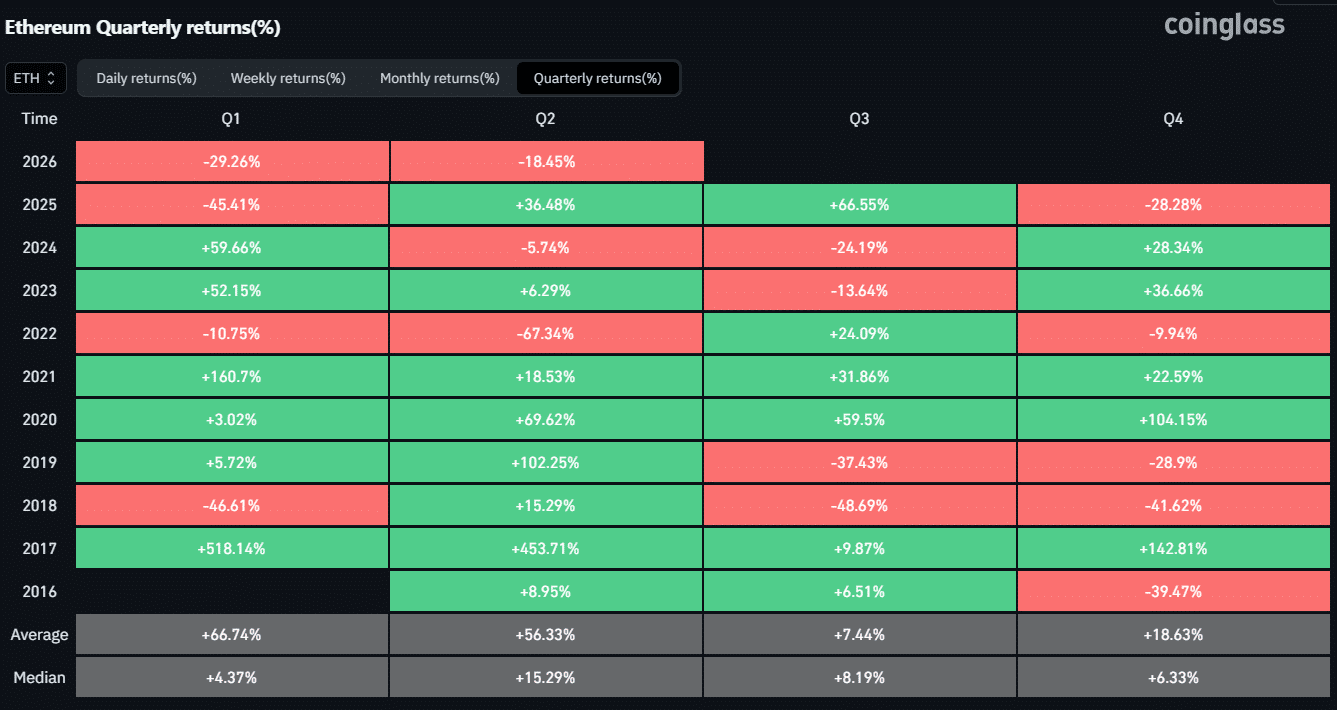
- Ethereum has fallen nearly 40% in 2026, creating fears of a deeper bear cycle.
- ETH could face its first three consecutive red quarters if Q3 remains weak.
- Falling exchange reserves and rising staking suggest long-term accumulation.
Ethereum is facing one of its most challenging periods in recent years as falling prices and growing market uncertainty raise concerns about a potential extended bear cycle. The second-largest cryptocurrency has struggled throughout 2026, with consecutive quarterly losses putting pressure on investor confidence and pushing ETH back toward levels not seen since 2025.
ETH began the year near $2,966 but has since dropped close to 40%, following negative returns in both the first and second quarters. The decline has erased much of the previous year’s gains and left many holders waiting for a stronger recovery signal.
Ethereum’s historic pattern faces a possible break
Market participants are watching the third quarter closely, as Ethereum could approach an unusual milestone. The asset has never experienced three consecutive red quarters in its trading history.
The closest example came during the 2022 downturn, when ETH suffered major losses in the first two quarters before recovering during Q3. That rebound created a historical pattern where sharp declines were often followed by renewed buying activity.
If Ethereum fails to recover this time, analysts believe the current cycle could become one of the toughest bear markets the network has experienced.
Key support levels and investor pressure
From a technical perspective, Ethereum remains vulnerable. The recent 40% correction has pushed many investors into unrealized losses, increasing the importance of maintaining major support zones.
The $1,500 area has become a key level for market watchers. A move below that range could trigger additional selling pressure and increase fears of a deeper downturn.
However, price weakness is not the only factor shaping Ethereum’s outlook. On-chain data suggests the current market structure differs from previous cycles.
Supply trends show long-term confidence
Unlike the 2022 bear market, Ethereum’s exchange reserves have continued declining. Reserves have fallen from around 16.8 million ETH to 14.6 million, indicating that investors may be moving coins away from exchanges and holding for longer periods.
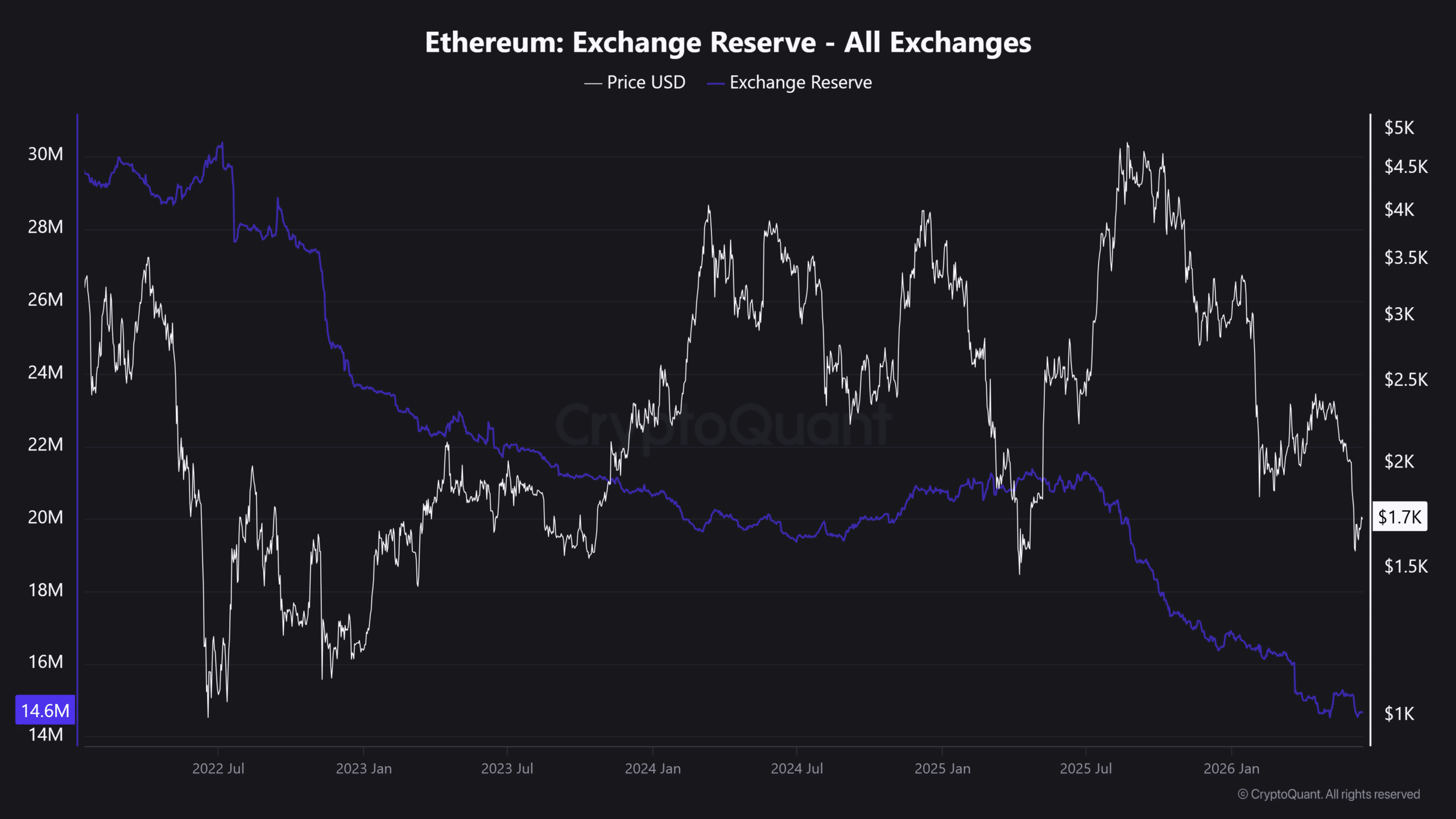
At the same time, Ethereum staking has reached record levels, with nearly 39.5 million ETH locked in staking. More than 32% of the total supply is now staked, reducing available market supply.
These trends suggest that some long-term holders are accumulating rather than selling.
Also Read: Ethereum vs Solana: 5 Key Reasons June Has Become a Brutal Month for Altcoins
Ethereum’s current downturn has created serious questions about whether ETH is entering its worst bear cycle yet. While market momentum remains weak, supply dynamics and staking growth show important differences from the 2022 collapse.
A Q3 recovery remains possible if demand strengthens and key support levels hold. For now, Ethereum sits at a critical point where both technical risks and long-term confidence are competing for control.
Disclaimer: The information in this article is for general purposes only and does not constitute financial advice. The author’s views are personal and may not reflect the views of Chain Affairs. Before making any investment decisions, you should always conduct your own research. Chain Affairs is not responsible for any financial losses.

I’m a crypto enthusiast with a background in finance. I’m fascinated by the potential of crypto to disrupt traditional financial systems. I’m always on the lookout for new and innovative projects in the space. I believe that crypto has the potential to create a more equitable and inclusive financial system.