
|
Getting your Trinity Audio player ready...
|
- Binance will shift its entire $1B SAFU reserve from stablecoins into Bitcoin within 30 days.
- A price-triggered safeguard ensures the fund stays near $1B even during BTC dips.
- The move signals strong institutional-level confidence in Bitcoin’s long-term value.
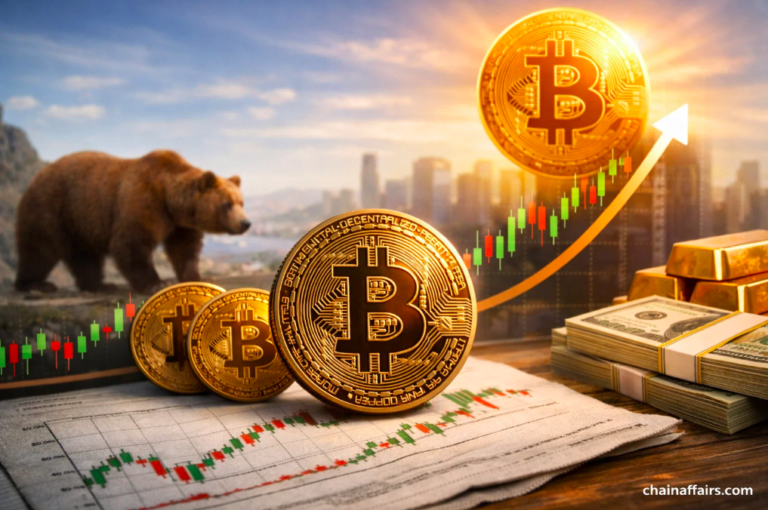
Binance, the world’s largest cryptocurrency exchange, is preparing a major shift in how it safeguards user funds. The company has announced plans to convert the entire $1 billion balance of its Secure Asset Fund for Users (SAFU) from stablecoins into Bitcoin over the next 30 days.
The move reflects Binance’s growing conviction that Bitcoin represents the strongest long-term store of value in the digital asset market, even as short-term volatility remains a constant risk. It also marks a notable change in how one of the industry’s largest safety reserves is structured.
Why Binance Is Moving SAFU Into Bitcoin
Since its creation in 2018 following a security incident, the SAFU fund has served as an emergency backstop for users. It is financed using a portion of Binance’s spot trading fees and has traditionally been held in stable, low-volatility assets to ensure rapid access during crises.
Binance now says its outlook has evolved. In an open letter to the crypto community, the exchange explained that Bitcoin’s resilience, liquidity, and long-term performance make it better suited for preserving the fund’s purchasing power over time.
Rather than converting all at once, Binance will carry out the transition gradually over the next month to limit market impact and operational risk.
Built-In Protection Against Price Swings
Acknowledging Bitcoin’s price volatility, Binance has added a safeguard to keep the SAFU fund properly capitalized. If the value of the Bitcoin-backed reserve falls below $800 million due to market declines, the exchange will inject additional Bitcoin to restore the fund to $1 billion.
This effectively creates an automatic “buy-the-dip” mechanism tied to user protection, ensuring the safety net remains fully funded regardless of market conditions.
The approach blends long-term conviction with risk management—treating Bitcoin as a strategic reserve asset while maintaining strict coverage thresholds.
Security Track Record Strengthens the Case
Binance’s announcement follows a year of aggressive security and compliance efforts. In 2025, the exchange says it helped recover $48 million across tens of thousands of cases involving incorrect deposits. It also assisted millions of users in identifying potential risks, preventing nearly $6.9 billion in scam-related losses.
Collaboration with global law enforcement led to the seizure of $131 million in illicit funds, while Binance’s proof-of-reserves data shows $163 billion in user assets fully backed across 45 cryptocurrencies.
These figures provide context for why the exchange believes it can afford to take a more long-term, Bitcoin-centric approach to its reserve strategy.
The crypto community has largely welcomed the decision. Well-known Bitcoin investor Lark Davis described the move as bullish, comparing Binance’s strategy to the accumulation-focused approach often associated with MicroStrategy chairman Michael Saylor.
Also Read: Investor Transfers 1.42 Billion PUMP Tokens to Binance as Dormant Wallet Awakes
For many observers, the conversion sends a strong signal: one of crypto’s most influential platforms is placing a billion-dollar bet on Bitcoin’s future.
Binance’s decision to convert its entire SAFU reserve into Bitcoin represents more than a balance-sheet adjustment. It signals a philosophical shift toward treating BTC as a core reserve asset rather than just a tradable instrument. If successful, the move could influence how other major exchanges structure their own safety funds—and further reinforce Bitcoin’s role at the center of the crypto ecosystem.
Disclaimer: The information in this article is for general purposes only and does not constitute financial advice. The author’s views are personal and may not reflect the views of Chain Affairs. Before making any investment decisions, you should always conduct your own research. Chain Affairs is not responsible for any financial losses.

I’m your translator between the financial Old World and the new frontier of crypto. After a career demystifying economics and markets, I enjoy elucidating crypto – from investment risks to earth-shaking potential. Let’s explore!