
|
Getting your Trinity Audio player ready...
|
- Saylor treats Bitcoin as a fortress-like reserve, while Thiel uses equity stakes in Ether-treasury firms to chase asymmetric upside.
- Thiel’s strategy offers liquidity and agility but higher execution risk; Saylor’s model is stable and transparent but illiquid.
- Saylor normalized BTC as a corporate reserve, while Thiel is pioneering ETH-based corporate pivots, shaping two new adoption blueprints.
In the evolving world of corporate crypto adoption, few figures loom as large—or take such opposing paths—as Peter Thiel and Michael Saylor. Both billionaires have become emblematic of high-conviction crypto treasury strategies, yet their methods could not be more different. Saylor, as executive chairman of Strategy (formerly MicroStrategy), has made Bitcoin the backbone of his corporate balance sheet through direct accumulation. Thiel, by contrast, has chosen an indirect route: taking significant equity stakes in companies that convert themselves into Ether-treasury vehicles.
This divergence is more than stylistic. It reflects contrasting philosophies about what crypto represents—Bitcoin as digital gold versus Ether as programmable capital—and how corporations can leverage that to generate enduring value. Understanding these two playbooks reveals not just competing investment theses, but the two primary blueprints now shaping institutional crypto adoption.
Peter Thiel’s Asymmetric Ether Strategy
Peter Thiel, best known for co-founding PayPal, Palantir, and later the crypto exchange Bullish, has approached Ethereum (ETH) not as a store of value but as a growth catalyst. Instead of directly buying ETH tokens and placing them on balance sheets, Thiel’s funds back companies that pivot to become Ether-treasury entities.
Example: ETHZilla
Formerly Nasdaq-listed 180 Life Sciences, ETHZilla transformed itself through a $425 million private equity investment to build an Ether treasury. It received approval to issue another $150 million in debt securities, with Electric Capital managing its onchain yield programs. This strategic pivot allowed ETHZilla’s stock to become a proxy for ETH exposure—offering equity-like upside tied to crypto.
Example: BitMine Immersion
BitMine has raised hundreds of millions to accumulate over 1.52 million ETH—worth roughly $6.6 billion—including 373,000 tokens added during Ether’s latest rally. Backed by Thiel-linked capital, BitMine exemplifies his strategy: gain exposure to ETH price appreciation and corporate equity growth simultaneously.
This method mirrors Thiel’s earlier asymmetric plays with Facebook and Palantir—placing early bets on underpriced companies poised to become infrastructure cornerstones, then riding both equity and ecosystem growth.
Why Thiel Chose Ether Over Bitcoin
Thiel’s focus on ETH over BTC is deliberate. While Bitcoin’s narrative is rooted in scarcity and its role as “digital gold,” Thiel views Ether as programmable capital—the fuel of decentralized finance (DeFi), smart contracts, tokenized assets, and future financial infrastructure.
This distinction shapes his thesis:
| Factor | Ether (Thiel’s Focus) | Bitcoin (Saylor’s Focus) |
|---|---|---|
| Core Value Proposition | Programmable capital, DeFi infrastructure | Store of value, digital gold |
| Capital Strategy | Equity in ETH-treasury firms | Direct accumulation on balance sheet |
| Liquidity Profile | Can exit via equity sales | Illiquid long-term reserve |
| Risk Drivers | Company governance + ETH price | BTC price + financing dynamics |
| Optionality | Tied to future tokenized finance | Tied to Bitcoin’s scarcity thesis |
By embedding ETH exposure within corporate structures, Thiel can benefit from both token price growth and rerated company valuations as they become de facto ETH funds. This creates compound optionality—if Ether gains traction as the backbone of new financial systems, these companies’ valuations could surge beyond ETH’s price appreciation alone.
Michael Saylor’s Relentless Bitcoin Accumulation Model
In stark contrast, Michael Saylor has built Strategy (formerly MicroStrategy) into the world’s largest Bitcoin treasury vehicle, making BTC the company’s reserve backbone. Since 2020, Saylor has orchestrated one of the boldest corporate balance-sheet transformations in history.
Key Metrics of Strategy’s Bitcoin Holdings (as of August 2025):
| Metric | Value |
|---|---|
| Total BTC Held | ~629,000 BTC |
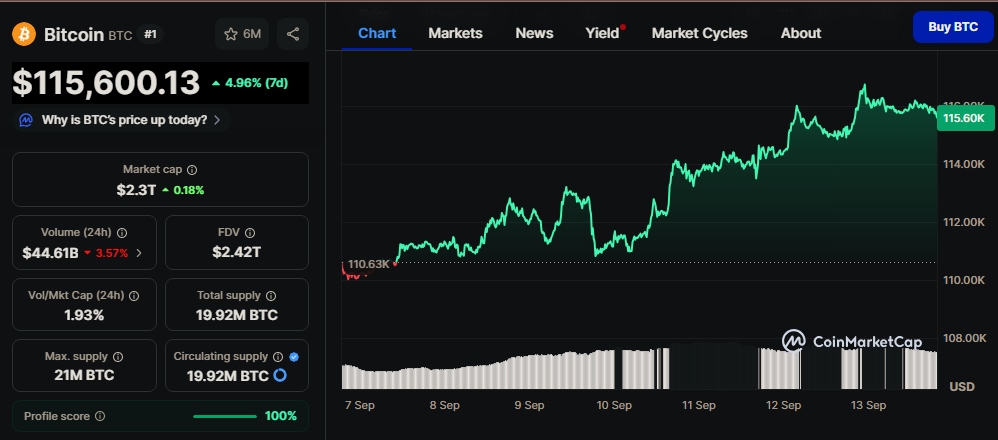
| Market Value | ~$72.8 billion (at $115,827) |
| Share of Public Treasury BTC | ~64% |
| August 2025 Purchase | 585 BTC for $69 million |
Saylor’s model emphasizes scale, consistency, and transparency:
- Cost-Averaging: He spreads purchases across market cycles, dampening volatility risk.
- Layered Financing: Capital is raised via at-the-market equity offerings, convertible debt, and perpetual preferred shares, ensuring continuous liquidity for new BTC purchases.
- Balance Sheet as a Strategic Weapon: Strategy’s market-to-net-asset-value premium has allowed it to raise funds even when its core software business stagnated, converting it into a pure Bitcoin proxy.
Importantly, Saylor conducts purchases via over-the-counter desks to avoid price slippage and market shocks. This steady, mechanical approach has normalized Bitcoin as a legitimate corporate reserve asset.
Strategic Philosophies: Fortress vs. Flexibility
At their core, Thiel and Saylor embody two opposing strategic philosophies.
| Dimension | Thiel (Ether Firms) | Saylor (Bitcoin Treasury) |
|---|---|---|
| Core Objective | High-upside asymmetric bets | Fortress-like reserve accumulation |
| Method | Equity stakes in ETH-holding companies | Direct BTC purchases on balance sheet |
| Exposure Type | Indirect, via corporate pivots | Direct, via owned reserves |
| Liquidity | Can exit via equity markets | Illiquid without major sales |
| Risk Profile | Corporate execution + ETH volatility | BTC volatility + leverage dynamics |
| Transparency | Opaque until filings | Fully public and continuous disclosures |
| Market Signaling | Innovation and optionality | Stability and long-term conviction |
Saylor’s approach resembles building a fortress: slow, methodical, and designed to endure for decades. Thiel’s strategy is more like surfing institutional realignments—risky but potentially explosive if ETH becomes core to global finance.
Market Ripple Effects: How Each Shapes the Ecosystem
The market impact of each strategy goes beyond their own balance sheets:
- Saylor’s Ripple Effect: By consistently buying BTC at scale, he normalized the notion that corporations can hold Bitcoin as a treasury reserve. This catalyzed other public firms, ETFs, and even nation-states to explore Bitcoin accumulation.
- Thiel’s Ripple Effect: By backing companies that pivot into ETH-treasury entities, he is creating a new category of “crypto-native public firms.” This could establish a parallel precedent: not just buying tokens, but restructuring entire companies around them.
If Saylor showed that corporations could survive and thrive with Bitcoin as a reserve, Thiel is showing they can reinvent themselves around Ether and the tokenized economy.
Strengths and Vulnerabilities of Each Model
Thiel’s Advantages
- Strategic Agility: Can deploy capital into firms quickly and exit positions if needed.
- Leverage of VC Expertise: Identifies underpriced companies with compounding potential.
- Indirect Custody Benefits: Avoids direct ETH custody and regulatory exposure, outsourcing operational risk.
Risks: Reliant on management execution, corporate governance, and thinner liquidity in some targets. Vulnerable to both ETH price swings and company mismanagement.
Saylor’s Advantages
- Process and Predictability: Creates a transparent, rules-based accumulation model.
- Resilience to Volatility: Cost-averaging dampens BTC price shocks over time.
- Institutional Credibility: Full transparency builds investor trust and market confidence.
Risks: Highly concentrated exposure to BTC; long-term illiquidity; depends on maintaining market premium to raise fresh capital.
Who Is Making the Smarter Crypto Treasury Bets?
The contrast ultimately hinges on risk versus resilience.
- Saylor’s Strength: Building an impregnable Bitcoin reserve fortress. Ideal for institutions prioritizing stability, transparency, and balance-sheet strength.
- Thiel’s Strength: Riding institutional realignment with strategic agility. Ideal for investors seeking higher-beta, venture-style upside tied to ETH’s potential financial infrastructure dominance.
Neither approach is inherently “smarter” in all contexts—they represent opposite ends of the corporate crypto treasury spectrum. Saylor embodies resilience and permanence; Thiel embodies adaptability and asymmetric upside.
As institutional adoption of digital assets accelerates, these two playbooks will likely remain the primary templates: the fortress model and the asymmetric bet model.
Also Read: Ether ETFs Soar $3.87B in August 2025, Outpacing Bitcoin
Two Archetypes Defining the Future of Corporate Crypto
Peter Thiel and Michael Saylor are not just investors; they are archetypes of two divergent visions for how corporations can embrace crypto. Saylor is building an eternal vault of Bitcoin, betting on scarcity, security, and time. Thiel is orchestrating dynamic Ether bets, wagering on innovation, flexibility, and systemic change.
One strategy prioritizes predictability, the other optionality. Both have already reshaped market expectations—and as crypto becomes more embedded in global finance, the long-term results of their opposing strategies will likely influence how thousands of other companies design their own treasury blueprints.
Disclaimer: The information in this article is for general purposes only and does not constitute financial advice. The author’s views are personal and may not reflect the views of Chain Affairs. Before making any investment decisions, you should always conduct your own research. Chain Affairs is not responsible for any financial losses.

I’m a crypto enthusiast with a background in finance. I’m fascinated by the potential of crypto to disrupt traditional financial systems. I’m always on the lookout for new and innovative projects in the space. I believe that crypto has the potential to create a more equitable and inclusive financial system.