

|
Getting your Trinity Audio player ready...
|
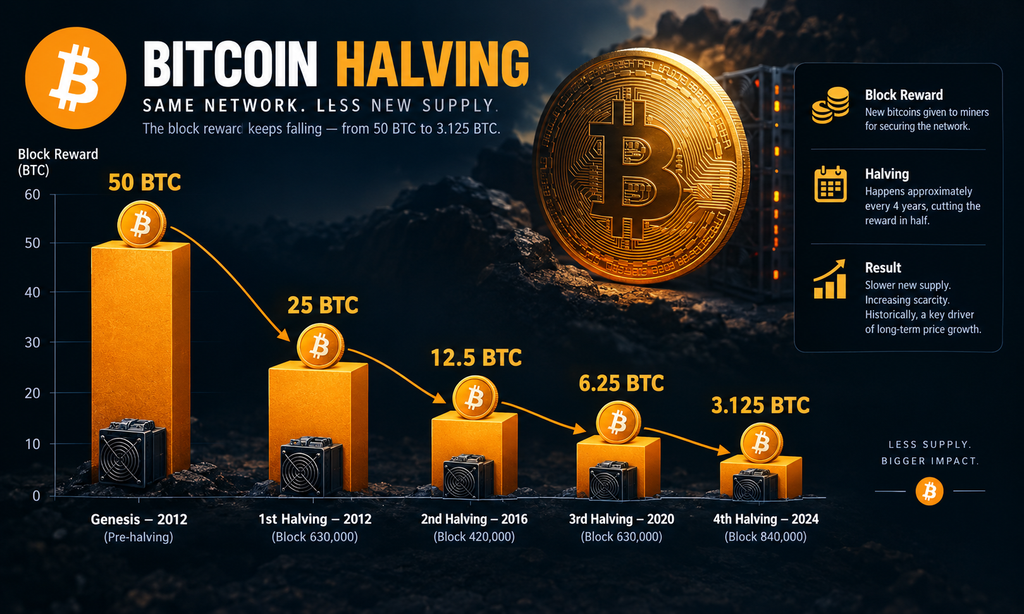
- Roughly 95% of Bitcoin’s 21 million supply has already been mined, but the last coin isn’t due until around 2140. Block rewards shrink with each halving, so the change is gradual, and the next cut comes around April 2028.
- Once the subsidy fades, miners depend on transaction fees alone. Whether fees can fund a network securing a trillion-dollar asset is still an open question, and it is the real long-term risk.
- Blocks would take longer and the network would be cheaper to attack until difficulty resets, which happens only every 2,016 blocks. Falling difficulty would then make mining profitable again and tend to bring machines back.
Bitcoin mining is not going to stop tomorrow. The network is closer to a record than a shutdown. Still, “what if mining ends?” is a serious question, because the answer shows how Bitcoin pays for its own security. The question has two versions: what happens when the last coin is mined, and what happens if miners simply walk away.
Mining Is Busier Than Ever
Bitcoin’s hashrate, the computing power securing the network, climbed above 1 zettahash per second and reached a seven-month high on October 22, 2026. Trackers report different figures, but they agree on the direction. Mining difficulty stood at 140.58 trillion after the October 16 adjustment.
The picture for miners themselves is less rosy. Reports describe weakening hashprice, higher difficulty and rising energy costs, and many large operators are shifting toward AI computing as a second business. Mining is growing and getting squeezed at the same time.
Scenario 1: The Last Bitcoin Is Mined
Bitcoin’s supply is capped at 21 million coins. Roughly 95% of that supply has already been mined, with fewer than one million coins left. The current reward is 3.125 BTC per block, set to fall to 1.5625 BTC around April 2028.
The remaining coins won’t arrive evenly. One projection suggests 99% of the supply will be mined by around 2035. The final satoshi, though, is not due until around the year 2140.
At that point, the reward reaches zero and miners live on transaction fees alone. Nothing breaks overnight, because the subsidy shrinks gradually. The real change is economic: fees must pay for the entire security budget.
Can Fees Replace the Block Reward?
This is the open debate. Today, the subsidy still supplies most of miners’ revenue. If fee income stays low as rewards fall, some miners will shut off machines, hashrate will drop, and the network will become cheaper to attack.
Optimists point to growing demand for block space and the possibility that Bitcoin’s price rises enough to offset each halving. Skeptics say nobody knows whether fees alone can sustain a network securing a trillion-dollar asset. Both sides agree on one thing: it is a test the network has not yet faced.

Scenario 2: Miners Suddenly Leave
Now the harder case. Say a large share of miners quit, through regulation, an energy shock, or collapsing profits.
Blocks slow down first. Bitcoin targets one block roughly every ten minutes. If 90% of the hashrate vanished, blocks would arrive about every 100 minutes until the system adjusts. Difficulty only resets every 2,016 blocks, which at that pace would take around 140 days. In the meantime, transactions would crawl and fees would spike.
Security weakens. With less computing power guarding the chain, a rival could attempt a 51% attack more cheaply. Larger transactions would need more confirmations to be considered safe.
Recovery usually follows. Once difficulty drops, mining becomes cheaper for those who remain, and profitability tends to bring machines back online.
Also Read: Bitcoin Was Supposed to Beat Inflation. Why Does It Fear the Fed?
If Every Miner Stopped
In the extreme case of zero mining, no new blocks get added. The ledger freezes. Your coins would still exist in the last recorded state, but no one could confirm new transfers. The network would stop working as money until someone mined again, and since anyone with hardware could restart it, a permanent halt is unlikely while the coins have value.
Mining won’t stop on a date. It will thin out slowly as rewards shrink toward 2140, and the market will test whether fees can carry the load long before then. A sudden exit is a short-term crisis the protocol is designed to survive. The bigger question is whether Bitcoin’s users will keep paying enough to keep it secure.
Disclaimer: The information in this article is for general purposes only and does not constitute financial advice. The author’s views are personal and may not reflect the views of Chain Affairs. Before making any investment decisions, you should always conduct your own research. Chain Affairs is not responsible for any financial losses.


I’m the cryptocurrency guy who loves breaking down blockchain complexity into bite-sized nuggets anyone can digest. After spending 5+ years analyzing this space, I’ve got a knack for disentangling crypto conundrums and financial markets.