


|
Getting your Trinity Audio player ready...
|
Bitcoin’s weekend strength didn’t survive Monday’s thin trading conditions. BTC dropped nearly 2% to slip back under $80,000, giving back some of the gains that had pushed it to its strongest weekly close since early May. With US markets closed for Labor Day, lighter order books left the market more exposed to sharp swings — and traders are now watching this week’s inflation data as the next real test of direction.
Thin Liquidity, Even Split on Liquidations
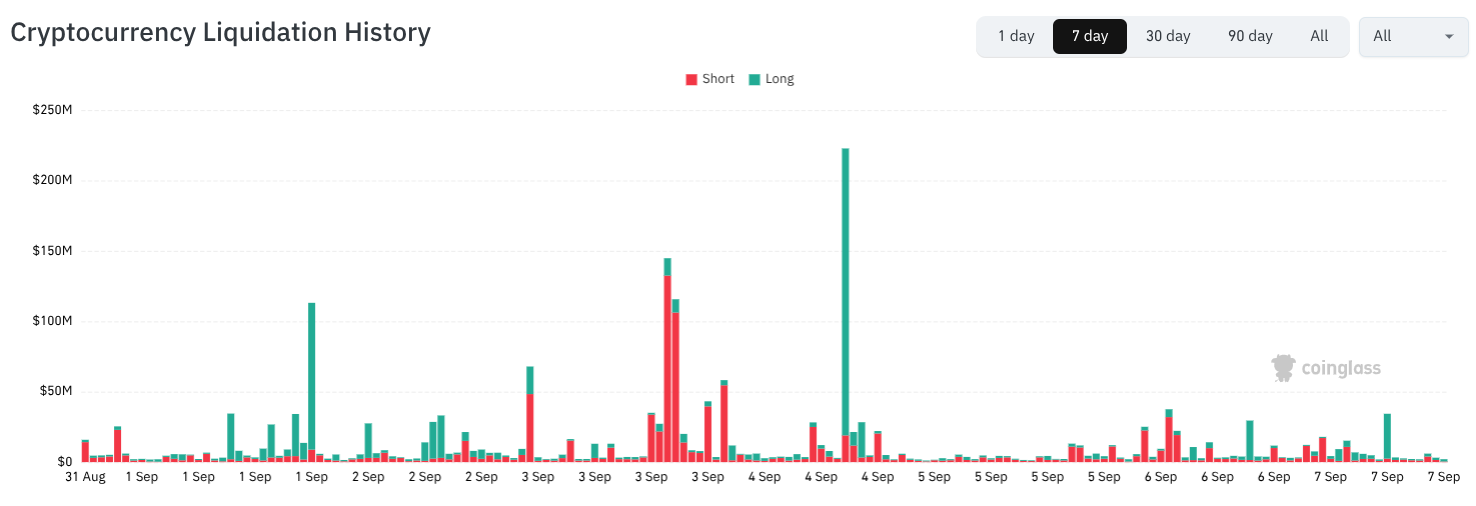
The pullback came alongside a distinctly quiet holiday trading session. Data from CoinGlass showed liquidations were evenly split between long and short positions over the past 24 hours, with the cross-crypto total reaching $178 million — a sign that neither bulls nor bears had a clear upper hand. Liquidity built up through the day around $80,500 and $78,800, marking the nearest short-term price magnets in either direction.

Trading firm QCP Capital pointed to declining volatility as evidence the market is simply waiting rather than taking a strong position. The firm noted that this apparent calm exists despite major catalysts approaching later in the week — US inflation data due Thursday and Friday, which will heavily influence expectations for the Federal Reserve’s next move on interest rates. QCP described the current setup as a market waiting for clarity rather than pricing in a firm directional view, adding that a break in one direction or the other looks likely once the data lands.
Why Analysts Call Bitcoin’s Range “Resilient”
Even with Monday’s dip, Bitcoin has held the bulk of its roughly 25% gain from last month, trading in a relatively tight band since August 21. Bitget chief analyst Ryan Lee pointed out that Bitcoin has already absorbed a significant macro shock — last week’s surprise strength in nonfarm payrolls — without breaking down. Normally, stronger employment data pressures yields and the dollar higher, creating headwinds for risk assets. The fact that Bitcoin shrugged it off, Lee said, suggests investors aren’t treating a potential Fed hike as the only thing driving price at current levels.
The Fed Remains the Real Ceiling
Bitcoin’s rate sensitivity hasn’t disappeared, though. CoinShares’ James Butterfill argued that Bitcoin is increasingly trading like gold, but the Fed still effectively caps upside near $80,000. That dynamic played out clearly after Fed Chair Kevin Warsh’s Jackson Hole remarks, which suggested inflation progress remained too slow to build confidence that price pressures were returning to target. Roughly $100 million exited digital asset products immediately after the speech as markets repriced toward a higher chance of a September hike.
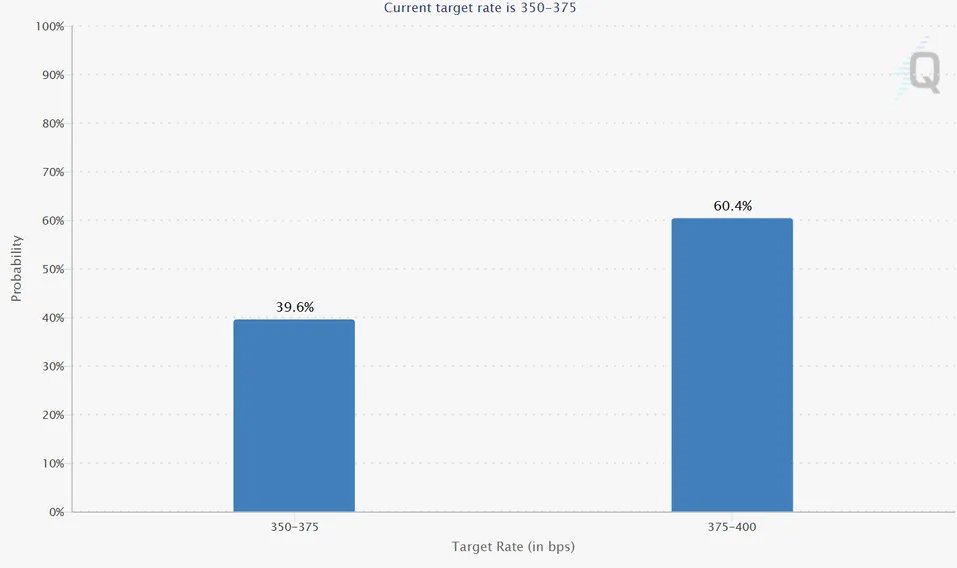
That move reversed just as quickly. Flows turned positive over the following week, reaching $1 billion by September 4, after Fed Governor Christopher Waller pointed to signs of disinflation and said he’d favor holding rates steady in September if upcoming data continued to show progress. Butterfill framed the swings as evidence that investors aren’t abandoning the asset class — they’re simply repositioning around the expected rate path. As of Monday, Fed Funds futures priced in roughly a 60% chance of a rate hike following next week’s FOMC meeting, per CME Group data.

Treasury Buybacks Add to the Liquidity Picture
The macro backdrop extends beyond the Fed. Last month, the US Treasury announced plans to double certain long-dated bond buybacks from $2 billion to $4 billion per operation, a program set to run from September 9 through November 4. Bitcoin’s climb from the low $60,000s to above $80,000 unfolded alongside that announcement, and 21Shares co-founder Ophelia Snyder argued the timing wasn’t coincidental. She noted the buyback news coincided with equity sell-offs, yield curve shifts, and ongoing volatility tied to the Iran war, suggesting the rally may reflect broader de-risking away from US assets rather than crypto-specific drivers alone.
Also Read: White-Hat Hackers Return $270M in Bitcoin to Liquid Network After Patch Confirmation
That liquidity backdrop has fueled bigger forecasts. Standard Chartered has pointed to the buyback program in projecting Bitcoin could reach $100,000 before year-end — though this week’s inflation prints may determine how quickly, or whether, that path plays out.
Disclaimer: The information in this article is for general purposes only and does not constitute financial advice. The author’s views are personal and may not reflect the views of Chain Affairs. Before making any investment decisions, you should always conduct your own research. Chain Affairs is not responsible for any financial losses.