|
Getting your Trinity Audio player ready...
|
- SEC is delaying approval of prediction market ETFs to assess risks and gather public input.
- Demand for prediction markets is rising, with over $15B in monthly trading volume.
- Regulators remain cautious as legal and structural questions around these products persist.
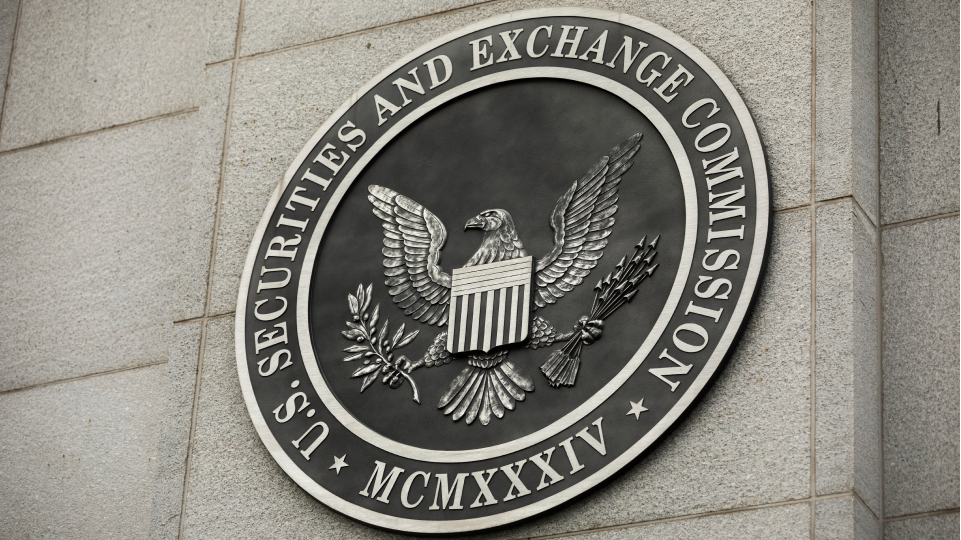
The U.S. Securities and Exchange Commission (SEC) is taking a more cautious stance on a new class of exchange-traded products tied to prediction markets, signaling that so-called “novel ETFs” will not move forward without further scrutiny. The pause highlights growing regulatory uncertainty around financial products that bridge traditional investing and event-based trading, from elections to sports outcomes.
SEC Slows Approval of Prediction Market ETFs
In a recent statement, SEC Chair Paul Atkins said that emerging ETF structures raise complex questions that require deeper review. He directed staff to gather public input before moving ahead with approvals.
Several firms had already entered the race. Bitwise Investments filed in February for a suite of prediction-focused funds under its PredictionShares brand. Meanwhile, Roundhill Investments and GraniteShares also submitted proposals designed to give investors exposure to binary event outcomes through standard brokerage accounts.
These products aim to package prediction markets into familiar ETF structures, potentially opening the door to broader retail participation.
Growing Appetite for Prediction Markets
Interest in prediction markets has surged over the past year, evolving into one of the more active corners of digital trading. Platforms across elections, sports, and macroeconomic events now generate over $15 billion in monthly trading volume.
The proposed ETFs would allow investors to tap into that activity without directly engaging with specialized trading platforms. Instead, exposure would be available through traditional financial channels, similar to how Bitcoin and Ether ETFs brought crypto exposure into mainstream portfolios.
Regulatory Caution and Legal Pressure
According to Eric Balchunas of Bloomberg, the regulator is still weighing how these products fit within existing frameworks, drawing parallels to the early debates around spot crypto ETFs.
He noted that the SEC appears reluctant to “open the gates” before fully understanding potential risks and market behavior.
Adding to the uncertainty, prediction market operators such as Kalshi continue to face legal scrutiny in several U.S. jurisdictions, further complicating the path toward ETF approval.
Despite the slowdown, the SEC has acknowledged ETFs as a major driver of market innovation. ETF assets have expanded significantly in recent years, reflecting strong investor demand for diversified and accessible products.
Also Read: Jane Street Accused of Secret Terra Insider Trading Before $40B Crash
At the same time, regulators are exploring broader modernization efforts, including a potential “innovation exemption” that could support tokenized equities like Apple, Nvidia, and Tesla trading on blockchain-based infrastructure.
The SEC’s decision to delay prediction market ETFs underscores a balancing act between innovation and oversight. While investor appetite for event-based trading continues to grow, regulators are signaling that new financial instruments will need clearer safeguards before reaching mainstream markets.
Disclaimer: The information in this article is for general purposes only and does not constitute financial advice. The author’s views are personal and may not reflect the views of Chain Affairs. Before making any investment decisions, you should always conduct your own research. Chain Affairs is not responsible for any financial losses.

I’m a crypto enthusiast with a background in finance. I’m fascinated by the potential of crypto to disrupt traditional financial systems. I’m always on the lookout for new and innovative projects in the space. I believe that crypto has the potential to create a more equitable and inclusive financial system.