
|
Getting your Trinity Audio player ready...
|
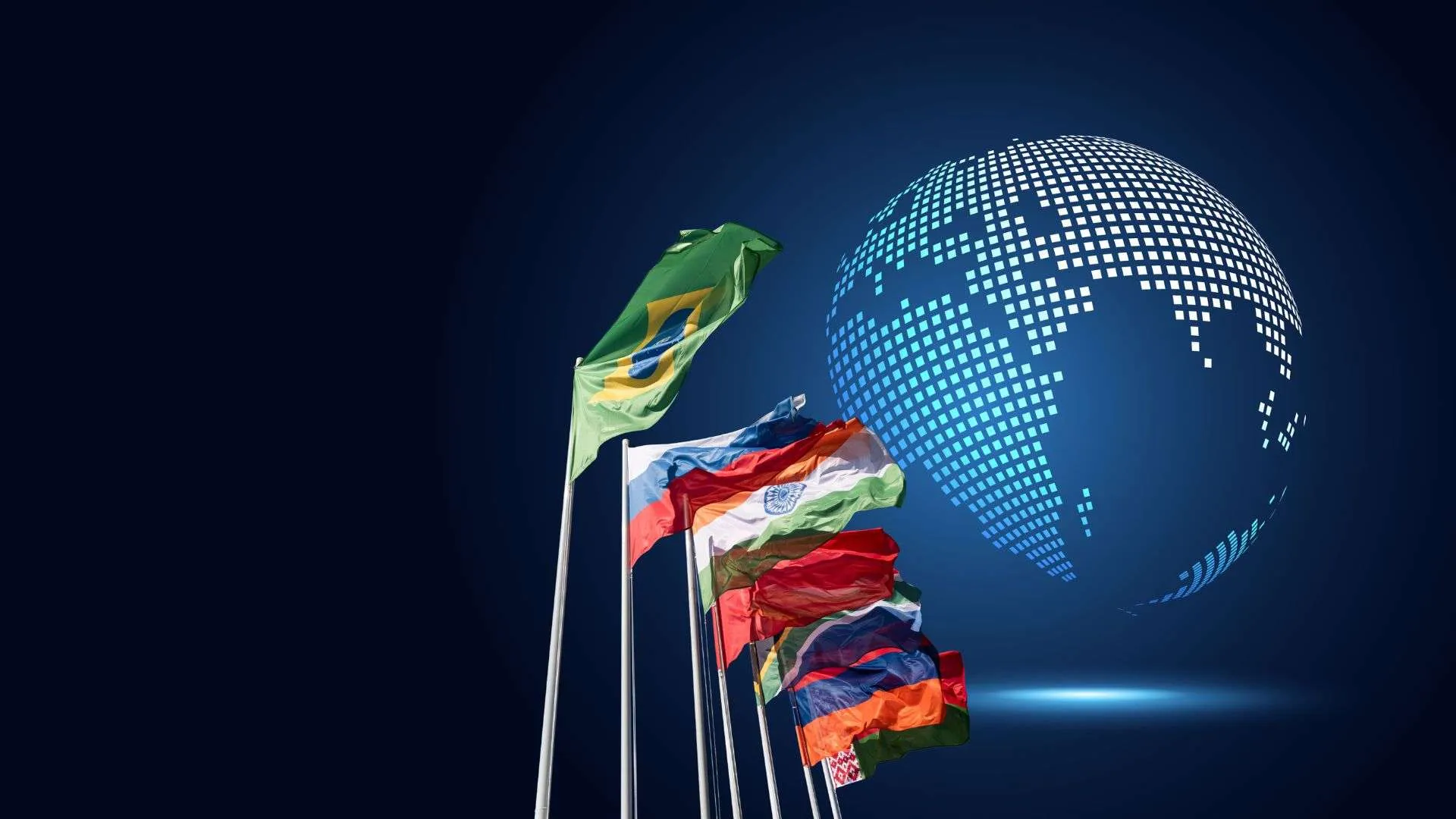
As the world’s geopolitical and economic landscapes evolve, a significant shift is underway: BRICS nations are actively reducing their reliance on the U.S. dollar to reclaim financial sovereignty and establish a multipolar world order. Russian Deputy Foreign Minister Mikhail Bogdanov’s recent statements underscore this transition, highlighting BRICS as a powerful coalition aiming to distance its economies from Western influence without being “anti-Western.” This movement, rooted in sovereignty and collaboration, is gaining momentum, with BRICS expanding and enhancing its global impact.
The Expanding BRICS Coalition
Initially formed in 2006 by Brazil, Russia, India, and China, with South Africa joining in 2011, BRICS represents a coalition of emerging economies with shared goals of fostering economic growth and strengthening regional alliances. The addition of Egypt, Iran, the UAE, Saudi Arabia, and Ethiopia as full members on January 1, 2024, signals the coalition’s growing appeal. These new entrants bring significant geopolitical and economic clout to BRICS, enhancing its influence as a global alternative to Western-led organizations like the International Monetary Fund (IMF) and the World Bank.
Kazan Summit – A New Agenda for Economic Sovereignty
The 16th BRICS Summit, held from October 22 to 24, 2024, in Kazan, Russia, marked a milestone as it was the first summit to include the newly inducted members. At the heart of the discussions was the Kazan Declaration, a strategic document outlining BRICS’ stance on global issues, including the commitment to a financial architecture that reduces dependency on the dollar. The Declaration emphasizes local currency transactions, cross-border payment solutions, and policies to support economic integration among BRICS nations.
Russian Deputy Foreign Minister Sergey Ryabkov highlighted the effectiveness of mutual settlement clearing schemes among BRICS countries, which aim to bypass dollar transactions, thus mitigating the risk of sanctions. Ryabkov noted, “These agreements play a pivotal role in shielding our economies from illegitimate sanctions,” indicating a desire to build resilience against external economic pressures. With Brazil set to inherit the BRICS presidency, these dedollarization initiatives will continue, potentially leading to the establishment of a cross-border payment system fully independent of the dollar.
BRICS’ Appeal – An Alternative to Western Hegemony
Bogdanov’s remarks reflect a shared sentiment among BRICS members: the need to create financial systems free from Western control, but without positioning the coalition as adversarial. “This association has very great potential,” Bogdanov noted, pointing to the growing list of countries expressing interest in joining BRICS. The coalition offers an alternative path for countries seeking economic sovereignty, one that enables partnerships without the geopolitical strings often associated with Western alliances.
For many countries, joining Brazil, Russia, India, and China signifies more than just economic alignment; it represents a strategic move to reclaim political and financial independence. The coalition provides a platform where emerging economies can thrive through mutual cooperation, advancing shared goals while remaining insulated from the influence of sanctions or the policies of Western powers.
Also Read: BRICS Common Currency – Could It Disrupt the $7 Trillion U.S. Dollar Dominance?
BRICS’ path toward dedollarization signifies a bold shift in global finance, where emerging markets work collectively to diminish the dollar’s role as the dominant global reserve currency. This endeavor could transform trade dynamics, fostering a multipolar world where financial power is more evenly distributed. While the road ahead involves overcoming significant hurdles, such as establishing reliable and efficient cross-border systems and managing potential diplomatic friction with the West, BRICS remains committed to redefining economic power structures.
As BRICS advances, the coalition could shape a future where countries have the freedom to choose economic partners without external pressure. For now, the BRICS movement symbolizes a new era of financial independence, one where the vision of a multipolar world draws closer to reality with each summit and new alliance formed.
Disclaimer: The information in this article is for general purposes only and does not constitute financial advice. The author’s views are personal and may not reflect the views of Chain Affairs. Before making any investment decisions, you should always conduct your own research. Chain Affairs is not responsible for any financial losses.

Crypto and blockchain enthusiast.