

|
Getting your Trinity Audio player ready...
|
- Bitcoin remains the preferred digital gold for long-term treasury stability.
- Ether offers income-generating potential and programmable utility through staking and DeFi.
- Dual-asset strategies are emerging as the optimal approach for both corporations and sovereigns.
Inflationary pressure, and geopolitical volatility, cash alone no longer guarantees stability. Traditional reserves such as bonds, gold, and T-bills come with their own challenges—interest rate risk, slow liquidity, and exposure to foreign exchange shocks. Corporations and governments are increasingly turning to digital assets, particularly Bitcoin (BTC) and Ether (ETH), to safeguard wealth, diversify currency exposure, and enable fast, cross-border transactions.
As digital adoption accelerates, 2025 marks a pivotal moment in the evolution of treasury strategies. Bitcoin continues to serve as the “digital gold” of reserves, while Ether emerges as a programmable, yield-generating alternative. Understanding their unique advantages—and the strategic rationale behind dual-asset reserves—offers insight into the future of finance.
Bitcoin Treasuries: The Digital Gold Standard
Bitcoin has long been regarded as a store of value, earning the moniker of “digital gold.” Its finite supply of 21 million coins ensures scarcity, while its widespread recognition and liquidity make it a natural choice for treasury diversification.
Institutional and Sovereign Adoption
The U.S. has moved cautiously but decisively toward Bitcoin integration. Senator Cynthia Lummis proposed the Bitcoin Act, which, if enacted, would require the U.S. Treasury to acquire 1 million BTC over five years. In parallel, former President Donald Trump launched the Strategic Bitcoin Reserve in March 2025, utilizing seized federal BTC to fund a government-backed reserve.
El Salvador made headlines in 2021 by adopting Bitcoin as legal tender, while countries such as Bhutan quietly added BTC to sovereign reserves. Corporations have mirrored this approach: Strategy, a leading crypto-focused firm, continuously acquires BTC as the backbone of its treasury.
Advantages of Bitcoin Treasuries:
- Liquidity: Highly tradable across global exchanges.
- Scarcity: Limited supply ensures long-term value preservation.
- Recognition: Widely accepted and understood in financial markets.
Drawbacks:
- Volatility: BTC price swings can impact balance sheets.
- Passive income: Holding BTC alone generates no yield without lending or derivative strategies.
Example: Semler Scientific acquired 210 BTC in July 2025 for ~$25 million at an average price of $118,974 per coin, demonstrating corporate-scale adoption at moderate investment levels.
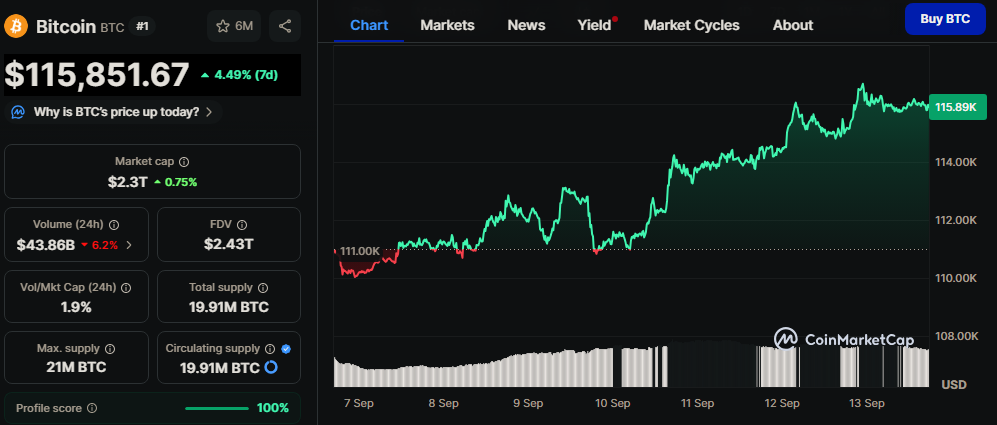
Ether Treasuries: The Programmable Alternative
Ether, the native cryptocurrency of the Ethereum network, offers a different proposition for treasury managers. Following Ethereum’s 2022 Merge, which transitioned the network to proof-of-stake (PoS), ETH became a productive asset capable of generating 3%-5% annual staking yields.
Use Cases Beyond Storage of Value
Ether treasuries provide both security and utility:
- Staking Income: Treasuries can earn consistent returns on idle ETH.
- Decentralized Finance (DeFi) Integration: ETH can be used as collateral, enabling access to liquidity without liquidating holdings.
- Tokenized Assets: Corporate and sovereign treasuries can engage with bonds, commodities, or other tokenized real-world assets.
Institutional Uptake
Ether-based ETFs launched in 2024 have facilitated regulated institutional exposure, while DAOs increasingly hold ETH to ensure long-term stability. Historical exposure through trusts like Grayscale Ethereum Trust also underscores early institutional confidence.
Challenges:
- Regulatory uncertainty across jurisdictions.
- Technical complexity and staking risks.
- Price volatility, though mitigated by yield opportunities.
2025 Data: Comparing Bitcoin and Ether Treasury Holdings
By September 10, 2025, BTC remains the preferred treasury asset, but ETH is rapidly gaining adoption.
| Metric | Bitcoin (BTC) | Ether (ETH) |
|---|---|---|
| Total corporate & institutional holders | 134 | 73 |
| Coins held | ~1,245,000 BTC | 4.91M ETH |
| Leading holder | Strategy: 638,460 BTC | BitMine Immersion Tech: 2.07M ETH |
| Strategy | Long-term hold | Active staking & DeFi |
| Annual return | None (passive) | 3%-5% via staking |
| Valuation (as of Sept 2025) | Billions USD | $21.28B USD |
This comparison highlights different treasury strategies: BTC serves as a long-term value store, while ETH offers a more dynamic, income-generating role.
Dual Treasury Strategies: Combining Stability and Growth
Many entities are now adopting a dual-asset approach, holding both BTC and ETH to balance security with utility.
Examples of Dual Strategies
United States Strategic Crypto Reserve:
- BTC: ~198,000-207,000 coins ($17B-$20B) acquired via executive orders and seizures.
- ETH: ~60,000 coins ($261M) in a dedicated digital asset stockpile.
BitMine Immersion Technologies (BMNR):
- BTC: 192 coins (~$21M)
- ETH: 2.07M coins (~$9B)
This hybrid approach allows entities to leverage Bitcoin’s global trust while generating yield and utility from Ether holdings.
Insight: Institutions are increasingly tokenizing traditional assets, issuing billions in government bonds on Ethereum, merging crypto with conventional finance (TradFi).
Advantages and Drawbacks: BTC vs ETH
Bitcoin Pros and Cons
Pros:
- High liquidity and global acceptance
- Scarcity ensures long-term value preservation
- Digital gold narrative supports adoption
Cons:
- Volatile in the short term
- No passive income without derivatives
Ether Pros and Cons
Pros:
- Staking generates 3%-5% annual yield
- Supports DeFi and tokenized assets
- Versatile for institutional applications
Cons:
- Technically complex for treasury management
- Regulatory and staking risks
- Less recognized than BTC as a “reserve currency”
Key Takeaway: BTC prioritizes security and trust, ETH prioritizes growth and income. Both can coexist in a well-rounded treasury.
Historical Context: Crypto Treasuries Evolving
From 2021 onward, the treasury landscape has shifted dramatically:
- 2021: El Salvador adopts BTC as legal tender.
- 2022: Ethereum Merge introduces staking yields.
- 2024: ETH ETFs provide regulated institutional exposure.
- 2025: Strategic dual-reserve initiatives emerge in both sovereign and corporate treasuries.
This historical trajectory indicates a maturing market, with growing sophistication in treasury strategies.
Strategic Implications for Corporations and Sovereigns
Corporations
Treasury managers are motivated by four objectives:
- Inflation Hedge: BTC and ETH can offset currency devaluation.
- Diversification: Reduce reliance on cash and bonds.
- Liquidity: 24/7 global access to funds.
- Digital Settlement: Test blockchain-enabled payment rails.
Sovereigns
For governments, crypto treasuries serve broader strategic purposes:
- Sanctions Resilience: Maintain neutral, borderless liquidity.
- Long-Term Wealth Preservation: Hedge against domestic and global economic shocks.
- Digital Asset Experimentation: Explore new financial infrastructure for state-level adoption.
The 2025 Landscape: Who’s Winning?
By mid-2025:
- Bitcoin dominates in total treasury holdings, favored for its stability and digital gold status.
- Ether gains traction for its income generation and programmable utility, appealing to tech-forward institutions and DAOs.
Ultimately, the “winner” depends on the treasury’s goals: security or growth. The emerging trend is hybrid: BTC for reliability, ETH for utility and yield.
Also Read: BlackRock’s $100B Crypto Portfolio: Bitcoin Surges While Ethereum Faces Outflows
The Future of Digital Treasuries
The evolution of corporate and sovereign reserves underscores a critical shift in global finance. BTC remains the cornerstone for stability and wealth preservation, while ETH introduces innovation, yield, and programmable capabilities.
In 2025, forward-looking treasuries increasingly embrace both assets, reflecting a sophisticated balance between digital gold and digital productivity. As regulatory frameworks clarify and adoption expands, dual-reserve strategies may become standard practice, signaling a fundamental transformation in how value is stored, moved, and grown in the digital age.
Disclaimer: The information in this article is for general purposes only and does not constitute financial advice. The author’s views are personal and may not reflect the views of Chain Affairs. Before making any investment decisions, you should always conduct your own research. Chain Affairs is not responsible for any financial losses.

I’m your translator between the financial Old World and the new frontier of crypto. After a career demystifying economics and markets, I enjoy elucidating crypto – from investment risks to earth-shaking potential. Let’s explore!