

|
Getting your Trinity Audio player ready...
|
- BlackRock says leverage and shifting capital flows were major forces behind Bitcoin’s correction.
- Institutional interest remains strong despite ETF outflows and months of price consolidation.
- On-chain accumulation signals could offer support, but they do not guarantee that Bitcoin has bottomed.
Bitcoin’s sharp decline from its October 2025 record has raised fresh questions about the strength of the cryptocurrency’s long-term investment case. But BlackRock argues that the latest downturn says more about leverage, investor positioning and shifting capital flows than a fundamental failure of Bitcoin.
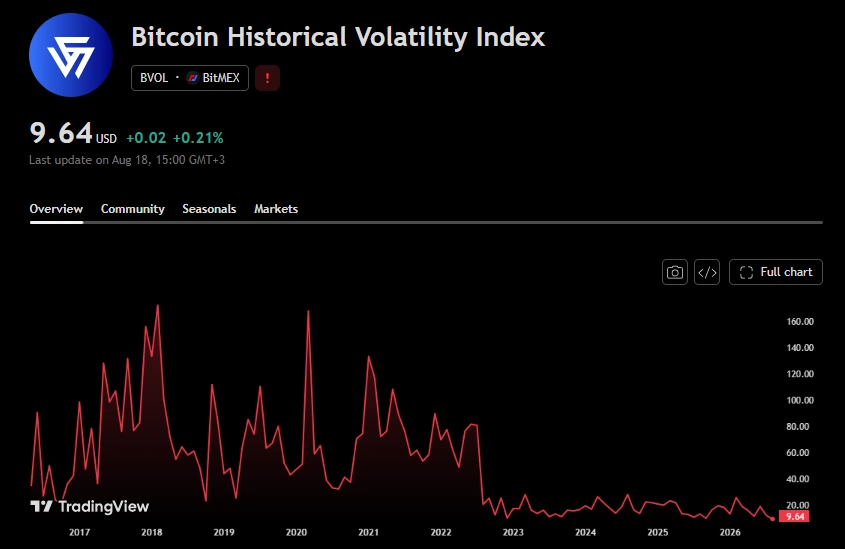
After reaching roughly $126,000 in October 2025, Bitcoin fell toward $60,000 in 2026. The cryptocurrency has since entered a prolonged period of consolidation, recently trading between $62,000 and $66,000, with the price around $64,595 at press time.

Leverage Played a Major Role in Bitcoin’s Decline
BlackRock points to excessive leverage as one of the key drivers of the sell-off. Bitcoin futures open interest climbed above $90 billion near the market peak, with about 80% concentrated in perpetual futures outside CME markets.
As tariff concerns and changing expectations for interest rates hit risk assets, leveraged positions were liquidated, accelerating Bitcoin’s decline. Long-term holders also reduced exposure around the closely watched $100,000 level, while demand from digital-asset treasury firms weakened.
The resulting correction, BlackRock argues, should not automatically be interpreted as evidence that Bitcoin’s core investment thesis has failed.
Bitcoin ETF Flows Show Changing Investor Demand
Spot Bitcoin exchange-traded products attracted approximately $60 billion in cumulative inflows from launch through October 2025. More than $5 billion subsequently flowed out as investor attention shifted toward other themes, including artificial intelligence funds.
Those movements highlight how quickly institutional capital can rotate when market narratives change. Still, institutional participation remains visible.
Tudor Investment Corporation increased its holdings in BlackRock’s spot Bitcoin ETF by 18.9% in the second quarter, while Jane Street increased its spot Bitcoin ETF exposure by $630 million.
Why BlackRock Still Favors a Small Bitcoin Allocation
BlackRock’s longer-term argument increasingly centers on Bitcoin’s role within diversified portfolios rather than perpetual price appreciation. The firm cites its fixed supply, growing regulated access, evolving digital-asset regulation and relatively different behavior from traditional investments.
Its 10-year portfolio analysis suggests that allocating 1% to 2% of a traditional 60/40 portfolio to Bitcoin could improve risk-adjusted returns, although results depend on assumptions and the measurement period.
Bitcoin adoption is also expanding. Metaplanet plans to transfer 2,100 BTC and $2.5 million into Super League Enterprise as it develops a Bitcoin treasury strategy, while Zhibao Technology has joined the growing group of publicly traded Bitcoin treasury companies.
On-chain data offers another potentially positive signal. CryptoQuant says Bitcoin’s spot demand is approaching positive territory for the first time since February. Historically, comparable shifts have preceded a median 18.1% gain over 60 days, although past performance does not guarantee future results.
Glassnode has also identified signs of accumulation by stronger holders, with the $60,000 region emerging as an important area of interest.
For now, Bitcoin remains caught between roughly $62,000 and $66,000. Holding above the $63,200 median realized price could support a move toward $65,000, while a break below it could expose $62,000.
The broader picture remains uncertain. Bitcoin’s recent stability, institutional adoption and emerging accumulation signals provide reasons for optimism, but they do not prove that a market bottom is in place. For BlackRock, however, the latest correction appears more like a test of market structure than an end to Bitcoin’s long-term portfolio story.
Also Read: BlackRock Launches Tokenized Funds in Europe: What JPMorgan’s Blockchain Move Means
Bitcoin’s latest downturn has exposed the risks of leverage and rapidly shifting capital flows, but institutional demand and adoption have not disappeared. With BlackRock continuing to support a modest portfolio allocation, the debate is increasingly shifting from whether Bitcoin can rise again to what role it can play in diversified investment strategies over the next decade.
Disclaimer: The information in this article is for general purposes only and does not constitute financial advice. The author’s views are personal and may not reflect the views of Chain Affairs. Before making any investment decisions, you should always conduct your own research. Chain Affairs is not responsible for any financial losses.


I’m your translator between the financial Old World and the new frontier of crypto. After a career demystifying economics and markets, I enjoy elucidating crypto – from investment risks to earth-shaking potential. Let’s explore!