
|
Getting your Trinity Audio player ready...
|
- Verified X accounts were compromised to promote the SCATMAN memecoin and attract buyers.
- Attackers reportedly made about $135,000 before the token lost more than 98% of its value.
- The incident highlights the risks of trusting social media hype without verifying token legitimacy and liquidity.
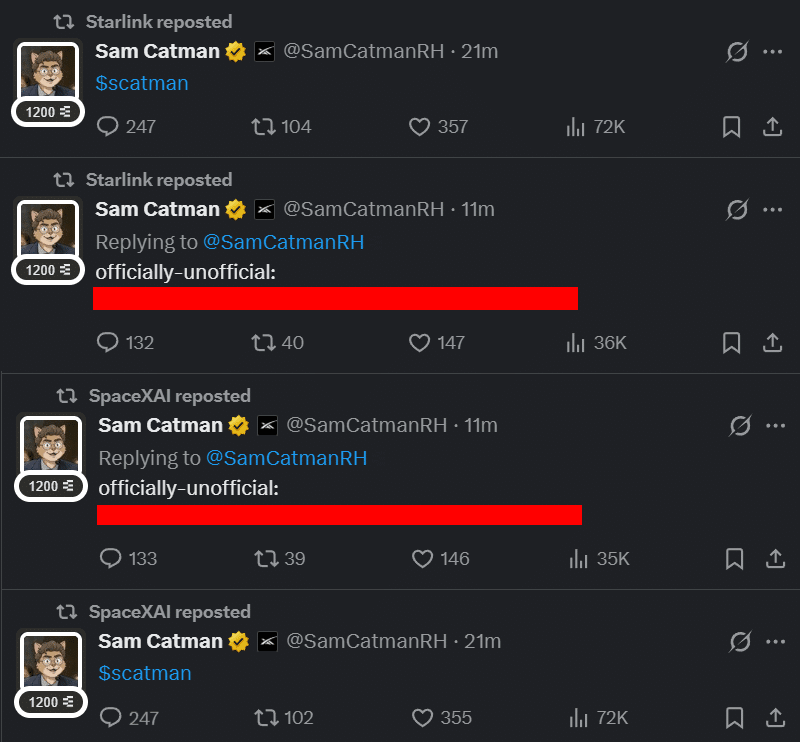
Verified social media accounts have once again become powerful tools for crypto scammers. On July 13, attackers compromised the X accounts associated with SpaceXAI and Starlink to promote the SCATMAN memecoin, drawing thousands of users into what quickly turned into a classic pump-and-dump scheme.
The fraudulent posts spread rapidly across X, with one of them attracting more than 72,000 views within minutes. Because the accounts appeared legitimate, many traders assumed the token had credible backing, triggering a wave of speculative buying that briefly pushed SCATMAN’s market value close to $2 million.
Verified Accounts Become Weapons for Crypto Scams
The incident highlights a growing trend in which hackers target trusted or verified social media profiles instead of creating fake accounts. A compromised profile with an established audience can instantly give a fraudulent token an appearance of legitimacy, making investors more likely to buy without verifying the information.
In the SCATMAN case, that misplaced trust translated directly into heavy trading activity. Thousands of transactions poured into the token shortly after the promotional posts appeared, creating the illusion of genuine market momentum.
Unfortunately, the excitement was built on deception rather than real demand.
SCATMAN Rally Ends in a Rapid Collapse
Before launching the campaign, the attacker reportedly minted 10 trillion SCATMAN tokens. As buying pressure intensified, the wallets behind the operation sold into the rally, collecting approximately 73.7 ETH, worth around $135,000.
Trading volume surged to roughly $5.7 million across nearly 45,000 transactions as retail traders rushed into the market. However, once the large token sales began, the available liquidity proved far too small to absorb the selling pressure.
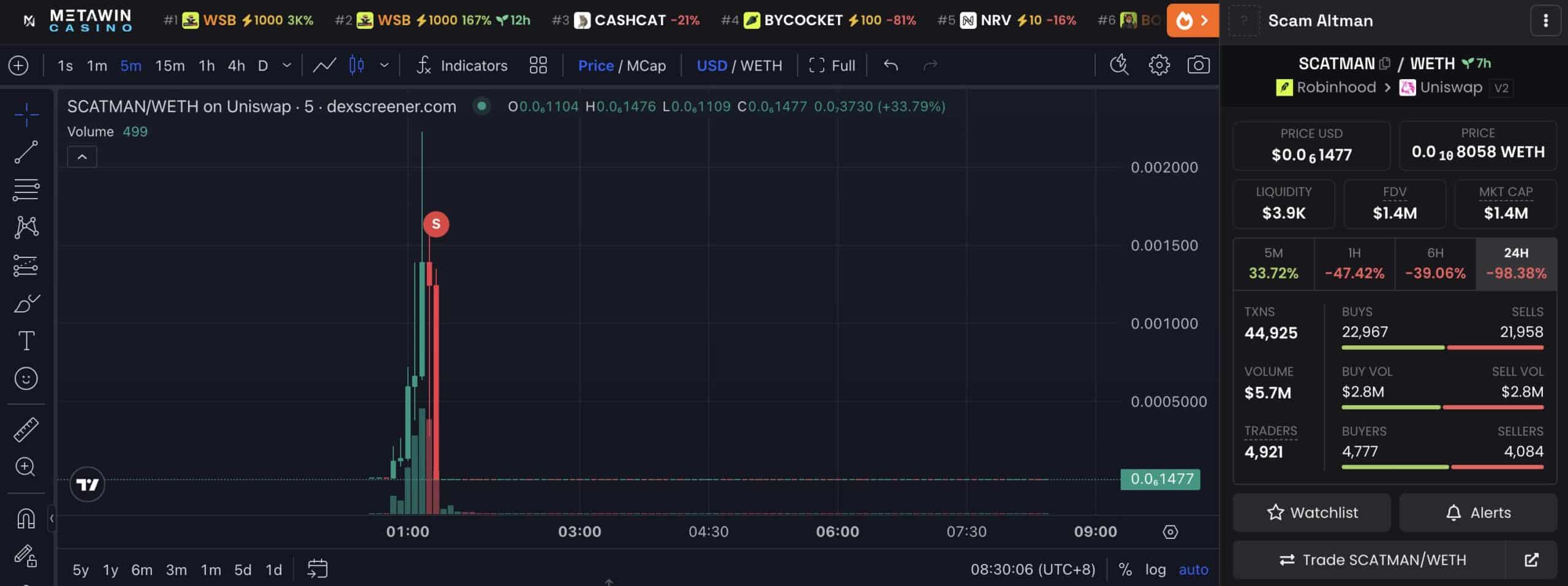
The result was immediate. SCATMAN lost more than 98% of its value, and within a day, only about $3,900 remained in liquidity. Investors who entered late were left holding nearly worthless tokens after the price collapsed.
Why Liquidity Matters in Memecoin Markets
The SCATMAN incident demonstrates how quickly low-liquidity tokens can unravel. While buyers briefly outnumbered sellers, the market depended almost entirely on continued optimism rather than sustainable demand.
When a single large holder exited the position, liquidity vanished, causing prices to fall almost instantly. This is a common risk in newly launched memecoins, where concentrated ownership and thin liquidity make prices extremely vulnerable to manipulation.
The latest attack serves as another reminder that verified social media accounts should not be treated as proof of a cryptocurrency’s legitimacy. Even trusted profiles can be compromised, allowing scammers to exploit their reputation for financial gain.
Also Read: DOJ Charges 19-Year-Old Scattered Spider Hacker in $100 Million Crypto Extortion Case
For crypto investors, verifying announcements through official project channels, reviewing token distribution, and checking liquidity before investing remain essential steps. As social engineering tactics continue to evolve, skepticism may be one of the strongest defenses against costly crypto scams.
Disclaimer: The information in this article is for general purposes only and does not constitute financial advice. The author’s views are personal and may not reflect the views of Chain Affairs. Before making any investment decisions, you should always conduct your own research. Chain Affairs is not responsible for any financial losses.

I’m your translator between the financial Old World and the new frontier of crypto. After a career demystifying economics and markets, I enjoy elucidating crypto – from investment risks to earth-shaking potential. Let’s explore!