|
Getting your Trinity Audio player ready...
|
- SpaceX shares dropped sharply after an explosive public debut, raising valuation concerns.
- A $25 billion bond sale increased investor debate over risk and market demand.
- The SpaceX reaction could influence future IPO plans from major technology companies.
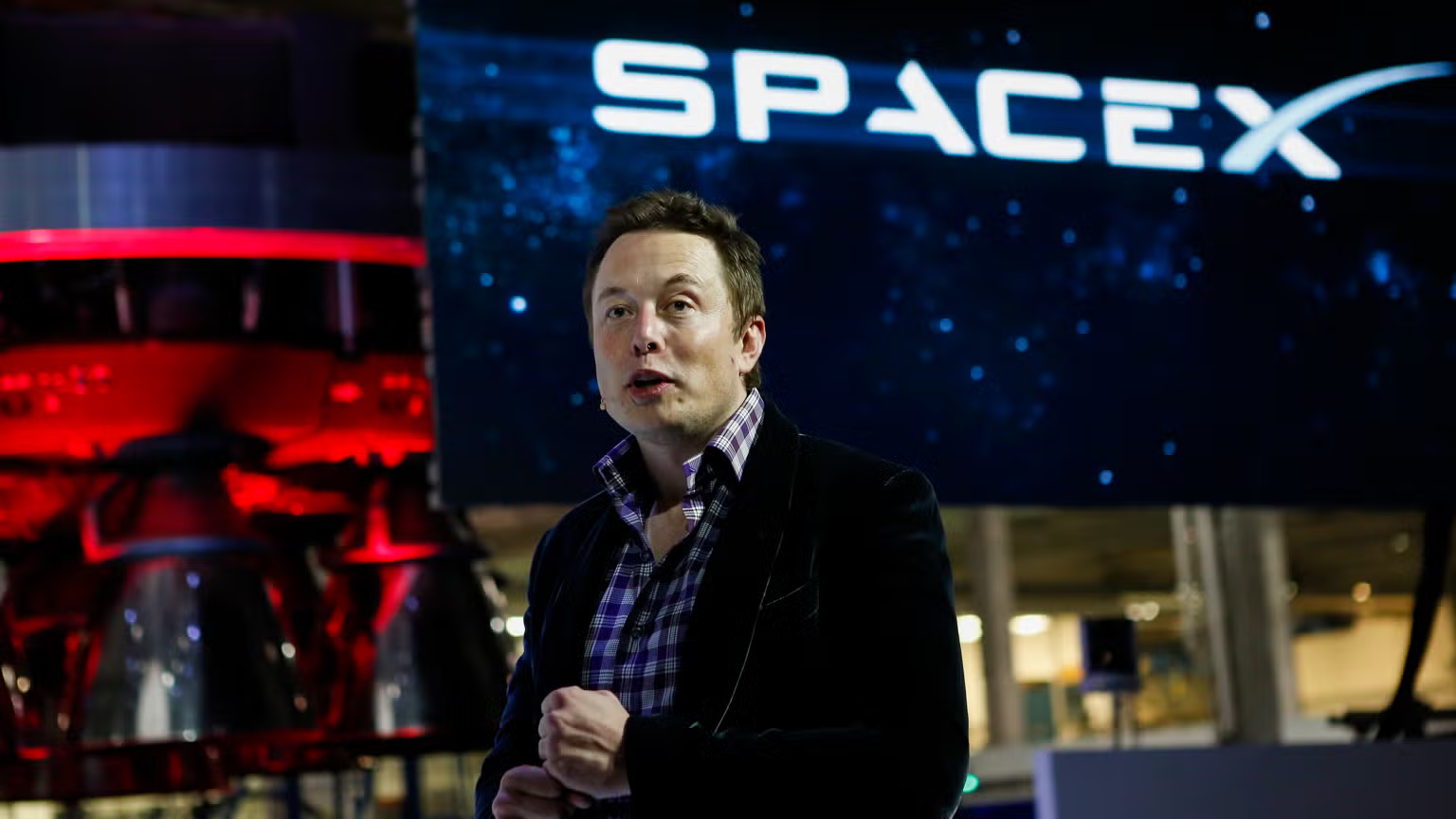
SpaceX’s highly anticipated public market debut quickly became a test of investor confidence. Just two weeks after the company entered public trading, one of Europe’s biggest asset managers warned that the excitement surrounding the listing may have pushed markets too far. The warning has added fresh debate over whether SpaceX’s stock performance reflects long-term value or a broader sign of market excess.
Allianz Chief Investment Officer Ludovic Subran said SpaceX’s return to capital markets represents a shift from a strong investment environment into what he described as “bubble territory.” His concerns come as investors evaluate whether the demand surrounding major technology and space companies is sustainable.
SpaceX IPO Momentum Fades After Historic Debut
SpaceX shares, trading under the ticker SPCX, opened at $150 on June 12 and quickly attracted heavy buying interest. The stock climbed to an intraday high of $225.64 on June 16, creating a wave of optimism around the company’s future growth.
However, the rally reversed sharply. By June 26, SPCX had fallen close to $152, marking a decline of about 32% from its peak and wiping out more than $600 billion in market value in less than two weeks.
The sudden pullback has raised questions about whether investors priced in too much future growth too quickly. Analysts have described the stock as expensive compared with current fundamentals, with some suggesting the market may need time to reassess SpaceX’s valuation.
$25 Billion Bond Sale Adds Pressure on Investors
The debate intensified after SpaceX launched a $25 billion corporate bond offering. The company initially planned a smaller deal but expanded it after receiving strong demand, with investor orders reaching around $89 billion.
SpaceX plans to use the funds to repay a $20 billion bridge loan taken earlier in the year. While demand was strong, bond buyers required higher returns, signaling that some lenders wanted extra compensation for taking on the risk.

Subran highlighted the difference between stock investors chasing future growth and bond investors focused on repayment and income. That contrast has become central to the discussion around SpaceX’s valuation.
IPO Pipeline Faces New Investor Concerns
SpaceX’s volatility may influence other major technology companies considering public listings. Market watchers have already pointed to uncertainty around possible IPOs from companies such as OpenAI and Anthropic, especially as investors become more cautious about high-growth valuations.
Some analysts previously warned that large artificial intelligence and space-related companies entering public markets could create a major wave of new stock supply. The reaction to SpaceX’s debut may now shape how those companies approach future listings.
Investment firms have taken a measured view of SPCX. Susquehanna began coverage with a Neutral rating and a $170 price target, while Morningstar placed its optimistic valuation near $169 and warned that the stock appeared significantly overvalued at its peak.
SpaceX’s first public earnings report, expected on August 6, will be a key moment for investors. The results could determine whether the current decline is simply a market correction or an early warning sign of broader pressure on high-growth stocks.
SpaceX’s IPO journey has moved from excitement to caution in a matter of weeks. While the company remains one of the world’s most closely watched private-sector space players, its early market performance shows the challenges of balancing innovation, expectations, and valuation.
Disclaimer: The information in this article is for general purposes only and does not constitute financial advice. The author’s views are personal and may not reflect the views of Chain Affairs. Before making any investment decisions, you should always conduct your own research. Chain Affairs is not responsible for any financial losses.

I’m your translator between the financial Old World and the new frontier of crypto. After a career demystifying economics and markets, I enjoy elucidating crypto – from investment risks to earth-shaking potential. Let’s explore!