
|
Getting your Trinity Audio player ready...
|
- Bitcoin fell nearly 7% as geopolitical tensions and rising oil prices hit risk assets.
- Over $670 million in crypto long positions were liquidated within 24 hours.
- Analysts say holding the $76K support zone is crucial to avoid deeper losses.
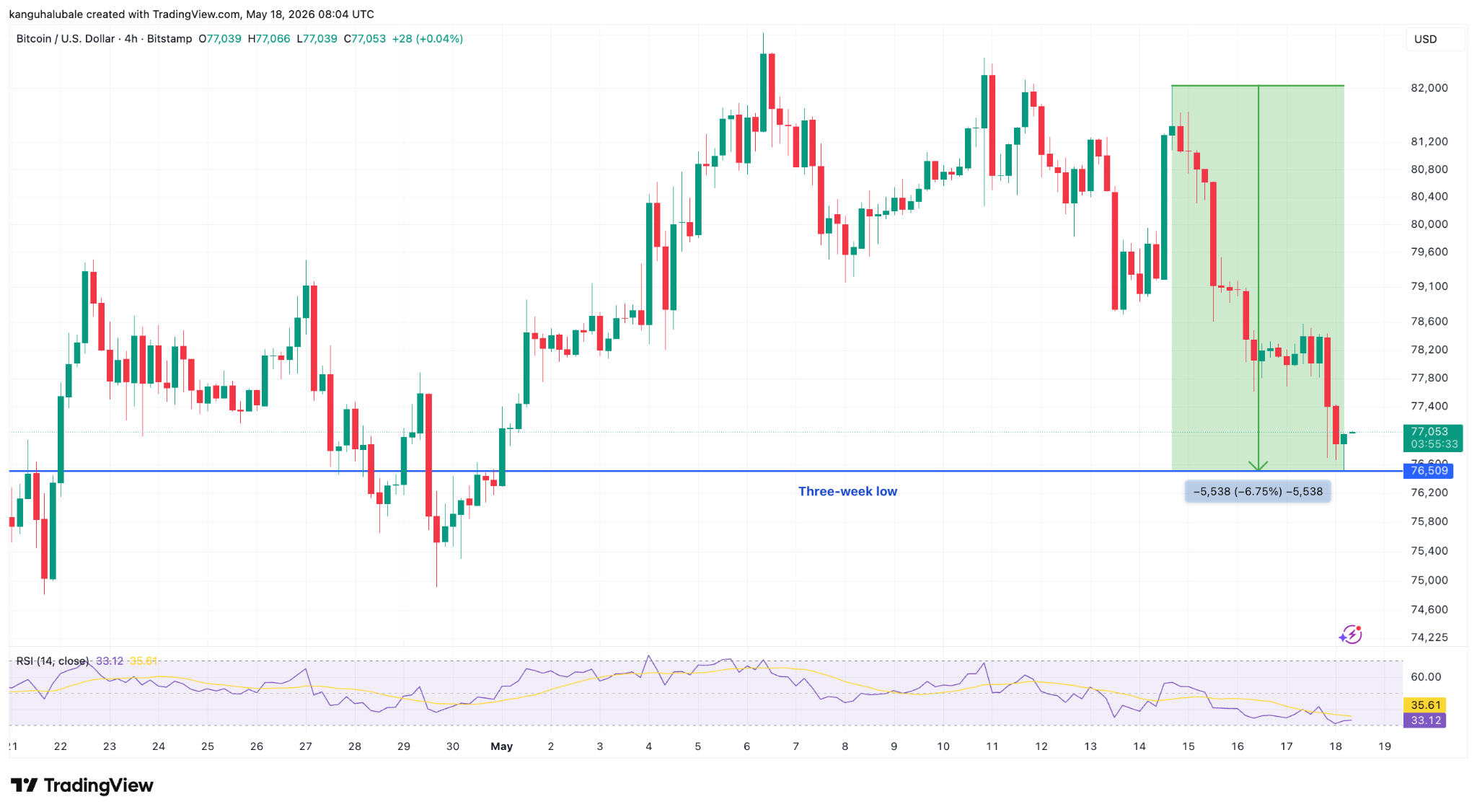
Bitcoin plunged to its lowest level in weeks on Monday, sliding below $77,000 as renewed geopolitical tensions between the United States and Iran rattled global markets and triggered a wave of crypto liquidations.
The sharp decline erased much of Bitcoin’s gains from earlier this month, when optimism around spot ETF inflows and crypto regulation reforms had briefly lifted sentiment. Instead, traders are now facing a market increasingly driven by macro uncertainty, rising oil prices, and fears of tighter monetary policy.
Bitcoin Drops as Risk Appetite Weakens
Bitcoin (BTC) fell nearly 7% over three days, touching around $76,500 during Asian trading hours. The sell-off intensified after US President Donald Trump warned that “the clock is ticking” for Iran amid stalled peace discussions, fueling speculation about possible military escalation.
The geopolitical concerns quickly spread across financial markets. Oil prices surged, with WTI crude briefly climbing above $104 per barrel before easing slightly. Rising energy costs have reignited inflation fears, reducing expectations that the US Federal Reserve will cut interest rates anytime soon.
That combination — higher inflation, stronger bond yields, and geopolitical instability — has pressured risk assets across the board, including cryptocurrencies.
Liquidations Accelerate Bitcoin’s Decline
The latest market drop triggered massive liquidations in leveraged crypto positions. More than $670 million in long positions were wiped out in 24 hours, with Bitcoin accounting for roughly $190 million of those losses.
Analysts say the flush of leveraged traders amplified downside volatility as BTC lost key technical support levels, including its 21-week exponential moving average near $78,600.
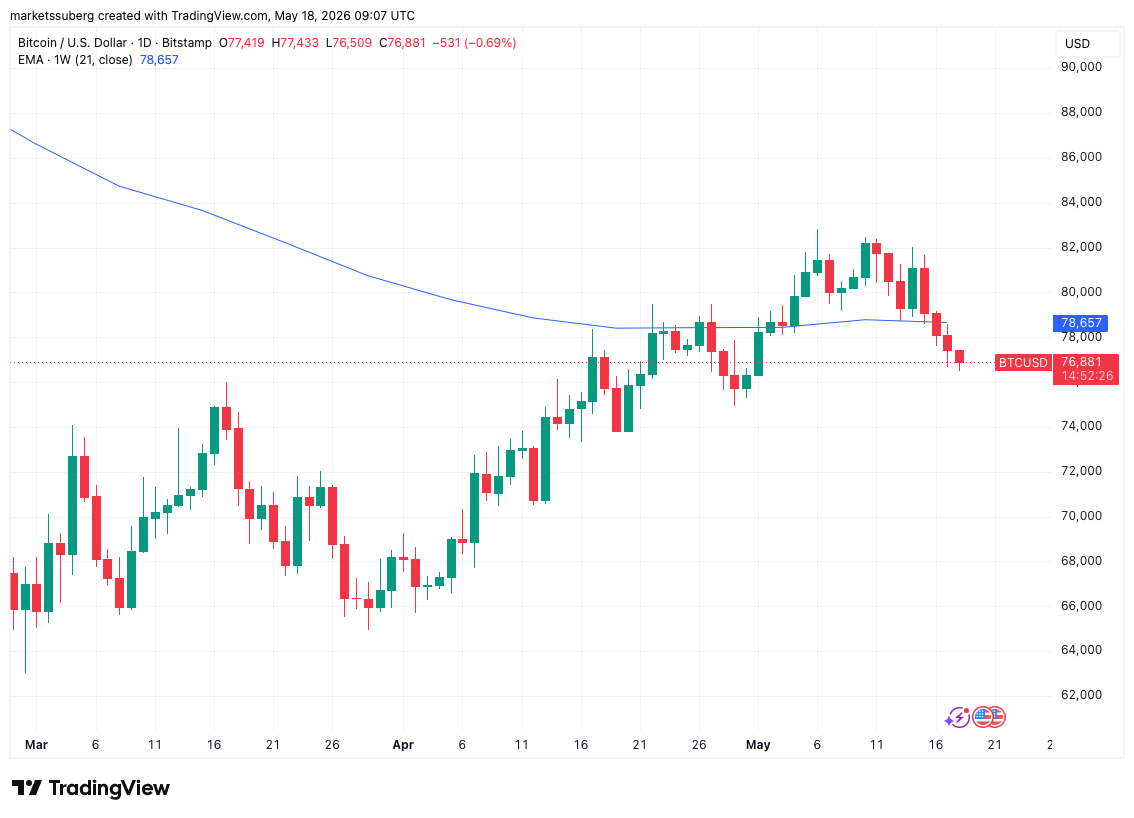
Several traders now view the $75,000–$76,000 region as a critical support zone. If Bitcoin fails to stabilize there, some analysts believe prices could revisit the $71,000 range or even drop toward $65,000 in a deeper correction.
Still, not everyone is turning bearish.
Whale Activity Suggests Long-Term Confidence
Despite the panic, onchain data indicates that large Bitcoin holders are not aggressively selling. According to CryptoQuant analysts, whale wallets holding more than 10,000 BTC continue to maintain or even increase their positions.
That behavior suggests major investors may still believe Bitcoin’s longer-term uptrend remains intact, even as short-term volatility intensifies.
Some traders are also watching for a potential “bear trap,” arguing that overly aggressive short positioning and negative funding rates could fuel a relief rally if market sentiment stabilizes.
Markets are now focused on upcoming economic data and corporate earnings for fresh direction. Investors are closely watching this week’s US manufacturing PMI report and earnings from Nvidia, both of which could influence broader risk sentiment.
Also Read: Iran Launches Bitcoin Shipping Insurance as Crypto Market Crashes Below Key Levels
A stronger-than-expected economic outlook or upbeat tech earnings could help crypto markets recover some lost ground. However, analysts warn that continued geopolitical escalation and rising inflation remain major risks for Bitcoin in the near term.
Bitcoin’s latest decline highlights how sensitive the crypto market has become to global macro events. While long-term holders appear relatively calm, rising liquidations and geopolitical tensions are keeping traders on edge. The coming days could prove crucial as markets weigh inflation risks, Fed expectations, and whether Bitcoin can defend the $76,000 support zone.
Disclaimer: The information in this article is for general purposes only and does not constitute financial advice. The author’s views are personal and may not reflect the views of Chain Affairs. Before making any investment decisions, you should always conduct your own research. Chain Affairs is not responsible for any financial losses.

I’m your translator between the financial Old World and the new frontier of crypto. After a career demystifying economics and markets, I enjoy elucidating crypto – from investment risks to earth-shaking potential. Let’s explore!