|
Getting your Trinity Audio player ready...
|
- PC mining is technically possible but economically unviable in 2026.
- ASIC hardware and industrial operations dominate Bitcoin mining.
- Electricity costs and network difficulty make home mining impractical.
When Bitcoin was introduced in 2009 by Satoshi Nakamoto, mining was simple, accessible, and even profitable using a basic home computer. Early adopters could generate coins using standard CPUs, later upgrading to GPUs as competition increased. It was a grassroots system where participation required curiosity more than capital.
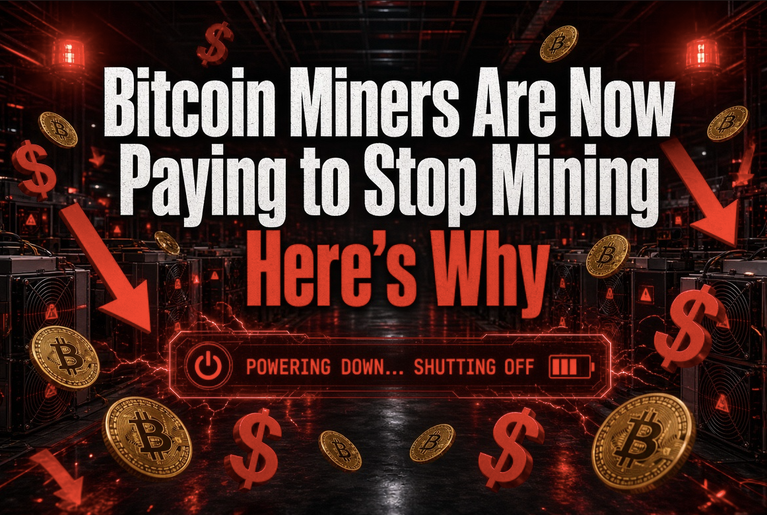
Fast forward to 2026, and that reality has fundamentally changed. While technically possible, mining Bitcoin on a regular PC has become economically impractical for most users. The network has evolved into a highly competitive, industrial-scale ecosystem dominated by specialized hardware, vast energy consumption, and institutional players.
This article breaks down whether PC mining still makes sense today, examining the economics, technology, and structural changes shaping the modern Bitcoin mining landscape.
From Hobbyist Mining to Industrial Powerhouses
In Bitcoin’s early years, mining was decentralized in the truest sense. Anyone with a computer could contribute to securing the network and earn rewards. That phase ended quickly as mining difficulty increased and hardware innovation accelerated.
Today, the mining ecosystem is almost entirely powered by application-specific integrated circuits (ASICs). These machines are purpose-built for Bitcoin’s SHA-256 algorithm, delivering unmatched efficiency and performance.
Modern mining operations resemble data centers rather than home setups. Large-scale facilities operate thousands of ASIC units, often located in regions with access to low-cost electricity. These industrial players have transformed mining into a capital-intensive business, leaving little room for small participants.
The shift has redefined competition. What was once a distributed network of individuals is now dominated by corporations optimizing every aspect of performance—from cooling systems to energy sourcing.
The 2026 Reality: Record Hashrate and Difficulty
Bitcoin mining in 2026 is defined by scale. The network’s total hash rate has reached the zettahash level, reflecting an enormous amount of computational power securing the blockchain.
Mining difficulty—adjusted automatically every 2,016 blocks—has also hit unprecedented levels. In February 2026, difficulty surged sharply, marking one of the largest increases in the network’s history. This adjustment reflects a recovery in hash rate and continued expansion of mining infrastructure worldwide.
For individual miners, this creates a harsh reality: the higher the network difficulty, the smaller the probability of solving a block. A home PC contributes such a tiny fraction of the total hash rate that its chances are effectively negligible.
At this scale, mining has become less about participation and more about efficiency, logistics, and access to cheap energy.
Why PCs Can’t Compete Anymore
The core issue with PC mining lies in performance. CPUs and GPUs were never designed specifically for Bitcoin’s hashing algorithm. While they can still perform calculations, they are vastly outmatched by ASICs.
A typical CPU might produce only a few dozen megahashes per second. A high-end GPU might reach gigahash levels under optimal conditions. In contrast, modern ASIC machines operate in terahashes per second—orders of magnitude higher.
This performance gap is not linear; it is exponential. ASICs are not just faster—they are dramatically more efficient per unit of electricity consumed.
For a home user, this creates a losing equation:
- Minimal contribution to total hash rate
- Extremely low probability of earning rewards
- Electricity costs that exceed potential earnings
Even when joining a mining pool, where rewards are distributed proportionally, the returns from a PC setup are typically fractions of a cent per day—far below operating costs.
The Hidden Costs Mining Calculators Miss
Online tutorials and mining calculators often present simplified projections, but they rarely capture the full picture.
Several factors erode profitability for home miners:
Electricity Costs: Residential power rates are significantly higher than industrial rates negotiated by large mining firms.
Hardware Degradation: Continuous high-load operation shortens the lifespan of CPUs and GPUs, increasing replacement costs.
Cooling Requirements: Mining generates heat, which may require additional cooling solutions, further increasing energy consumption.
Pool Fees: Mining pools typically charge 1–2% of earnings, reducing already minimal returns.
Halving Events: Bitcoin’s block reward decreases roughly every four years, tightening margins over time.
Combined, these factors make PC mining economically unviable for most users in 2026.
Why “Mine Bitcoin on Your Laptop” Guides Still Exist
Despite the economic reality, guides promoting home Bitcoin mining continue to circulate online. These tutorials are not entirely misleading—they are technically accurate.
Anyone can download mining software, connect to the network, and start hashing. The barrier to entry remains low from a technical standpoint.
However, these guides often omit the financial reality. They focus on how to mine, not whether it is profitable. For beginners, this creates a false impression that mining is still a viable income stream using consumer hardware.
In truth, the gap between technical feasibility and economic viability has never been wider.
Are There Any Scenarios Where PC Mining Makes Sense?
While profitable PC mining is largely a thing of the past, there are still niche scenarios where it may have value.
Educational Purposes
Running mining software on a PC can help users understand how proof-of-work functions, how blocks are validated, and how mining pools operate. For students and enthusiasts, this hands-on experience can be valuable.
Extremely Cheap Energy
In rare cases—such as off-grid solar setups or access to surplus energy—costs may be low enough to justify experimentation. Even then, profits remain unlikely.
Hobbyist or Lottery Approach
Some users treat mining as a long-shot experiment. Because mining is probabilistic, there is always a small chance of solving a block. These events are rare but not impossible, making mining a “lottery-like” activity for hobbyists.
The Bigger Picture: Mining as a Global Industry
Bitcoin mining now operates on a global scale, with energy consumption comparable to that of mid-sized countries. This has sparked ongoing debates around sustainability and environmental impact.
At the same time, innovation is reshaping the industry. Mining firms are increasingly turning to renewable energy sources, hydroelectric power, and even stranded energy such as flare gas. These strategies aim to reduce costs while addressing environmental concerns.
Geographically, mining has also become more distributed. After regulatory shifts in major regions, operations have migrated to jurisdictions offering favorable conditions, demonstrating the mobility and resilience of the industry.
Mining Bitcoin on a PC in 2026 is no longer a practical way to earn income. The network has evolved into a high-efficiency, industrial ecosystem where only specialized hardware and large-scale operations can compete.
While it remains technically possible to mine using a home computer, the economics simply do not work for most users. Electricity costs, hardware limitations, and overwhelming competition make profitability unattainable in typical scenarios.
Also Read: Why Experts Say Bitcoin Could Double Despite Current Sell-Off
For those curious about how Bitcoin works, PC mining can still serve as an educational tool. But for anyone looking to accumulate Bitcoin, alternative approaches—such as buying or earning it—are far more realistic.
What began as a decentralized experiment accessible to anyone has matured into a global industry. In that transformation, PC mining has shifted from opportunity to historical footnote.
Disclaimer: The information in this article is for general purposes only and does not constitute financial advice. The author’s views are personal and may not reflect the views of Chain Affairs. Before making any investment decisions, you should always conduct your own research. Chain Affairs is not responsible for any financial losses.

I’m your translator between the financial Old World and the new frontier of crypto. After a career demystifying economics and markets, I enjoy elucidating crypto – from investment risks to earth-shaking potential. Let’s explore!