|
Getting your Trinity Audio player ready...
|
- Thai crypto platforms froze over 10,000 suspected mule accounts after stricter AML checks.
- Regulators and exchanges are sharing data to detect suspicious transfers faster.
- The crackdown is part of Thailand’s broader campaign against “gray money” and crypto fraud.
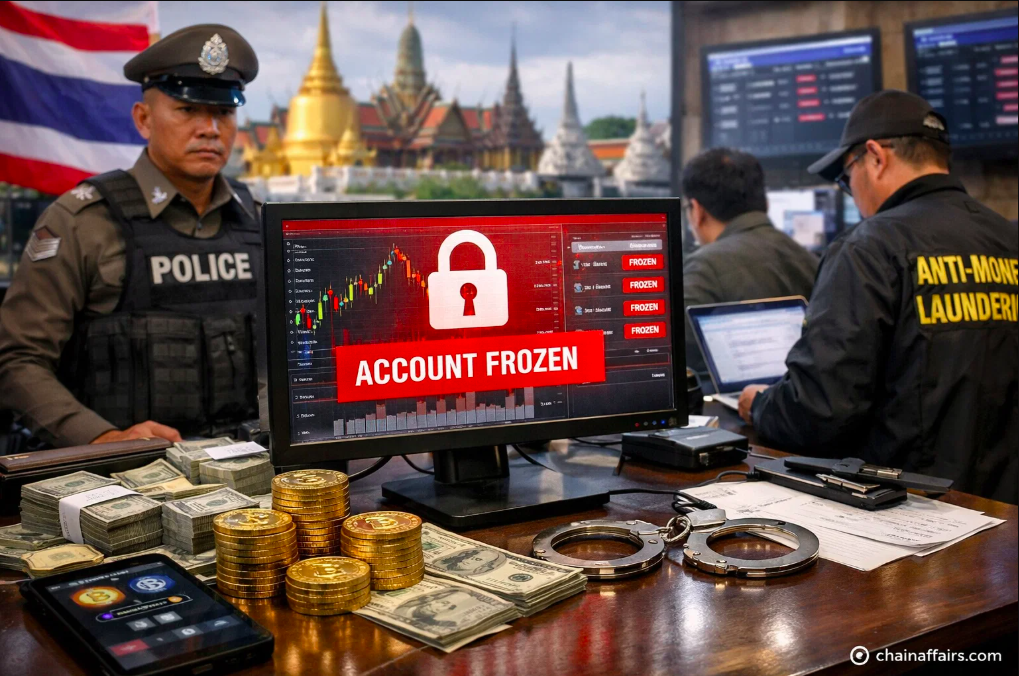
Authorities in Thailand have intensified their fight against crypto-related fraud, with digital asset platforms freezing more than 10,000 accounts suspected of being used for money laundering. The move comes as regulators and industry groups roll out stricter anti-money laundering (AML) controls aimed at identifying so-called “mule accounts.”
Local reports indicate the freezes followed the introduction of enhanced transaction monitoring systems and additional identity verification requirements for higher-risk transfers. The effort is part of a broader campaign to tighten oversight of the country’s rapidly growing cryptocurrency sector.
Stricter AML Checks Help Detect Suspicious Accounts
According to industry officials, the newly introduced screening process slows certain transfers while exchanges conduct deeper Know Your Customer (KYC) checks. The extra scrutiny allows operators to flag accounts suspected of being used to move illicit funds.
Att Thongyai Asavanund, chief executive of KuCoin Thailand and chairman of the Thai Digital Asset Operators Trade Association (TDO), said the upgraded monitoring system enabled exchanges to detect and freeze over 10,000 suspicious accounts.
Mule accounts are typically bank or crypto accounts controlled by intermediaries who move funds on behalf of criminal networks. These accounts are often used to obscure the origin of stolen or illegally obtained assets.
While the total value of frozen funds has not been publicly disclosed, regulators say the initiative represents a significant step toward strengthening Thailand’s crypto compliance standards.
Regulators and Industry Groups Coordinate Enforcement
The crackdown follows earlier collaboration between the Securities and Exchange Commission of Thailand and the TDO to address digital asset fraud and money laundering risks.
During a workshop in February 2025, the SEC worked alongside multiple agencies, including the Bank of Thailand, the Cyber Crime Investigation Bureau, the Central Investigation Bureau, the Anti-Money Laundering Office, and the Thai Bankers’ Association.
Together, the groups created new guidelines for monitoring suspicious activity and improving coordination between crypto platforms, banks, and law enforcement.
Deputy Secretary-General Jomkwan Kongsakul said the joint initiative aims to speed up investigations and reduce the time it takes to block potentially fraudulent accounts.
As part of the effort, operators are also expanding data-sharing practices to quickly identify and prevent transfers involving suspicious wallets.
Thailand Expands Oversight of “Gray Money”
The latest enforcement push is tied to Thailand’s broader campaign against “gray money,” a term used for funds that originate from questionable or semi-legal activities.
Authorities have increased monitoring not only in the crypto sector but also in traditional markets such as physical gold trading, where illicit funds can sometimes be converted or transferred.
Another key element of the crackdown is stricter enforcement of the Travel Rule, which requires crypto service providers to collect and transmit identifying information about senders and recipients in certain transactions.
Also Read: Bhutan Moves $11.8M in Bitcoin as Key BTC Indicator Flashes Rare ‘Value Zone’ Signal
By tightening these compliance standards, Thai regulators aim to limit the ability of criminal networks to exploit digital asset platforms.
Thailand’s latest move to freeze thousands of suspected mule accounts signals a more aggressive regulatory approach to crypto oversight. While the measures could slow certain transactions, officials say stronger monitoring and coordination between exchanges, banks, and law enforcement will help protect investors and reduce financial crime in the digital asset market.
Disclaimer: The information in this article is for general purposes only and does not constitute financial advice. The author’s views are personal and may not reflect the views of Chain Affairs. Before making any investment decisions, you should always conduct your own research. Chain Affairs is not responsible for any financial losses.

I’m your translator between the financial Old World and the new frontier of crypto. After a career demystifying economics and markets, I enjoy elucidating crypto – from investment risks to earth-shaking potential. Let’s explore!