
|
Getting your Trinity Audio player ready...
|
- AI agents are now the standard for yield optimization and risk management.
- Liquidity fragmentation is being solved by “chain-agnostic” protocols.
- Institutional adoption of tokenized assets (RWAs) is reaching trillion-dollar milestones.
- Tax compliance (1099-DA) is now automated via ZK-proof technology.
The decentralized finance (DeFi) landscape of 2026 is unrecognizable from its experimental beginnings. What was once a fragmented collection of liquidity pools and isolated blockchain networks has evolved into a sophisticated, interconnected financial machine. Two primary catalysts have driven this transformation: the integration of Artificial Intelligence (AI) into smart contract logic and the perfection of Cross-Chain Interoperability Protocols.
As we move further into 2026, these technologies are moving beyond the “hype” phase, providing institutional-grade security and efficiency to retail and corporate investors alike.
1. The Rise of AI-Managed Yield Optimizers
In the early days of DeFi, “yield farming” required manual management and constant monitoring of APY shifts across dozens of protocols. Today, AI-driven yield aggregators have automated this process with surgical precision.
These AI agents utilize machine learning models to analyze on-chain data, sentiment analysis from social media, and macroeconomic indicators in real-time. By predicting liquidity crunches or identifying emerging high-yield opportunities before they reach the mainstream, these “Intelligent Vaults” maximize returns while minimizing risk.
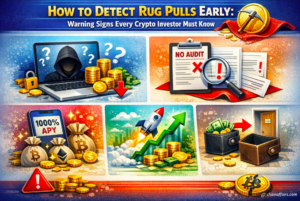
- Risk Mitigation: AI models now act as a primary defense layer, identifying anomalous smart contract behavior and automatically pulling liquidity if a potential exploit or “rug pull” pattern is detected.
- Dynamic Rebalancing: Instead of static portfolios, AI-managed accounts rebalance assets across various chains (Polygon, Avalanche, Ethereum, Solana) to find the most gas-efficient and profitable paths instantly.
2. Cross-Chain Interoperability: The Death of Fragmented Liquidity
For years, “liquidity fragmentation” was the Achilles’ heel of DeFi. A token’s value and utility were often trapped on the specific chain where it was minted. The maturity of protocols like Chainlink CCIP, LayerZero, and Polygon’s AggLayer has effectively solved this problem.
In 2026, we are seeing the emergence of “Chain-Agnostic Assets.” Whether you hold a stablecoin on Polygon or a governance token on Avalanche, the underlying network is becoming invisible to the end-user. This seamless movement allows for:
- Unified Liquidity Pools: Protocols can now tap into the combined TVL (Total Value Locked) of multiple blockchains simultaneously, reducing slippage for large-scale institutional trades.
- Universal Collateralization: A user can hold their primary assets on a high-security chain like Ethereum while using them as collateral to borrow assets on a high-speed, low-cost network like Solana or Polygon.
3. Institutional Adoption and the “Tokenization of Everything”
2025 and 2026 have been defined by the mass tokenization of Real World Assets (RWAs). We are no longer just trading “memecoins”; the DeFi rails are now carrying tokenized T-bills, real estate, and corporate debt.
The GENIUS Act and similar global frameworks (like the EU’s MiCA 2.0) have provided the regulatory clarity necessary for major banks to move their balance sheets on-chain. This institutional influx has led to the creation of “Permissioned DeFi” tiers—environments that offer the efficiency of blockchain with the compliance (KYC/AML) required by legacy financial systems.
| Asset Class | Tokenization Benefit | Estimated 2026 Market Cap |
|---|---|---|
| Real Estate | Fractional ownership & 24/7 liquidity | $2.1 Trillion |
| Private Equity | Lower entry barriers for retail | $850 Billion |
| Treasuries/Bonds | Instant settlement & transparency | $1.4 Trillion |
4. The 1099-DA Era: Compliance Meets Automation
As the IRS implements the mandatory Form 1099-DA reporting for the 2025-2026 tax cycle, compliance has moved from a burden to a feature. Modern DeFi wallets now include built-in tax engines that generate these forms automatically.
The integration of Zero-Knowledge (ZK) Proofs has been instrumental here. ZK technology allows taxpayers to prove their compliance to the IRS without revealing their entire transaction history or wallet balances, maintaining the privacy that is core to the blockchain ethos while meeting federal requirements.
5. Security in 2026: Beyond the Smart Contract Audit
While smart contract audits remain essential, the focus has shifted toward Formal Verification and Real-Time Security Monitoring. In 2026, a “safe” protocol is one that is constantly being scanned by AI-powered “White Hat” agents that look for vulnerabilities in the code as it executes.
The “0-TVL” architecture seen in protocols like deBridge has also become a standard. By not holding massive, centralized honeypots of capital, these protocols eliminate the primary target for hackers, ensuring that even if a bridge component is attacked, the user’s principal remains safe on the native chain.
Conclusion: The Path to the “Internet of Value”
The DeFi ecosystem of 2026 is no longer a sandbox for speculators. It is the plumbing of a new global financial system. The combination of AI’s predictive power and the seamless connectivity provided by cross-chain bridges has created a financial environment that is faster, more inclusive, and significantly more efficient than the traditional models of the past century.
As we look toward the remainder of the decade, the distinction between “DeFi” and “Finance” will continue to blur until they are one and the same. For the modern investor, success in this landscape requires a deep understanding of these interoperable tools and the intelligence that now powers them.
Disclaimer: The information in this article is for general purposes only and does not constitute financial advice. The author’s views are personal and may not reflect the views of Chain Affairs. Before making any investment decisions, you should always conduct your own research. Chain Affairs is not responsible for any financial losses.