
|
Getting your Trinity Audio player ready...
|
- Ethereum is testing a distributed staking system using 72,000 ETH to simplify validator operations.
- Vitalik Buterin wants “one-click” staking infrastructure to make participation easier.
- 37.5 million ETH is already staked, with 3.2 million ETH waiting in the validator queue.
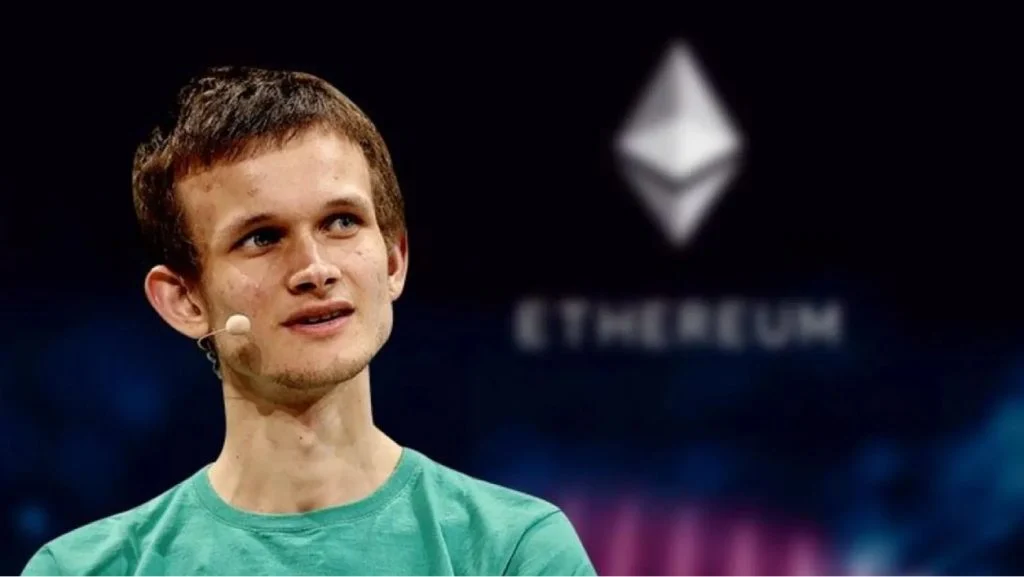
Staking on Ethereum has become a cornerstone of the network’s security, but according to co-founder Vitalik Buterin, the process has grown too complicated. He now argues that running validators should not require specialized infrastructure or advanced technical knowledge.
To address this, the Ethereum Foundation is experimenting with a new distributed staking setup using roughly 72,000 ETH. The test explores a simplified form of distributed validator technology designed to make staking easier for both institutions and regular participants.
Buterin believes reducing complexity could open the door to broader participation and strengthen the decentralization that underpins Ethereum’s security model.
A New Distributed Staking Model
The experimental system uses a lightweight version of Distributed Validator Technology (DVT). Instead of a single machine running a validator node, multiple computers can collectively operate one validator.
Under this structure, participants do not need to manage complex networking or infrastructure tasks. They simply select the machines that will run the nodes and generate a shared configuration file.
All machines operate using the same validator key, while the system automatically handles communication and coordination between them. By distributing validator responsibilities across several devices, the network also gains resilience against outages or hardware failures.
Buterin said the long-term vision is to make distributed staking nearly effortless. Ideally, institutions holding large amounts of ETH could launch validators with minimal setup, potentially through simple deployment tools.
Cutting Through Blockchain Complexity
Buterin has been vocal about what he sees as a growing misconception in the crypto industry: that operating blockchain infrastructure requires highly specialized professionals.
He argues that this perception discourages participation and runs counter to the goal of decentralization. If only large technical teams can run validators, control of the network may gradually concentrate among fewer operators.
By simplifying validator deployment—potentially through tools like containerized applications—Buterin hopes nodes could eventually start with a single command while automatically connecting to the network.
Staking Demand Remains Strong
Despite market volatility, interest in staking Ethereum continues to grow.
Data shows that around 3.2 million ETH is currently waiting to enter the validator queue, resulting in an estimated waiting time of about 55 days. By contrast, only around 29,000 ETH is waiting to exit staking.
In total, roughly 37.5 million ETH—worth more than $76 billion—has already been staked on the network. That represents close to 31% of Ethereum’s circulating supply.
Also Read: Vitalik Buterin Unveils Ethereum’s DVT-Lite Test — Could It Transform Staking?
For Buterin, simplifying staking is about more than convenience. Making validator participation easier could distribute control of the network across a wider set of participants, from institutions to everyday ETH holders.
If the experiment succeeds, the concept of “one-click” distributed staking could reshape how users interact with Ethereum’s validator network—making participation far more accessible while strengthening decentralization.
Disclaimer: The information in this article is for general purposes only and does not constitute financial advice. The author’s views are personal and may not reflect the views of Chain Affairs. Before making any investment decisions, you should always conduct your own research. Chain Affairs is not responsible for any financial losses.

I’m a crypto enthusiast with a background in finance. I’m fascinated by the potential of crypto to disrupt traditional financial systems. I’m always on the lookout for new and innovative projects in the space. I believe that crypto has the potential to create a more equitable and inclusive financial system.