
|
Getting your Trinity Audio player ready...
|
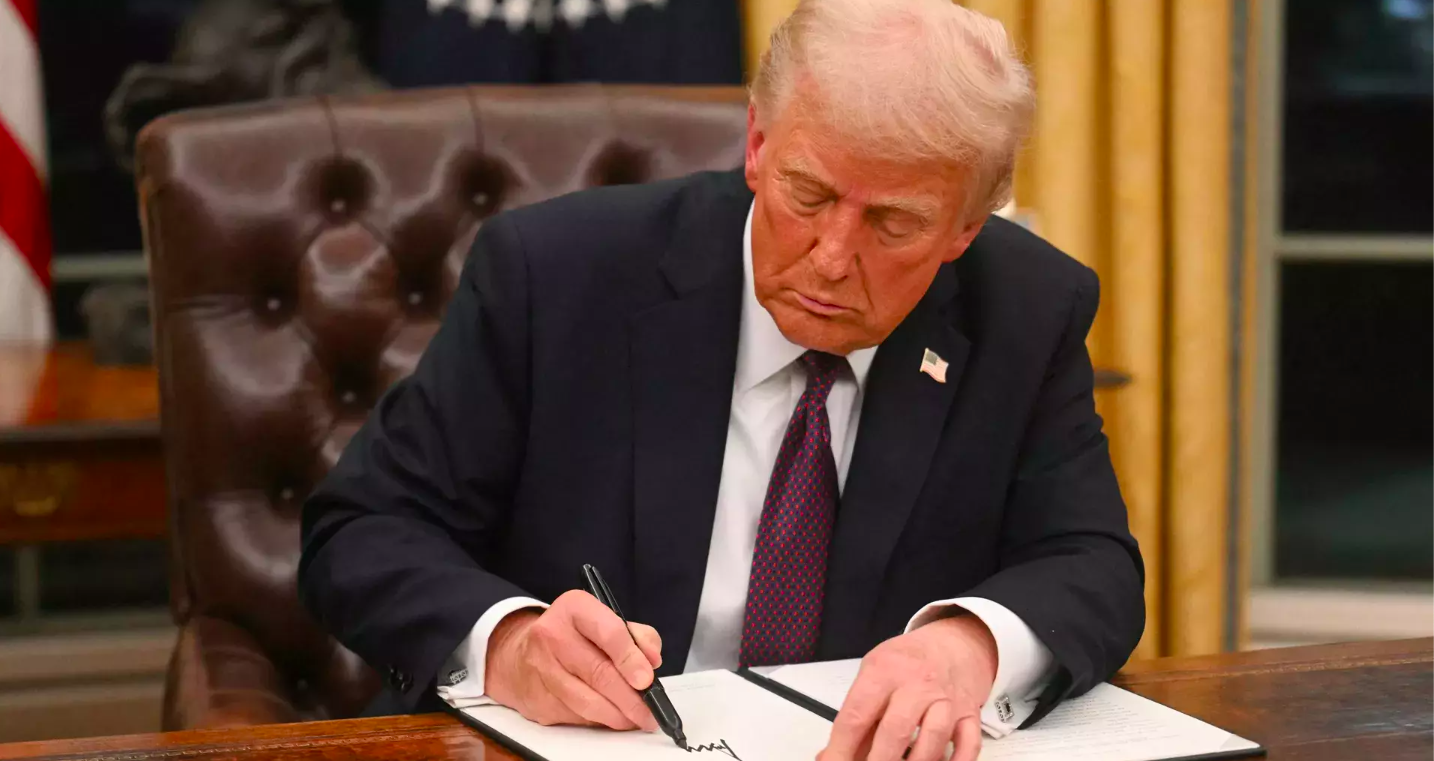
President Donald Trump will sign the GENIUS Act (Guiding and Establishing National Innovation for US Stablecoins Act) on Friday at 2:30 pm after the House passed the legislation Thursday. The bill creates the first comprehensive stablecoin regulation framework in the United States.
The law takes effect 18 months after signing or 120 days after Treasury and Federal Reserve issue implementation rules, whichever comes first. This creates a dual federal and state regulatory framework where banks, credit unions, and nonbanks can issue stablecoins under oversight from multiple agencies including the National Credit Union Administration, FDIC, OCC, Treasury, and Federal Reserve.
Banking Licenses Become Strategic Necessity
The GENIUS Act‘s stablecoin license restricts companies to “purely stablecoin issuance,” creating operational constraints for existing issuers. Most major stablecoin companies like Circle and Tether operate broader financial services beyond token issuance, making the specialized license inadequate for their business models.
Logan Payne, crypto lawyer at Winston & Strawn, said companies will likely pursue national trust bank charters from the Office of the Comptroller of the Currency instead. Banking licenses allow expanded operations without navigating state-by-state licensing requirements – a significant advantage given that even GENIUS Act-licensed issuers still need state-level money transmission licenses to operate nationally.
“Pretty much every stablecoin issuer in the United States issuing under US law right now engages in activities outside the scope of that license,” Payne said. Circle and Ripple have already pursued this route, obtaining national trust bank charters that provide operational flexibility while maintaining regulatory compliance.
Stablecoin Yield Programs Face Complete Ban
The legislation prohibits stablecoin issuers from offering interest or yield to holders, eliminating what has become a primary user acquisition tool. This ban applies to both US-regulated and foreign issuers serving American markets.
Popular platforms like Coinbase and Kraken currently offer USDC rewards to holders, arrangements that must be restructured or eliminated. The prohibition extends beyond direct issuer payments to any yield-generating mechanisms, fundamentally changing how stablecoins compete for market share.
Payne expects existing reward arrangements to undergo significant modifications, potentially forcing platforms to restructure their business models around stablecoin services rather than yield generation.
Comprehensive Reserve and Compliance Framework
Stablecoin issuers must maintain 1:1 dollar backing through US Treasury bills or cash equivalents, with monthly public reporting requirements. Certified public accounting firms must examine these reserves, and issuers must submit accuracy certifications to their regulatory body.
Foreign stablecoin issuers face a three-year transition period before non-approved stablecoins become illegal to offer in the US. However, the legislation provides pathways for compliance: issuers from countries with comparable regulatory frameworks can register with the OCC within 30 days and maintain sufficient US-based reserves to cover American customers.
Entities can choose state-level regulation if they issue under $10 billion in stablecoins, though states aren’t required to create stablecoin regulators. This creates potential regulatory arbitrage opportunities while maintaining federal oversight for larger issuers.
The GENIUS Act also leaves DeFi protocols in regulatory limbo. Payne noted that “how GENIUS will impact DeFi is intentionally a bit unaddressed,” creating uncertainty for decentralized platforms handling stablecoins. Additional legislation like the CLARITY Act, which passed the House Thursday, will likely address these gaps over time.
Disclaimer: The information in this article is for general purposes only and does not constitute financial advice. The author’s views are personal and may not reflect the views of Chain Affairs. Before making any investment decisions, you should always conduct your own research. Chain Affairs is not responsible for any financial losses

I’m your translator between the financial Old World and the new frontier of crypto. After a career demystifying economics and markets, I enjoy elucidating crypto – from investment risks to earth-shaking potential. Let’s explore!