
|
Getting your Trinity Audio player ready...
|
- Pakistan is exploring USD1 for regulated cross-border payments and remittances
- The deal links a sovereign state with a Trump-backed crypto venture
- U.S. crypto legislation could shape how stablecoins expand globally
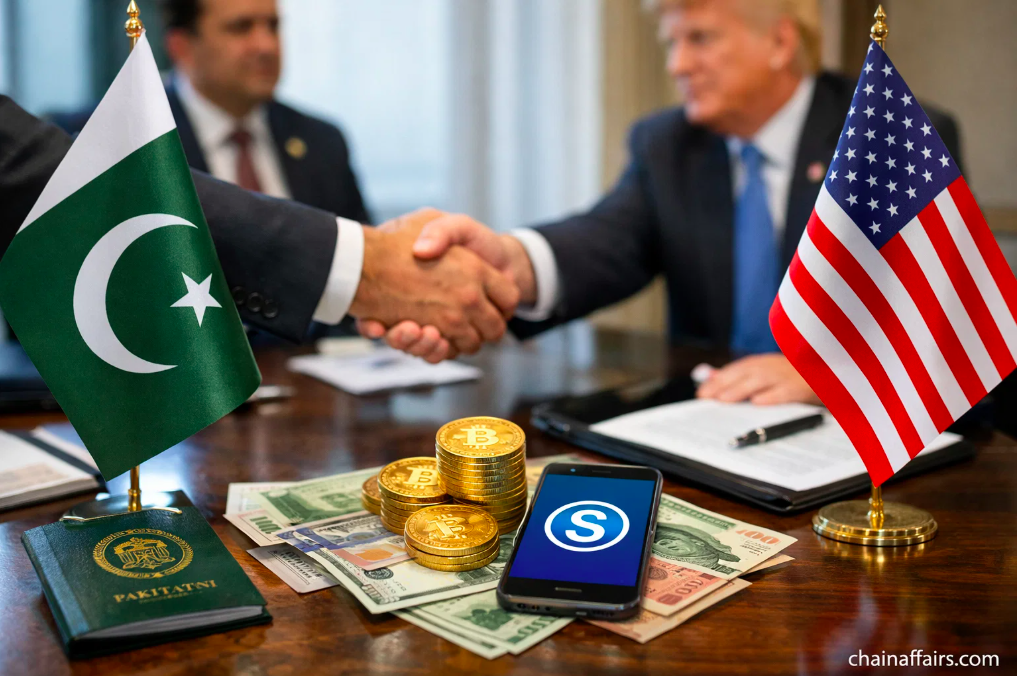
Pakistan is stepping deeper into digital finance, this time with a politically charged partner. The country has signed an agreement with SC Financial Technologies, a firm tied to World Liberty Financial — the crypto venture linked to U.S. President Donald Trump’s family — to explore using its dollar-backed USD1 stablecoin for payments. The move places Pakistan at the center of two fast-moving trends: sovereign adoption of stablecoins and a renewed push for crypto regulation in Washington.
A Stablecoin Test Case for Cross-Border Payments
According to people familiar with the matter, the agreement focuses on testing USD1 within Pakistan’s regulated payments framework, working alongside the central bank. While details remain limited, the stablecoin could be used for cross-border transactions such as remittances, an area where Pakistan sees both high demand and high friction.
If implemented, the project would mark one of the first publicly known cases of a Trump-linked crypto venture collaborating with a sovereign state. World Liberty Financial’s chief executive is expected to visit Islamabad as Pakistan prepares a formal announcement.
USD1 has already been used in high-profile deals. Last year, Abu Dhabi–backed MGX reportedly relied on the token to facilitate a $2 billion equity purchase in Binance, underscoring its ambitions beyond retail crypto markets.
Pakistan’s Broader Crypto Ambitions
The stablecoin talks fit into Pakistan’s wider strategy to position itself as a crypto-friendly hub. Over the past year, authorities have established the Pakistan Virtual Assets Regulatory Authority, allowed major exchanges like Binance and HTX to operate locally, and explored initiatives such as a Bitcoin reserve and real-world asset tokenization.
Officials see digital assets as a way to attract foreign capital, modernize payments, and improve liquidity — goals that align closely with stablecoin use in emerging markets.
U.S. Regulation Looms in the Background
The timing is notable. In the United States, lawmakers are moving closer to finalizing a long-awaited crypto market structure bill. The Senate Agriculture Committee plans to release the bill text on Jan. 21, followed by a markup hearing on Jan. 27. The legislation would clarify the roles of the SEC and CFTC and reduce long-standing regulatory uncertainty.
While the bill has momentum, debates remain, especially around stablecoin yield and decentralized finance. Those outcomes could directly shape how U.S.-linked stablecoins like USD1 operate globally.
Why This Matters
Pakistan’s exploration of USD1 highlights how regulatory clarity in Washington and experimentation abroad are increasingly intertwined. As governments test stablecoins for real-world payments, the lines between politics, policy, and crypto infrastructure are becoming harder to ignore.
Disclaimer: The information in this article is for general purposes only and does not constitute financial advice. The author’s views are personal and may not reflect the views of Chain Affairs. Before making any investment decisions, you should always conduct your own research. Chain Affairs is not responsible for any financial losses.