|
Getting your Trinity Audio player ready...
|
- Oil prices fell nearly 10% after Trump warned Iran against blocking the Strait of Hormuz.
- The strategic waterway handles about 13 million barrels of oil daily, making it critical for global supply.
- Potential G7 emergency oil releases helped calm markets after Monday’s historic price spike.
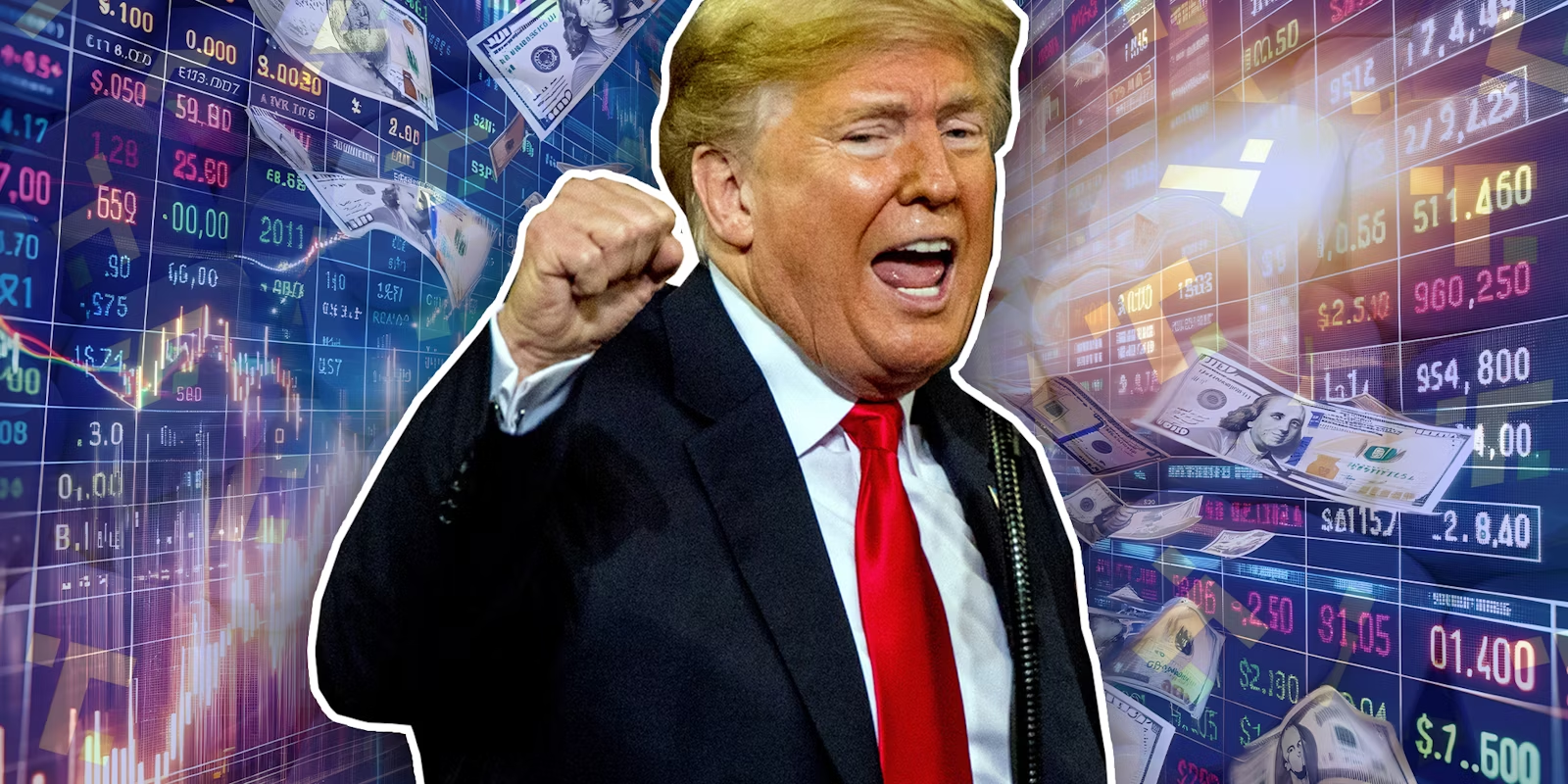
Oil markets turned volatile Tuesday after sharp geopolitical tensions between the United States and Iran rattled global energy traders. Prices tumbled nearly 10% after former U.S. President Donald Trump issued a strong warning to Iran over attempts to block the critical shipping route known as the Strait of Hormuz.
The sudden drop came just a day after oil surged to a three-year high, highlighting how sensitive energy markets remain to developments in the Middle East. Traders quickly reassessed supply risks as new political signals and potential emergency supply measures emerged.
Trump Issues Strong Warning to Iran
Tensions escalated after Trump warned that any effort by Iran to halt oil shipments through the Strait of Hormuz would trigger an overwhelming response from the United States.
The Strait is one of the world’s most important energy chokepoints, with roughly 13 million barrels of oil moving through it each day. Disruptions in this narrow passage can quickly send shockwaves across global energy markets.
Iran reportedly restricted traffic through the waterway, allowing only vessels connected to the country to pass. Authorities also warned that ships attempting to cross without permission could face retaliation from Iranian naval forces and the Revolutionary Guards.
Trump responded with a stark message, saying the U.S. would strike “twenty times harder” if Iran interfered with global oil flows. The statement drew immediate attention from traders and governments monitoring the conflict.
Interestingly, the warning came shortly after Trump suggested that the confrontation between the two nations could end soon, adding further uncertainty to the geopolitical outlook.
Oil Prices Retreat After Recent Surge
The escalating rhetoric initially pushed oil higher earlier in the week, but markets reversed sharply on Tuesday.
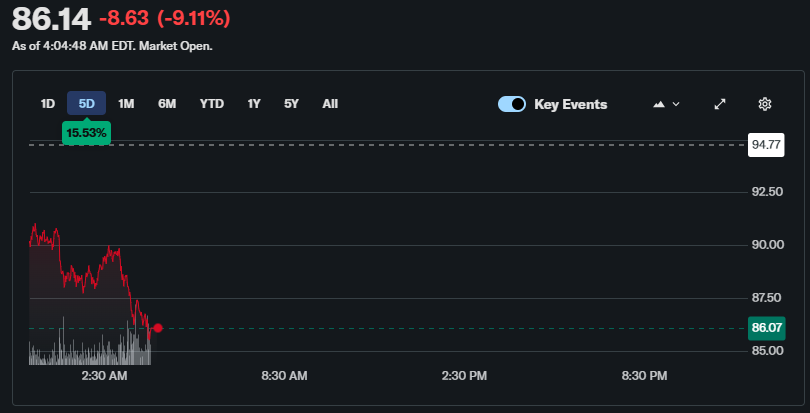
Brent crude fell about 4.2% to roughly $94.79 per barrel, while U.S. West Texas Intermediate (WTI) declined around 4% to $90.96. Both benchmarks had dropped as much as 11% earlier in the session before recovering some losses.
The pullback follows Monday’s dramatic rally when oil prices jumped roughly 30%, briefly pushing U.S. crude above $100 per barrel.
Adding to the downward pressure, G7 leaders signaled they may release up to 400 million barrels from strategic reserves if supply disruptions intensify. That potential move reassured traders that emergency supplies could help stabilize the market.
Global Energy Markets Remain on Edge
Despite Tuesday’s drop, uncertainty surrounding the Strait of Hormuz continues to weigh heavily on energy markets. Shipping congestion has already begun forming near the waterway, with reports suggesting electronic interference affecting navigation systems.
Meanwhile, Persian Gulf exporters are reportedly filling storage facilities as restricted access complicates shipments.
Also Read: Trump-Backed Miner Stockpiles $433M in Bitcoin After Mining 766 BTC in 2026
For now, oil markets remain highly reactive to political developments between the U.S. and Iran. Any further escalation—or signs of diplomatic progress—could quickly reshape price trends in the days ahead.
The sharp drop in oil prices shows how quickly markets react to geopolitical shifts. While Trump’s warning signals a firm U.S. stance against disruptions in the Strait of Hormuz, the broader conflict between the U.S. and Iran continues to create uncertainty. As traders watch for further developments, global energy markets are likely to remain volatile in the near term.
Disclaimer: The information in this article is for general purposes only and does not constitute financial advice. The author’s views are personal and may not reflect the views of Chain Affairs. Before making any investment decisions, you should always conduct your own research. Chain Affairs is not responsible for any financial losses.

I’m your translator between the financial Old World and the new frontier of crypto. After a career demystifying economics and markets, I enjoy elucidating crypto – from investment risks to earth-shaking potential. Let’s explore!