|
Getting your Trinity Audio player ready...
|
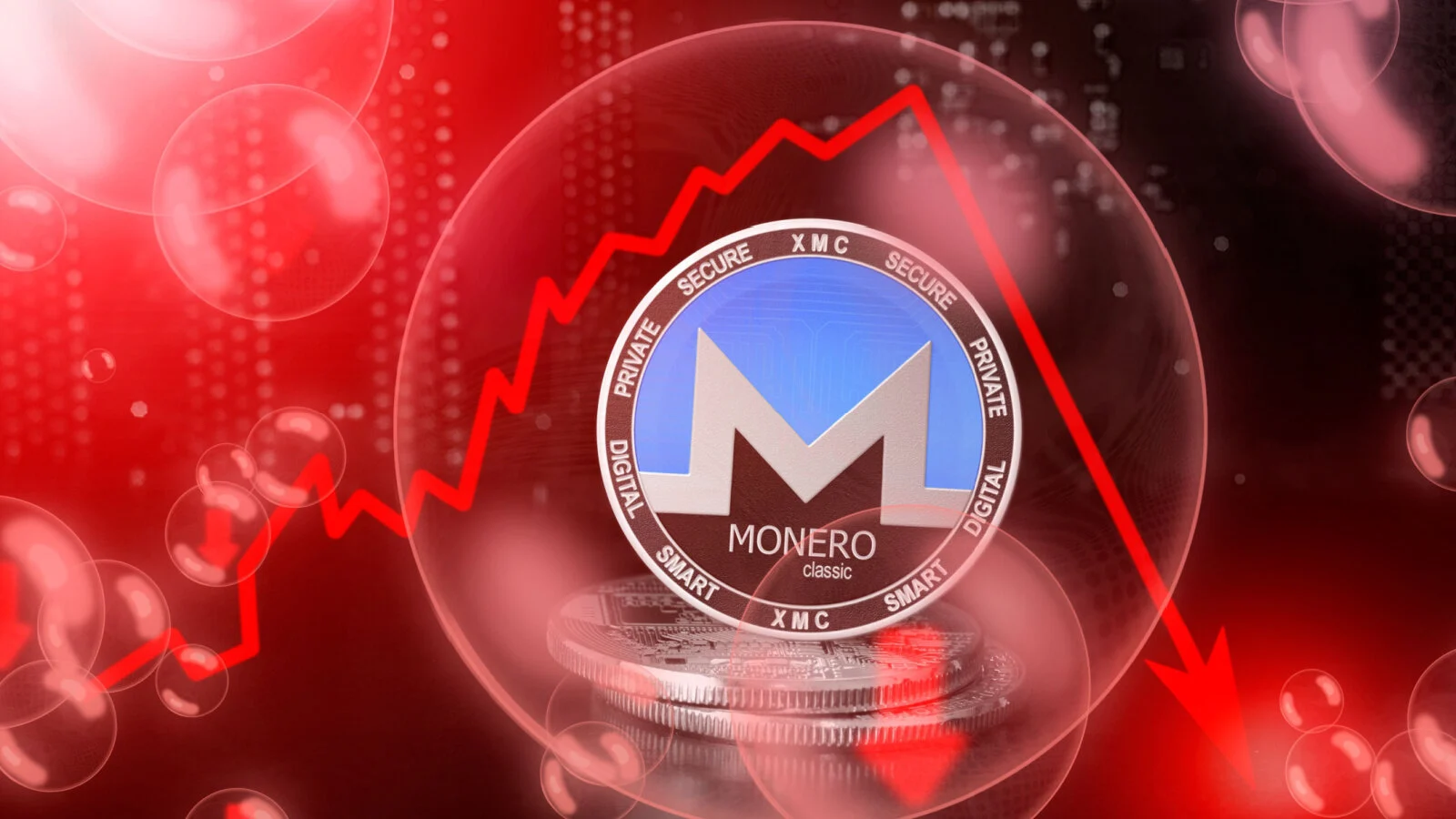
Monero (XMR), one of the leading privacy-focused cryptocurrencies, has taken a sharp fall, dropping nearly 7% in the last 24 hours. This decline follows Kraken’s announcement that it will delist Monero for users in the European Economic Area (EEA) due to increasing regulatory pressure. As privacy coins face growing scrutiny, the move could be a sign of what’s to come for similar cryptocurrencies.
Kraken’s Delisting And Its Implications
Kraken, one of the oldest and most respected cryptocurrency exchanges, informed its users that Monero will be unavailable for trading and deposits for clients within the EEA starting October 31. Additionally, all open Monero orders will be automatically closed. Users will still have until December 31 to withdraw their Monero balances. After this deadline, any remaining Monero will be converted to Bitcoin (BTC) at the market rate.
In its announcement, Kraken explained the rationale behind its decision, stating that regulatory changes in the EEA left them “no choice” but to delist Monero. The exchange expressed regret over the move, adding that the decision was not made lightly.
This news is not isolated. Earlier this year, Binance, the world’s largest cryptocurrency exchange by volume, delisted Monero, citing similar concerns. With privacy coins coming under fire from regulators, Kraken’s decision underscores the growing hostility toward cryptocurrencies designed to protect user anonymity.
The Regulatory Crackdown on Privacy Coins
Monero’s fall and subsequent delisting mark just the latest chapter in the broader crackdown on privacy-focused cryptocurrencies. Reports have circulated since January that coins like Monero (XMR), Zcash (ZEC), and Horizen (ZEN) could be in regulators’ crosshairs, with fears of delisting spreading through the crypto community.
Governments and financial watchdogs argue that privacy coins can be used for illicit purposes, such as money laundering or financing illegal activities, as these currencies obfuscate transaction details. The ability to conduct anonymous transactions makes them a target for regulators, who are increasingly pushing for transparency in cryptocurrency transactions.
Legal Repercussions Beyond Privacy Coins
Monero’s delisting is also unfolding amid the controversial legal battle surrounding decentralized cryptocurrency mixer Tornado Cash. Mixers, unlike privacy coins, anonymize publicly available transactions like Bitcoin, obscuring the source and destination of funds. Tornado Cash has been a focal point for regulators due to its association with money laundering.
In a landmark decision, Tornado Cash developer Alexey Pertsev was sentenced to five years and four months in prison by a Dutch court for money laundering, even though he had no control over the smart contract-based privacy solution once it was deployed on the Ethereum blockchain. The U.S. Office of Foreign Assets Control (OFAC) sanctioned Tornado Cash in 2022, yet it still managed to operate and process more than $1.9 billion in transactions in the first half of 2024.
The lawsuit against Pertsev could set a legal precedent, raising concerns that developers of privacy solutions may be held accountable for their software’s misuse, even if they have no control over how it is used. This case could have significant consequences, not only for privacy coins but also for decentralized finance (DeFi) applications and developers.
Also Read: Monero (XMR) Dominates With 58% Of Payments On ShopBit, Eyes $200 Amid Price Surge
Monero’s delisting from Kraken in the EEA may be a harbinger of what’s to come for other privacy coins, as regulators continue to tighten their grip on the crypto industry. The fate of privacy-focused cryptocurrencies is now tied to the evolving regulatory landscape, and the implications of these developments could reshape the future of digital privacy.
As privacy coins like Monero fall out of favor with major exchanges, the ongoing tension between the need for privacy and regulatory oversight is likely to intensify, leaving users and developers facing tough choices in an uncertain landscape.
Disclaimer: The information in this article is for general purposes only and does not constitute financial advice. The author’s views are personal and may not reflect the views of Chain Affairs. Before making any investment decisions, you should always conduct your own research. Chain Affairs is not responsible for any financial losses.

I’m your translator between the financial Old World and the new frontier of crypto. After a career demystifying economics and markets, I enjoy elucidating crypto – from investment risks to earth-shaking potential. Let’s explore!