

|
Getting your Trinity Audio player ready...
|
- Corporations and ETFs now hold more than 13% of Bitcoin’s supply.
- Analysts say economic ownership is still widely distributed.
- Some fear institutional dominance could echo the 1971 gold shift.
Corporate Bitcoin holdings continue to grow at a rapid pace, yet industry leaders argue the trend is strengthening decentralization rather than weakening it. Speaking at Bitcoin Amsterdam 2025, treasury and banking executives pushed back on concerns that institutions are concentrating too much of the supply.
Corporate Demand Expands Storage Options
Alexander Laizet, Bitcoin strategy director at Capital B, said rising corporate interest is widening access points, not narrowing them. With more banks offering Bitcoin custody, companies and individual investors now have more ways to store their BTC securely. Laizet believes this diversity in custodians reduces reliance on a handful of players and spreads risk across the ecosystem.
Large Holders Grow, But Ownership Remains Distributed
Data shows corporations now hold roughly 6.7% of the total Bitcoin supply, split between public and private companies. Spot Bitcoin ETFs sit even higher, collecting about 7.3% of supply in under two years. Despite those large numbers, analysts maintain the network remains decentralized where it matters — at the economic level.
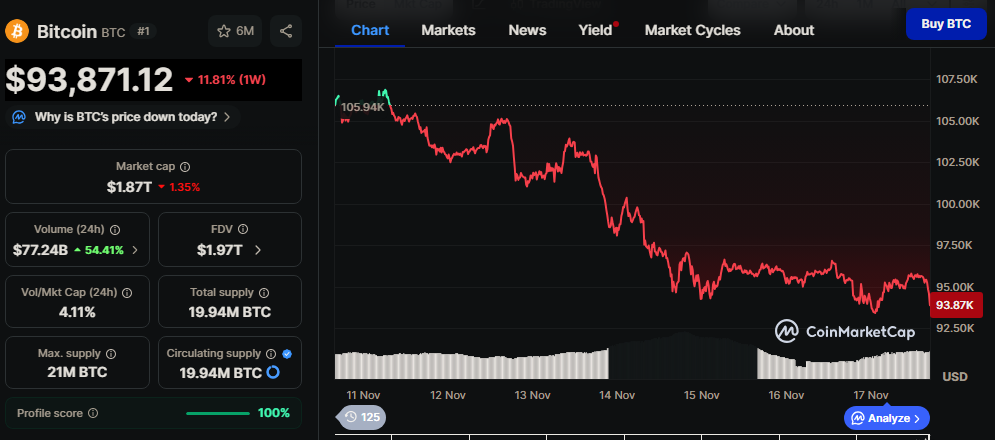
Nicolai Sondergaard of Nansen said that while custody has become more centralized, ownership is still distributed across millions of underlying investors. He noted that Bitcoin’s core properties remain intact, even as ETF issuers and major custodians gain more influence over liquidity and market behavior.
Growing Concerns About Institutional Dominance
Some analysts, however, warn that rapid institutional accumulation could create new weaknesses. Corporate crypto treasuries surpassed $100 billion in assets this year, and critics worry that large custodians could become single points of failure.
Also Read: Bitcoin Hits 95% Supply Milestone — 5 Key Implications for Traders Now
Willy Woo drew parallels to the U.S. nationalization of gold in 1971, suggesting a scenario where governments could pressure corporate holders if macroeconomic tensions rise. Woo argued that a similar pattern could unfold if BTC becomes highly concentrated among corporate treasuries.
For now, most experts agree Bitcoin’s decentralized design remains robust. Corporate adoption may reshape market dynamics, but the network’s core structure continues to rely on its broad global user base — not a select few institutions.
Disclaimer: The information in this article is for general purposes only and does not constitute financial advice. The author’s views are personal and may not reflect the views of Chain Affairs. Before making any investment decisions, you should always conduct your own research. Chain Affairs is not responsible for any financial losses.

I’m a crypto enthusiast with a background in finance. I’m fascinated by the potential of crypto to disrupt traditional financial systems. I’m always on the lookout for new and innovative projects in the space. I believe that crypto has the potential to create a more equitable and inclusive financial system.